
Review · HAMBURG TOURS
Historic Free Tour of Hamburg Old Warehouse District
Hamburg’s old warehouse district tells an unusually sharp story: coffee, tea, spices, tobacco, and carpets passed through its red-brick halls, while local residents were removed when the area gained special customs status. This 100-minute walking tour links that past with the modern Elbphilharmonie and HafenCity.
I like the clear route from Baumwall to Chilehaus, and I like that the Spanish-speaking guide explains trade, architecture, and the human cost of Hamburg’s port plans. The included stop at one of Hamburg’s oldest coffee shops, with no purchase required, is another useful touch.
The main consideration is weather. This is an outdoor walk, and there is no museum entry or visit inside the Elbphilharmonie. The displayed price is just $2.16 per person, but the tour also uses a pay-what-you-wish model, so check the payment details before booking.
Key points at a glance
- The Speicherstadt in 100 minutes: Walk among canals, bridges, alleys, and the world’s largest warehouse complex.
- A Spanish-language history lesson: Learn how coffee, tea, cocoa, spices, tobacco, and carpets shaped Hamburg’s trade.
- A striking modern contrast: See HafenCity and the Elbphilharmonie from the historic warehouse district.
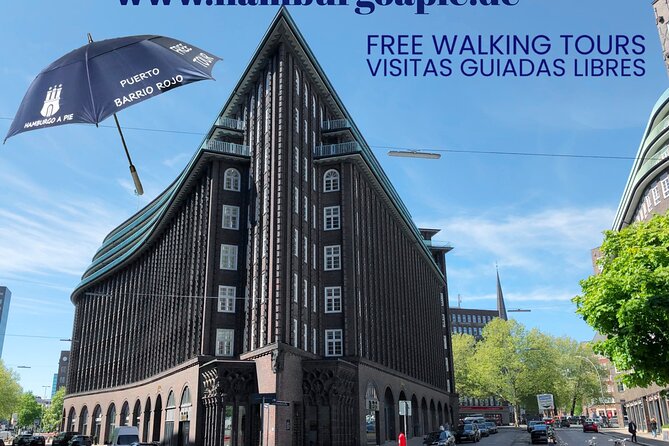
- Chilehaus finish: End beside the pointed brick building whose sharp corner recalls a ship’s bow.
- A human story, not just architecture: Hear how residents lost their homes when the customs district was created.
- Useful extras: Photos, local recommendations, third-party insurance, and a stop at an old coffee shop are included.
Why Speicherstadt makes a fine first walk in Hamburg
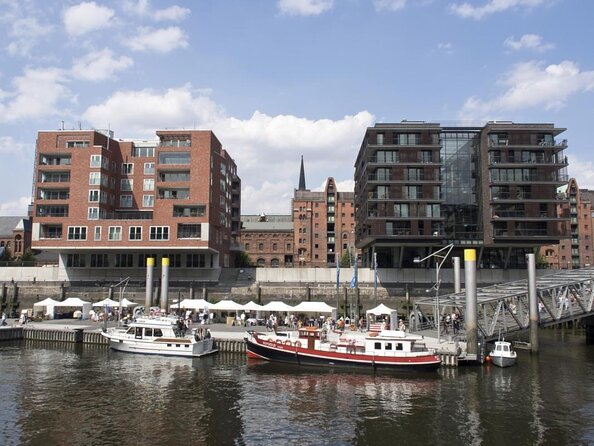
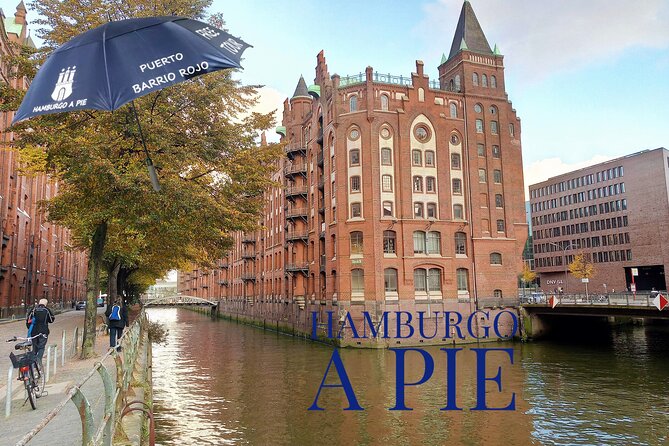
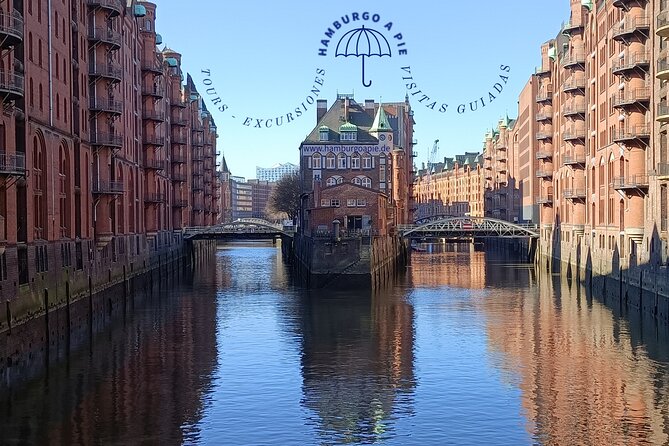
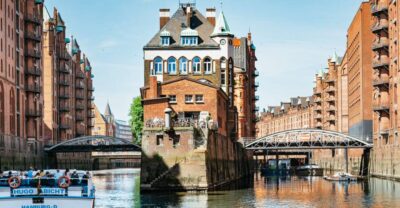
If you want to understand Hamburg quickly, start with Speicherstadt. The district is southeast of the Altstadt, close to HafenCity, yet it feels distinct from the regular city streets. Its red-brick warehouses line canals crossed by bridges, creating a compact area where the port’s commercial past is easy to see.
The buildings were constructed in a neo-Gothic style, using wooden piles for support. That detail matters because the district was not simply a row of attractive old buildings. It was a working storage complex designed for goods arriving through Hamburg’s port.
As you walk, the guide connects the buildings to the products once stored inside them. Coffee, tea, cocoa, spices, tobacco, and oriental carpets all passed through this part of town. The district’s architecture makes more sense once you know what the warehouses were built to handle.
I like tours that explain why a place looks the way it does, and this one has a clear purpose from the start. You are not only photographing brick façades. You are learning how Hamburg’s position on the water helped make it a trading power.
The route also gives you a useful city contrast. The walk begins near Baumwall, moves through the old warehouses, includes views toward HafenCity and the Elbphilharmonie, and finishes at Chilehaus. In less than two hours, you see several different versions of Hamburg.
More history-led days in Hamburg:
- The Local Tour of Hamburg Historic Centre
★ 5.0 · 1,058 reviews - Hamburg: Historical Tour of the St. Pauli Sex Work District
★ 4.4 · 215 reviews - Hamburg: UNESCO-World Heritage Sites Tour
★ 4.7 · 137 reviews
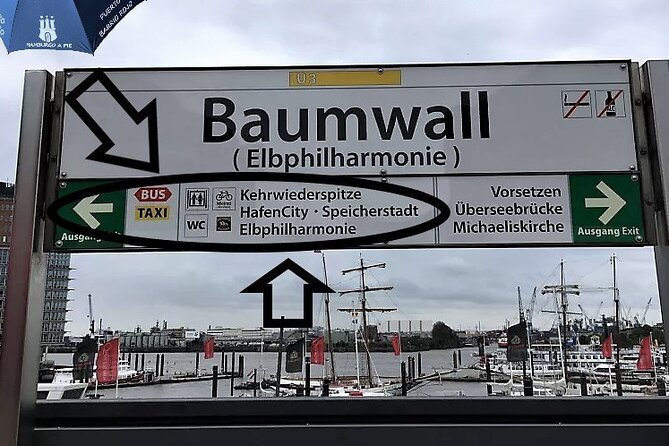
Starting at Baumwall near Hamburg’s old port
The meeting point is Baumwall, at 20459 Hamburg, with a scheduled start at 2:45 pm. Public transportation is nearby, which makes this a practical starting point if you are already in the Altstadt or around the harbour.
Arrive with comfortable shoes and enough time to locate the group. The tour lasts about 1 hour and 40 minutes, and most of that time is spent outside. You will be walking through historic canals, bridges, and narrow passages rather than sitting in a museum or coach.
The maximum group size is 30 people. That is not an intimate private walk, but it is still small enough for a guide to keep the route moving and explain the main sights. If you prefer a very quiet, highly personal tour, a group of this size may feel busy.
The tour is offered in Spanish. That is the central practical point for Spanish-speaking visitors, since the value depends heavily on following the explanations about Hamburg’s trade, architecture, and urban changes.
Walking the canals and warehouses of Speicherstadt
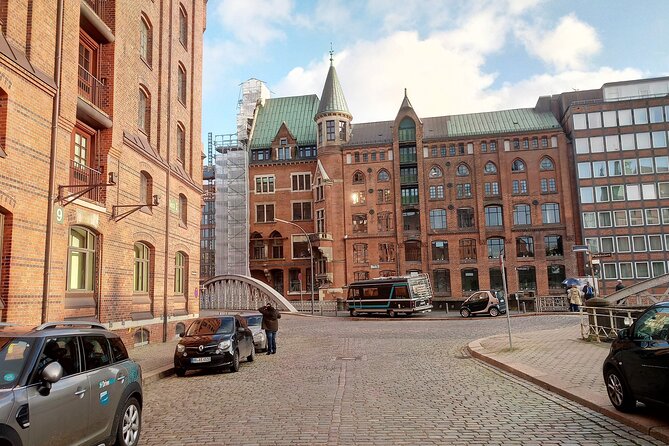
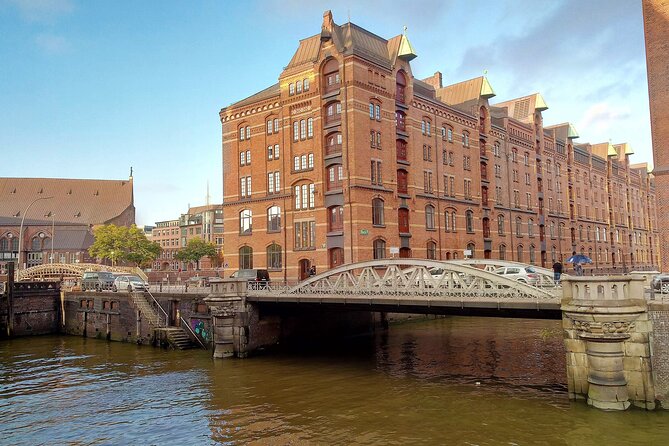
The core of the experience is the warehouse district itself. Speicherstadt is recognized as a UNESCO World Heritage site and is described as the largest port warehouse complex in the world. Its scale becomes clearer as you move between the long buildings, bridges, and waterways.
The neo-Gothic red brick gives the district a strong visual identity. The canals are not decoration added for tourists. They were part of the practical transport system that helped move goods around the storage area.
You will stop at several of the district’s most important points. The guide explains the curiosities of trade in this area and points out how the warehouses were built and organized. Even if you are not especially interested in commercial history, the subject becomes more approachable when tied to everyday products such as coffee and spices.
One useful detail is that the warehouses are identified by letters according to the order in which they were built. That small feature gives you a way to read the district as you walk. Instead of seeing a collection of similar brick blocks, you can begin to notice how the complex developed over time.
The walk also addresses the people who lived here before the area was set aside for special customs arrangements. When the decision was made to preserve that part of the island for duty-free trade, residents were removed from their homes with little warning. This is an important part of the story because it prevents the district from becoming only a pretty architectural backdrop.
I appreciate that this subject is included. Port wealth often comes with a price, and knowing who was displaced gives the warehouses a more complicated meaning. You can admire the engineering and design while still recognizing the disruption caused by Hamburg’s commercial plans.
Seeing HafenCity and the Elbphilharmonie from the old district
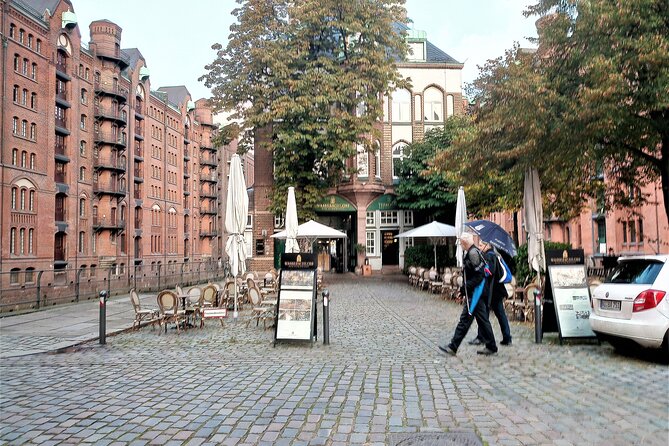
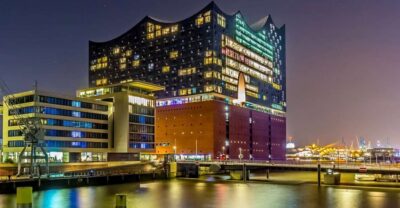
The walk does not stay locked in the nineteenth century. From Speicherstadt, you also get views toward HafenCity, Hamburg’s newer port-side district, and the Elbphilharmonie concert hall.
The Elbphilharmonie is known for its impressive façade and advanced acoustics. This tour does not include entry to the building, so the focus is on the exterior view and its place in Hamburg’s changing waterfront.
The contrast is especially useful. Speicherstadt represents storage, customs, and goods moving through the port. HafenCity represents a newer phase of redevelopment, with cultural and modern urban projects taking over former harbour space.
The guide also explains that the Elbphilharmonie greatly increased in cost during its construction. That detail gives the building a practical political and financial angle, not just an architectural one.
You should keep your expectations clear here. This is not a concert hall tour, and you will not receive access to the interior. If the Elbphilharmonie is your main reason for visiting Hamburg, book a separate activity. If you want to understand how it fits beside the old warehouse district, the exterior stop works well.
A few more Hamburg half-days to weigh up
- Hamburg: Sex and Crime in St. Pauli Tour for Ages 18+
★ 4.7 · 15,447 reviews - Hamburg: 1.5-Hour Harbor and Speicherstadt Day Cruise
★ 4.6 · 14,200 reviews - Hamburg: 90-Minute Evening Lights Harbor Cruise
★ 4.5 · 7,728 reviews - Hamburg: 2-Hour XXL Port of Hamburg Cruise Tour
★ 4.7 · 6,979 reviews
The old coffee shop stop and what it adds
The tour includes entry to one of Hamburg’s oldest coffee shops, with no consumption included. That means you can enter as part of the route without needing to buy a drink or snack.
This stop fits the district’s story. Coffee was one of the major goods stored and traded in Speicherstadt, so the café visit connects the old commercial activity with Hamburg’s continuing coffee culture.
Do not mistake this for a tasting or a full café experience. Food and drinks are not included, and the tour does not promise a museum display or a guided coffee presentation. The value is in the setting and the connection to the city’s trade history.
I like this kind of brief stop because it breaks up the outdoor walking without turning the tour into a sales visit. You can look around, listen, and decide for yourself if you want to return later.
Finishing at Chilehaus, the ship-bow building
The final stop is Chilehaus, at 20095 Hamburg. This is a memorable place to end because of its pointed façade and unusual architectural shape.
One side of the building comes to a very sharp angle, giving it the appearance of a ship’s bow. That design suits Hamburg, a city whose identity is closely tied to water, shipping, and international trade.
The Chilehaus stop also gives the tour a clean architectural finish. Speicherstadt is made up of large warehouse blocks and canals, while Chilehaus focuses attention on a single bold structure. You finish with a building that is easy to recognize and photograph.
The end point is not the same as the start point. That is convenient if you plan to continue exploring the Altstadt or nearby areas, but it means you should not leave a bag, bicycle, or other item at Baumwall. The tour ends at Chilehaus rather than returning you to the meeting point.
What the price means for your budget
The listed price is $2.16 per person, which is remarkably low for a guided city walk. At the same time, this is described as a free tour where you decide what to pay at the end. Treat the small upfront amount as a booking or reservation charge unless the payment terms clearly say otherwise.
The value is strongest if you want a short orientation walk rather than a ticketed attraction. You receive a Spanish-language guide, photographs during the tour, local recommendations, third-party insurance, and access to the coffee shop stop without a required purchase.
You do not receive entry to the Elbphilharmonie, museums, or exhibitions. Miniatur Wunderland and the Coffee Museum, for example, require separate tickets. Public transportation, transfers, food, drinks, bottled water, boat rides, and museum tours are also outside the price.
That separation is reasonable. The tour is about streets, canals, façades, and explanation. If you want indoor attractions, plan them separately and budget for them.
Practical details for a comfortable afternoon
The start time is 2:45 pm, so the tour fits neatly into an afternoon in Hamburg. You could use it after a morning in the Altstadt, or schedule it before an evening meal near HafenCity.
The tour needs good weather. If poor weather causes cancellation, you are offered another date or a full refund. You can cancel for a full refund up to 24 hours before the start time. Within 24 hours, refunds are not available and changes are not accepted.
Most people can take part, and service animals are allowed. Since the route is on foot and includes canals, bridges, and alleys, wear shoes suited to city walking. The supplied information does not promise seating, shelter, or refreshments, so bring what you need for an outdoor afternoon.
A mobile ticket keeps the booking simple. Save it where you can reach it easily, especially if you are moving between public transport and the meeting point.
Who will get the most from this tour
This walk suits you best if you want Hamburg explained in Spanish and prefer local streets to a formal museum setting. It is also a good choice for a first visit because the route introduces the Altstadt edge, Speicherstadt, HafenCity, the Elbphilharmonie, and Chilehaus in one compact outing.
You will likely enjoy it if architecture interests you, especially red brick, canals, warehouse design, and the sharp lines of Chilehaus. The trade stories also make the tour a good fit for anyone curious about how coffee, spices, tobacco, tea, cocoa, and carpets shaped the city.
Families and mixed-interest groups may find the length manageable at about 100 minutes. The route has enough visual variety to keep it from feeling like a lecture, though the main activity remains listening and walking.
This may not be the right choice if you want museum admission, a boat ride, food tasting, or a tour inside the Elbphilharmonie. It is also less suitable if rain would spoil your afternoon or if you need a fully private experience.
Should you book the Speicherstadt walk?
I would book this tour if you want a short, Spanish-language introduction to Hamburg’s port identity and you are happy to explore from the street. Its strongest feature is the combination of architecture and human history: you see the beautiful warehouses, but you also hear about the residents who were forced out when the customs district was created.
The low listed price makes it easy to consider, especially with the pay-what-you-wish format. Just confirm how the $2.16 booking price relates to the final contribution, and remember that major indoor attractions are not included.
Choose it for context, orientation, and a well-shaped walk from Baumwall to Chilehaus. Skip it if your priority is indoor access, food, or a private guide. For the right visitor, this is a practical way to see why Hamburg’s old warehouses still matter while the modern waterfront grows around them.
FAQ
How long is the Historic Free Tour of Hamburg Old Warehouse District?
The walking tour lasts approximately 1 hour and 40 minutes, or 100 minutes.
Where does the tour start and finish?
The tour starts at Baumwall, 20459 Hamburg, Germany, and ends at Chilehaus, 20095 Hamburg, Germany.
What time does the tour begin?
The scheduled start time is 2:45 pm.
Is the tour offered in Spanish?
Yes. Spanish language service is included.
Are museum tickets or entry to the Elbphilharmonie included?
No. Museum and exhibition tickets, including attractions such as Miniatur Wunderland and the Coffee Museum, are not included. Access to the Elbphilharmonie is also excluded.
What is the cancellation policy?
You can cancel at least 24 hours before the start time for a full refund. Cancellations or changes made within 24 hours are not accepted and are not refunded. If poor weather causes the tour to be canceled, you are offered another date or a full refund.
Just added around Hamburg
- Winter Alster tour★ 4.0 · 12 reviews
- World War 2 Hamburg Private Guided Tour★ 5.0 · 6 reviews
- UNESCO World Heritage – Speicherstadt and Kontorhaus district★ 4.5 · 12 reviews
- Ticket for the Emigration Museum BallinStadt Hamburg★ 4.0 · 57 reviews
- hamburg Experienced differently with wish rental bike relaxed enjoy★ 5.0 · 5 reviews
- Hamburg Private Food Tours with a Local: 100% Personalized★ 5.0 · 3 reviews
- The Beatles on St. Pauli★ 5.0 · 3 reviews
- The Beatles in Hamburg – Private Tour★ 5.0 · 16 reviews
Hamburg Tours, compared.
1.5-Hour Harbor and Speicherstadt Day Cruise
Read our review →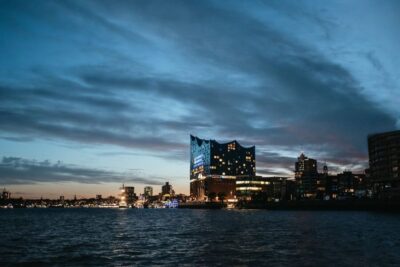
Browse the lists this tour appears in