
Review · HAMBURG TOURS
Hamburg St. Pauli and Red Light District Private Walking Tour
Hamburg’s St. Pauli district is far more than neon signs and late-night bars. On this private two-hour walk, you trace a lively route from Millerntorplatz along the Reeperbahn to Große Freiheit 36, taking in football, music, policing, old pubs, and the city’s once-notorious red-light quarter. The Beatles connection gives the walk a clear hook, but the best part is the broader look at how Hamburg’s nightlife grew around its harbor.
I like the private format, since your group can ask questions without being lost in a crowd. I also like the useful local advice at the end, including suggestions for pubs, restaurants, and places to continue your evening. The main caution is that this is an adult-oriented neighborhood tour, not a family outing, and some stops are brief rather than full museum visits.
Key points to know before booking
- Beatles history runs through the whole walk: See the Beatles’ former hair salon, Beatles-Platz, and Große Freiheit 36.
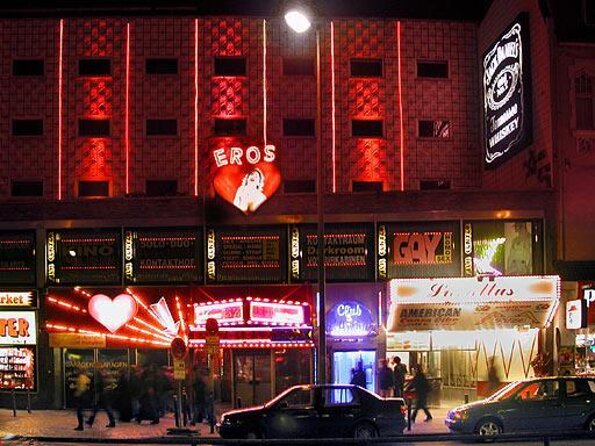
- The route covers Hamburg’s most famous nightlife streets: Walk along the Reeperbahn, Davidstraße, Herbertstraße, and Hans-Albers-Platz.
- You get a private guide for about $43.65 per person: The value improves when several people share the booking.
- The tour explains more than nightlife: Expect stories about Hamburg’s gates, the Michel church, the harbor district, policing, football, and urban redevelopment.
- Herbertstraße requires sensitivity: Women and children are not permitted to enter the street, so the guide offers a route around it.
- Come ready to walk outdoors: The tour runs in all weather, and moderate physical fitness is recommended.
Why St. Pauli makes such a good walking tour

St. Pauli is one of those city districts where the past and present sit close together. Football fans know the area for FC St. Pauli and the stadium near Millerntorplatz. Music fans know it for the Beatles. Night owls know the Reeperbahn and Große Freiheit. History-minded visitors get a look at Hamburg’s old port culture, strict city gates, police traditions, and changing architecture.
A walking tour helps you connect these pieces. From a taxi or sightseeing bus, you see signs and crowds. On foot, you notice how a football stadium, a former air-raid bunker, a wax museum, a police station, old taverns, and adult businesses all share the same few streets.
The route is also short enough to fit into a busy Hamburg stay. Two hours gives you a useful introduction without taking an entire afternoon. I would schedule it early in your visit, then use the guide’s suggestions to shape a later evening.
More St Pauli and Reeperbahn nights:
- Hamburg: Sex and Crime in St. Pauli Tour for Ages 18+
★ 4.7 · 15,447 reviews - Hamburg: Reeperbahn Lust & Laster Tour for Adults Only
★ 4.7 · 5,440 reviews - Hamburg: Insider Tour of the Reeperbahn & St. Pauli
★ 4.7 · 5,057 reviews
Millerntorplatz, football, and the first city stories
The tour begins at Millerntorplatz, a practical starting point at the edge of St. Pauli. You get a view toward the football stadium, which immediately places you in one of the district’s strongest local identities.
The guide uses a connecting thread to move from one subject to the next. That matters here, because St. Pauli can feel like a jumble of clubs, theaters, shops, and busy roads. The opening explanation gives the neighborhood some order before you reach the more famous nightlife streets.
Near the end of Heiligengeistfeld, you see a former air-raid bunker that is being converted for a new use. The guide explains how people can reach the inside and the top of the building. This is a good example of the tour’s wider purpose: showing how Hamburg reuses difficult remnants of the past instead of treating them as isolated monuments.
You also hear why the Michel, Hamburg’s familiar name for St. Michael’s Church, mattered during the period when the city gates closed at night. The church itself is not part of the visit, but the story adds context to the old city’s rules, schedules, and fear of being shut outside. It is a small historical detail, yet it helps explain why this district developed beyond the old central core.
The Dancing Towers and the first look at the Reeperbahn
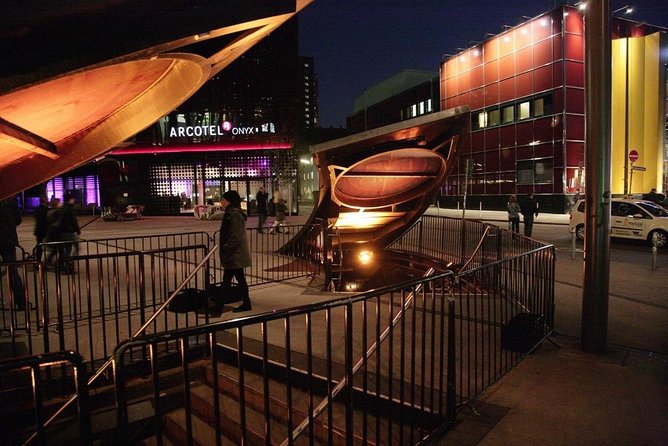
The Dancing Towers mark the entrance to the Reeperbahn nightlife zone. Their unusual bend is not just an architectural flourish. Your guide explains why the towers have that shape and points out the view associated with the Clouds restaurant.
This is a quick stop, about five minutes, so do not expect to go inside for a meal or a long look around. Its value is visual and practical. You get an orientation point for the nightlife area and a chance to understand how newer buildings frame the older entertainment quarter.
From here, the walk follows the Reeperbahn itself. You learn where the name came from, then receive suggestions for clubs and restaurants. Those suggestions may be one of the most useful parts of the evening if you do not know St. Pauli. The district offers many choices, but not every doorway will suit every mood or budget.
The Reeperbahn is also a place where the atmosphere changes by hour. A daytime walk lets you study the signs, façades, and street layout without the full nighttime rush. An evening departure gives you a stronger sense of the entertainment scene, but you should expect more noise and more foot traffic.
Spielbudenplatz, the Panoptikum, and Hamburg’s stage life
Spielbudenplatz is one of the district’s main public squares. The guide explains how it got its name and connects it with puppet theater. That link reminds you that St. Pauli’s entertainment culture did not begin with modern clubs. Public amusements, theaters, music halls, and informal shows have long shaped the area.
The square also hosts the Santa Pauli Christmas market each year. Its character differs from a traditional market, and the guide explains what makes it unusual. If your visit falls outside the holiday season, you will hear about the event rather than see it in operation.
The Panoptikum, Hamburg’s wax museum, appears next. You stop outside and hear about the black-curtained area in the basement. Admission is not included, and the tour allows only a brief look, so think of this as a pointer for a separate visit rather than a museum tour.
That can be useful if you enjoy odd corners and old-fashioned attractions. You can return later, pay separately, and give the museum the time it deserves. If wax figures are not your thing, you have lost only a couple of minutes.
More walking tours in Hamburg:
- Hamburg: Guided Walking Tour for Magic Fans
★ 4.8 · 1,992 reviews - Reeperbahn Walking Tour with St. Pauli Local
★ 4.8 · 577 reviews - Hamburg: Speicherstadt Walking Tour with Coffee Tasting
★ 4.6 · 360 reviews - Hamburg Reeperbahn Small-Group Walking Tour
★ 4.0 · 269 reviews
Davidwache and the stories of St. Pauli policing
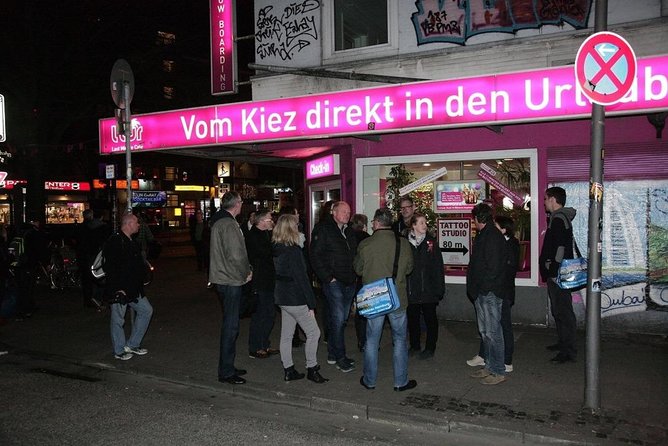
The Polizeikommissariat 15, better known as the Davidwache, is one of Germany’s most famous police stations. Its location beside the nightlife and red-light streets has made it a familiar symbol of St. Pauli.
The stop is short, but the guide supplies facts and anecdotes about the station. I like this pause because it keeps the tour from treating the district as pure entertainment. St. Pauli has always needed rules and enforcement, and the Davidwache shows how closely public order and nightlife have been linked.
You will not enter the police station as part of the walk. Instead, you get the outside view and the story behind its reputation. That is enough for most people, though anyone hoping for an interior visit should adjust expectations.
Davidstraße, Beatles memories, and the St. Pauli Museum
Davidstraße brings you closer to the district’s adult businesses and to one of the most appealing music stories on the route. You look toward the hair salon associated with the Beatles before passing the St. Pauli Museum.
The Beatles did not become famous in Hamburg, but the city played an important early role in their career. Their time here belongs to the working phase of the band, when long nights on small stages helped shape their performance style. This tour does not present a full Beatles museum experience, yet it gives fans several physical places to connect with that story.
The St. Pauli Museum is another optional follow-up. The walk points it out rather than including admission. If you want more background on the neighborhood, make a note of it and return on your own.
This portion can feel sharper in tone than the earlier streets. You are near the red-light businesses, so the guide’s presentation matters. The tour is designed as an informative look at the area, not as a joke-filled parade of salacious sights. Still, you should be comfortable discussing the adult side of city life in a public setting.
Hans-Albers-Platz and the character of old St. Pauli
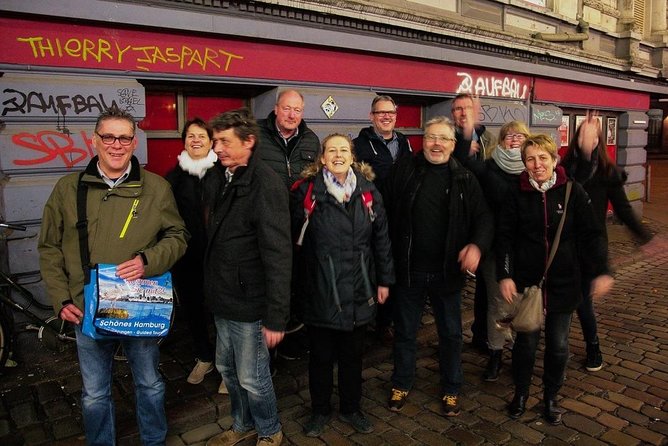
Hans-Albers-Platz honors the German actor and singer whose name remains closely tied to St. Pauli. The guide explains the story behind his monument and why another statue connected with him can be found in Düsseldorf.
It is a brief stop, but it adds a local cultural figure to a route otherwise dominated by international music and nightlife. Albers represents an older style of German popular entertainment, and his connection helps show that St. Pauli’s identity did not begin with the Beatles or modern clubs.
The square also puts you near some of the district’s long-running bars. One of the oldest taverns on the Kiez is passed during the route, and you can return there after the tour if it appeals to you. The guide does not include food or drinks, so any stop afterward is your own expense.
That arrangement is sensible. You get recommendations without being tied to a fixed restaurant or bar, and you can choose a place that fits your budget and energy.
Herbertstraße and the limits of the route
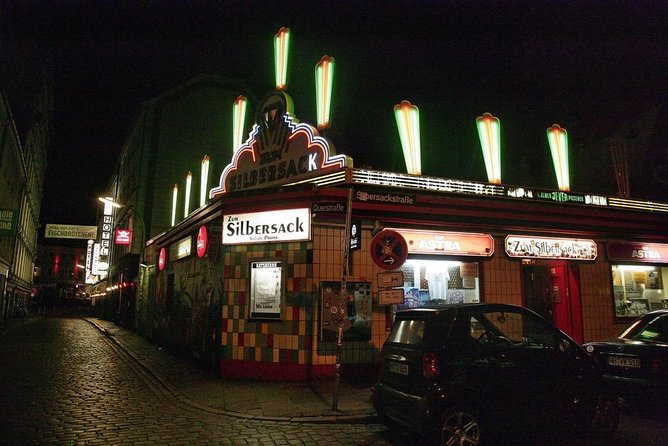
Herbertstraße is the most sensitive stop. Women and children are not allowed to enter, so the guide offers to split the group. Men may walk through the street while the guide takes the women around the outside and shares information about Erichstraße and the surrounding area.
This arrangement is important to understand before you book. The walk does not pretend that every part of St. Pauli is open to everyone. It explains the access rule and gives the group a practical alternative, but some people may still prefer to view the street from outside.
I would not treat this stop as a reason to book the tour by itself. Its value comes from the explanation of how the district operates and how public streets can have very different rules and meanings. You can ask the guide questions, but respectful behavior is essential. This is a working adult district, not a staged attraction.
The tour also passes another old Kiez pub nearby. Again, the guide leaves you free to return later. That flexibility is helpful because you may want a quiet drink, a meal, or simply a break after walking.
Beatles-Platz and Große Freiheit 36
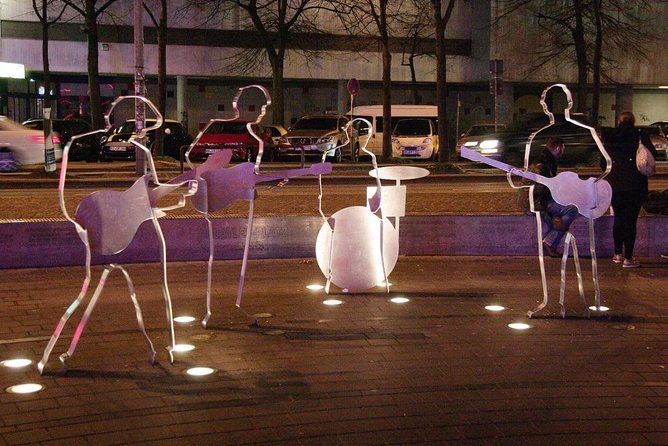
The Beatles story gets its most photogenic moment at Beatles-Platz. Since 2008, life-sized metal figures have marked the band’s Hamburg connection. The circular design of the square makes it a natural place for a group photo.
For Beatles fans, this is the emotional high point of the route. You are not just hearing that the band played in Hamburg. You are standing in the neighborhood where their early career became tied to long nights, club stages, and the city’s music scene.
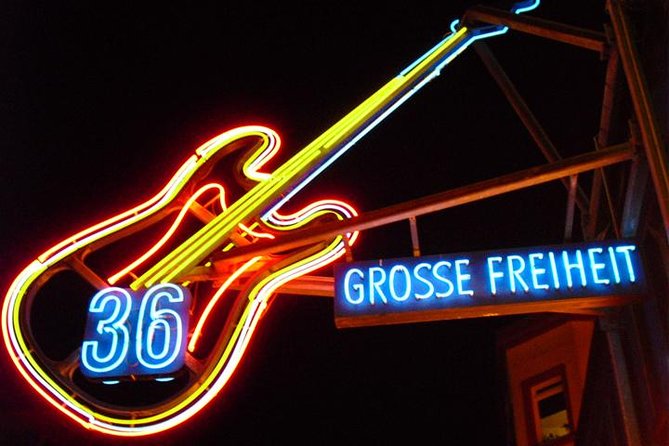
The tour ends at Große Freiheit 36, one of the district’s best-known music addresses. The stop gives you a clear finish and leaves you in a useful position for the rest of the evening. You can continue into the nightlife, follow the guide’s pub suggestions, or use public transport to move elsewhere.
Do not expect a concert or venue admission. The tour explains the place and its role in the area, then ends outside.
What the private format is worth at $43.65
At about $43.65 per person, the price is reasonable if you are traveling with a small group and want direct access to a guide. The tour includes the local guide but not food, drinks, transport, or paid admission at the Panoptikum.
The private setup is the real value. You can ask about a club, a restaurant, Hamburg’s football culture, or the Beatles without waiting for a large group to move on. A past booking with only two people became close to a personal walk, which shows how much attention you may receive when the group is small.
The price is less compelling if you want extensive interior access. Most stops are outside, and several last only two to five minutes. You are paying for explanation, route planning, local context, and the chance to ask questions, not for a series of included attractions.
The strongest guide experiences have included Lock and Joe. Joe’s American background was especially helpful for clear communication in one small private group. The tour may also be operated by a multilingual guide, so confirm the language arrangement you need when booking.
Timing, fitness, and who should take this walk
The route lasts about two hours and requires a moderate level of physical fitness. You will be on your feet outdoors, so comfortable shoes are more useful than anything stylish. The tour operates in all weather, and Hamburg rain can change the feel of the evening quickly, so bring suitable clothing.
The tour is not recommended for children. That is not simply because of the late-night reputation of the Reeperbahn. The route discusses adult businesses and visits streets with an adult character, making it better suited to mature visitors.
I would recommend it to:
- First-time visitors who want a clear introduction to St. Pauli
- Beatles fans who want to connect the band with real Hamburg locations
- Adults interested in nightlife, policing, urban change, and local culture
- Small groups who value questions and flexible conversation
- People who want ideas for a later evening rather than a packaged night out
I would choose another activity if you need an all-ages tour, dislike adult themes, or want long visits inside museums and buildings.
The tour begins at St. Pauli, Hamburg 20359, and finishes at Große Freiheit 36, 22767 Hamburg. Both ends are near public transportation, which makes it easy to connect the walk with the rest of your plans. Service animals are allowed.
How the guide affects the experience
This route covers many subjects in a short time, so the guide’s style matters. A good guide needs to explain the adult district without turning it into cheap comedy, keep the Beatles material from taking over, and show how the neighborhood fits into Hamburg’s wider story.
The supplied guide names include Lock and Joe. Joe’s US background helped one small group follow the tour easily, while Lock was praised for strong command of the area’s historical details. You should still allow for some variation because the experience may be led by a multilingual guide.
The tour works best when you ask questions. Ask where to eat after the walk, which streets suit a quieter drink, or what to see at the St. Pauli Museum. The guide’s local suggestions may prove as useful as the formal stops.
Cancellation and booking advice
You receive confirmation when booking, and the tour is often reserved well ahead of time, with an average booking lead time of about 137 days. That is a sign to reserve early if your Hamburg dates are fixed, especially if you want a particular time or a private arrangement.
Free cancellation is available up to 24 hours before the start time for a full refund. Changes or cancellations made inside that 24-hour window are not accepted for a refund, and the cut-off follows Hamburg local time.
Should you book the St. Pauli private walk?
Book it if you want a compact, adult-focused introduction to Hamburg’s most famous nightlife district, with the Beatles, football, police history, and old entertainment culture all in the same route. The private format, useful pub advice, and clear finish at Große Freiheit 36 make it particularly handy for a first evening in the city.
Skip it if your main goal is entry to attractions, a family-friendly outing, or a quiet historical walk. Much of the tour takes place outside, and the red-light district can feel confronting. For the right audience, though, this is a practical way to understand St. Pauli before exploring it on your own.
FAQ
How long does the Hamburg St. Pauli walking tour last?
The tour lasts approximately two hours.
Where does the tour begin?
It begins at St. Pauli, Hamburg 20359, Germany.
Where does the tour end?
The tour ends at Große Freiheit 36, 22767 Hamburg, Germany.
Is the tour private?
Yes. Only your group participates in the private tour or activity.
Is the tour offered in English?
English is offered. The tour may also be operated by a multilingual guide.
Is admission to the Panoptikum included?
No. Admission to the Panoptikum is not included in the tour price.
Are food, drinks, and transportation included?
No. Food, drinks, and transportation to and from attractions are not included.
Can I cancel for a full refund?
Yes. You can cancel at least 24 hours before the experience start time for a full refund. Cancellations or changes made less than 24 hours before the start time are not accepted for a refund.
Just added around Hamburg
- Winter Alster tour★ 4.0 · 12 reviews
- World War 2 Hamburg Private Guided Tour★ 5.0 · 6 reviews
- UNESCO World Heritage – Speicherstadt and Kontorhaus district★ 4.5 · 12 reviews
- Ticket for the Emigration Museum BallinStadt Hamburg★ 4.0 · 57 reviews
- hamburg Experienced differently with wish rental bike relaxed enjoy★ 5.0 · 5 reviews
- Hamburg Private Food Tours with a Local: 100% Personalized★ 5.0 · 3 reviews
- The Beatles in Hamburg – Private Tour★ 5.0 · 16 reviews
- The Beatles on St. Pauli★ 5.0 · 3 reviews
Hamburg Tours, compared.
1.5-Hour Harbor and Speicherstadt Day Cruise
Read our review →



Browse the lists this tour appears in