
Review · HAMBURG TOURS
Hamburg: Speicherstadt & HafenCity 2-Hour Walking Tour
Hamburg’s best architectural contrast unfolds on foot: old red-brick warehouses beside glass towers, narrow canals beside a 21st-century harbor district. This private walk takes you from Deichstrasse and the Zollkanal into Speicherstadt, then across to HafenCity and its modern landmarks.
I like the chance to enter one of the old warehouses rather than simply photograph it from outside. I also like the practical questions built into the tour: why some buildings have round towers, why Speicherstadt has no ordinary floors, and how goods still reach upper levels. The main consideration is pace. Two hours covers a lot, so you get a strong introduction rather than a slow, room-by-room visit.
Key points at a glance
- Old Hamburg first: Begin near Rödingsmarkt and Deichstrasse, where historic houses help set the scene.
- Speicherstadt from the canals: Follow the Zollkanal and learn how this warehouse district handled imported goods.
- Hands-on warehouse detail: Enter an old building and hear about work, transport, and the unusual building design.
- A sharp change at Brooktorkai: Cross into HafenCity, where glass architecture meets preserved port buildings.
- Harbor views at the finish: Look toward the Elbe Philharmonic Hall, Coffee Plaza, Unilever building, and cruise-ship traffic.
- Private and flexible: The group can include up to 15 people, and the start time may be adjusted on request.
From Rödingsmarkt to Hamburg’s oldest streets
The meeting point is in front of Rödingsmarkt underground station on the U3 line. Use the exit marked Willy-Brandt-Straße and Ludwig-Ehrhard-Straße. That detail matters in Hamburg, where a large station can have several exits and a wrong turn can cost you the first few minutes of a short tour.
The walk begins at Steintwiete 1, then heads toward the Binnenhafenbrücke. Before the warehouses take over, you pause at Deichstrasse, one of the most useful places for understanding old Hamburg. Its 17th-century houses give you a picture of the city before the port was reshaped by modern trade and construction.
This is a short stop, listed at about 10 minutes, but it does valuable work. The houses put a human face on Hamburg’s past. You are not starting with a grand monument or a museum display. You are looking at the kind of street that helps explain how the city once met the water.
The stop is mainly for photographs and guided explanation, so do not expect a long interior visit here. Its real purpose is orientation. After Deichstrasse, the canals and warehouses make more sense because you have already seen the older urban fabric around them.
More walking tours in Hamburg:
- Hamburg: Guided Walking Tour for Magic Fans
★ 4.8 · 1,992 reviews - Reeperbahn Walking Tour with St. Pauli Local
★ 4.8 · 577 reviews - Hamburg: Speicherstadt Walking Tour with Coffee Tasting
★ 4.6 · 360 reviews
Following the Zollkanal into Speicherstadt
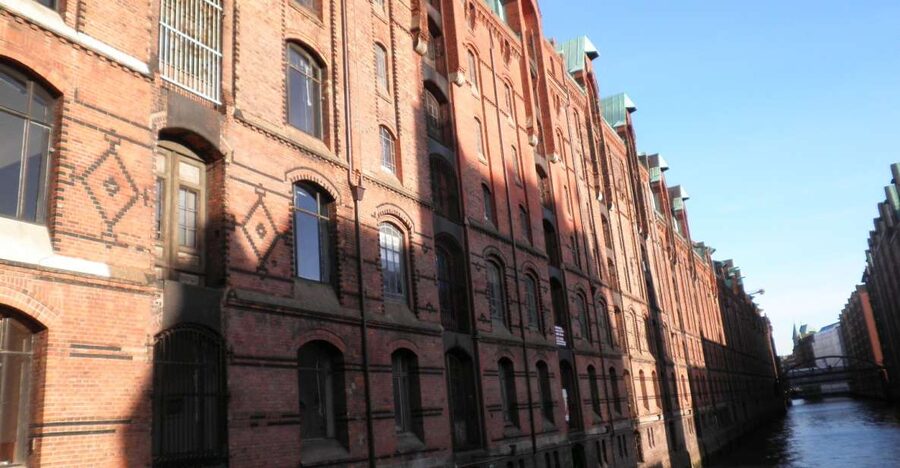
From Deichstrasse, the route reaches the Zollkanal. The canal is more than a pretty photo background. It explains why Speicherstadt was built in this form, with goods moving between water, warehouses, and the wider port.
The guide points out how the canal system worked and gives you the origin story of the warehouse district. This is where the tour becomes especially useful for anyone who has seen photographs of Speicherstadt but wondered what the buildings actually did.
You learn about the jobs once available here and the hard physical work behind the port economy. The warehouses were not decorative brick blocks. They were working buildings linked to the movement and storage of products. That context helps you read the facades differently: doors, loading points, canals, bridges, and upper levels all served a purpose.
The canal stop is brief, about five minutes in the published route, so the explanation needs to stay focused. That is a benefit if you want a clear city introduction. It is less ideal if you hope to linger at every bend with a camera.
The brick towers and unusual design of Speicherstadt
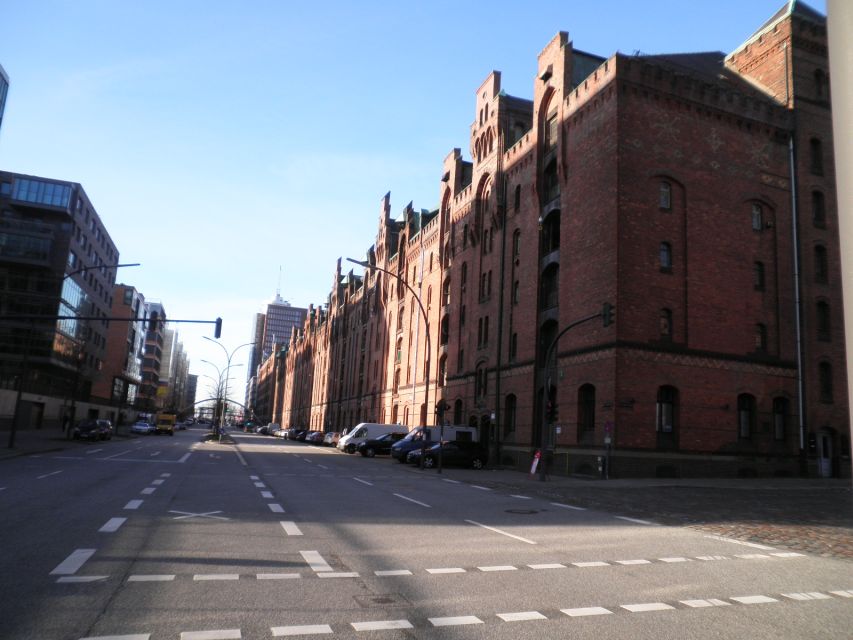
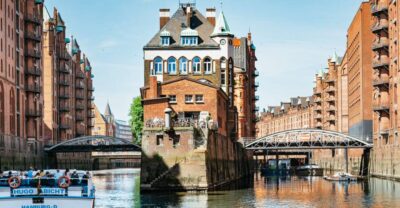
Speicherstadt is the heart of the walk. Its red-brick architecture gives Hamburg some of its most recognizable views, but the guide goes beyond the standard postcard description. You hear why the complex has the design it does and how its buildings functioned as part of the port.
One detail I would pay attention to is the question of floors. The tour explains why there are no floors in the usual sense. That odd feature makes more sense once you understand the need to move stored products through tall warehouse spaces. You also learn how products can be transported into the buildings today.
The tour includes entry into one of the old warehouses. That gives you a welcome change from the usual walk-and-point format. You can connect the outside architecture with the working interior, including the smell and atmosphere of an old storage building. The information supplied for the experience specifically highlights the scent of the old warehouses, so this is a sensory part of the walk, not just a history lesson.
Look up at the buildings in the east, too. The guide explains why only those structures have round towers. It is a small architectural puzzle, but these are the details that make a guided walk worthwhile. You leave with answers to questions you probably would not think to ask on your own.
The Speicherstadt section is listed as roughly 10 minutes of photo stop and explanation, though the full walk naturally spends more time moving through the district. With a two-hour total, the experience gives you a sample of the area rather than a full tour of every street and building.
Crossing Brooktorkai into HafenCity
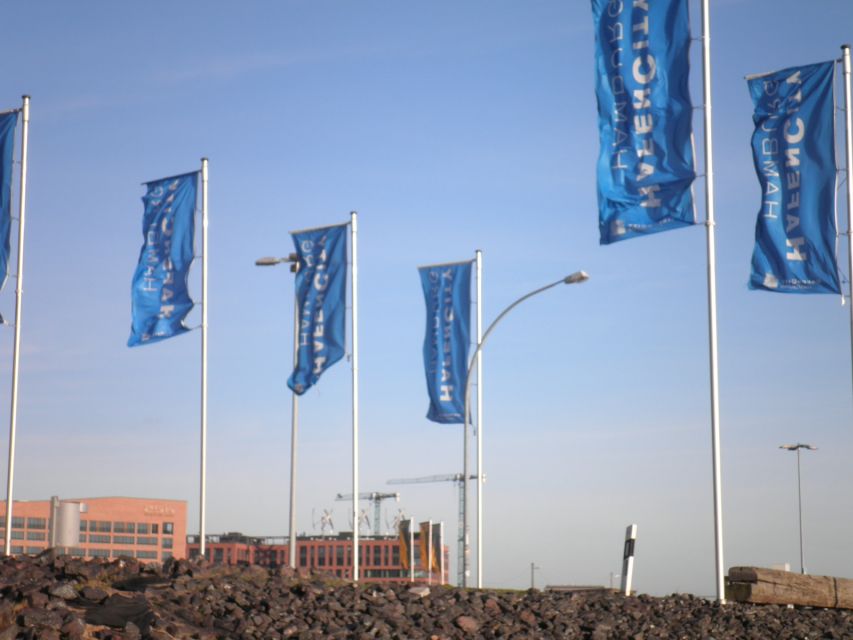
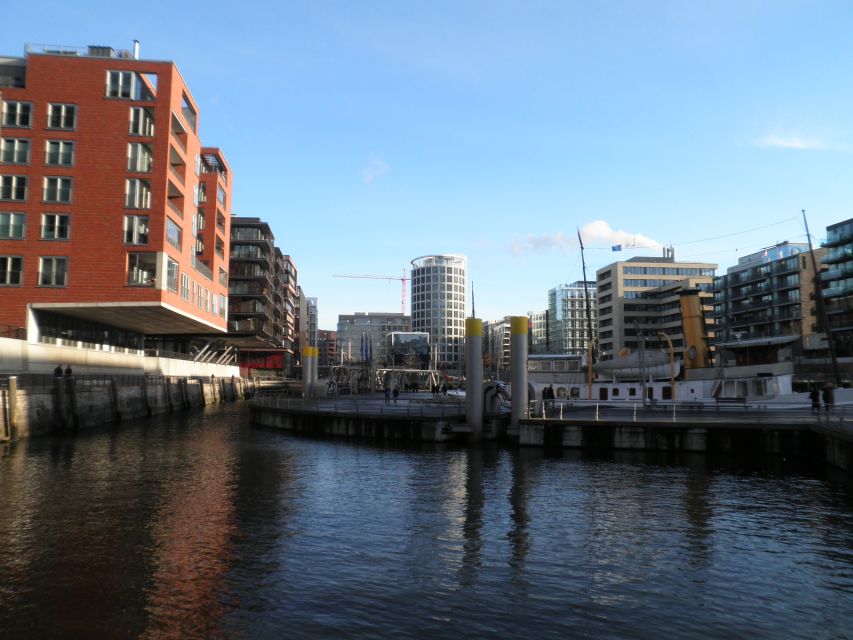
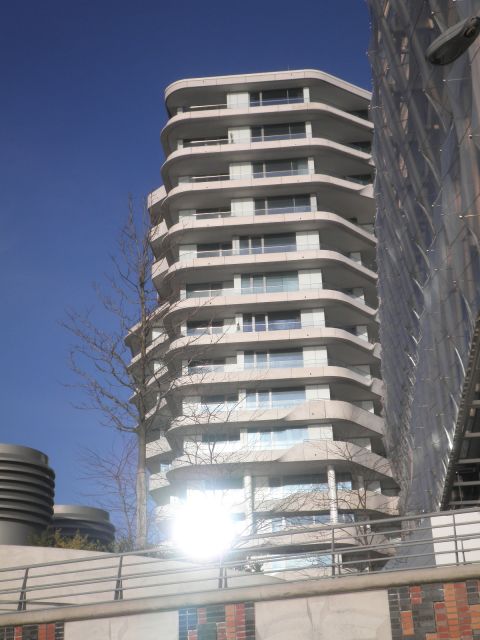
The mood changes after you cross Brooktorkai. The old warehouse district gives way to HafenCity, Hamburg’s modern development zone. Here, the tour shifts from trade buildings and canal logistics to new architecture, public spaces, and the city’s move into the 21st century.
This transition is one of the strongest parts of the route. You do not study Speicherstadt in isolation. You see it beside modern HafenCity, which lets you compare materials, scale, and purpose in a single walk. Red brick, canal edges, and historic port structures meet glass buildings with contemporary designs.
The route also includes listed buildings within the newer district. Kaispeicher B, the quay warehouse that houses the Maritime Museum, is one of them. The Port Authority on Überseeboulevard adds another link to Hamburg’s maritime identity.
The point is not that old is good and new is bad, or the reverse. HafenCity shows how Hamburg has tried to reuse its port setting while adding new buildings and public areas. The guide helps you notice the preserved structures instead of treating the modern district as a collection of shiny facades.
The HafenCity portion is also listed at about 10 minutes for photos and explanation. Expect a brisk overview. If you want to tour the Maritime Museum or enter the Elbe Philharmonic Hall, this walking tour does not present that as part of the package. The included service is the walking tour itself.
A few more Hamburg half-days to weigh up
- Hamburg: 2-Hour XXL Port of Hamburg Cruise Tour
★ 4.7 · 6,979 reviews - Hamburg: Speicherstadt and HafenCity 2-Hour Tour
★ 4.8 · 1,063 reviews - Hamburg: 2-Hour Harbor Cruise
★ 4.6 · 504 reviews - Hamburg: 2-Hour Sightseeing Cruise to Blankenese
★ 4.6 · 279 reviews
The Elbe Philharmonic Hall and harbor views
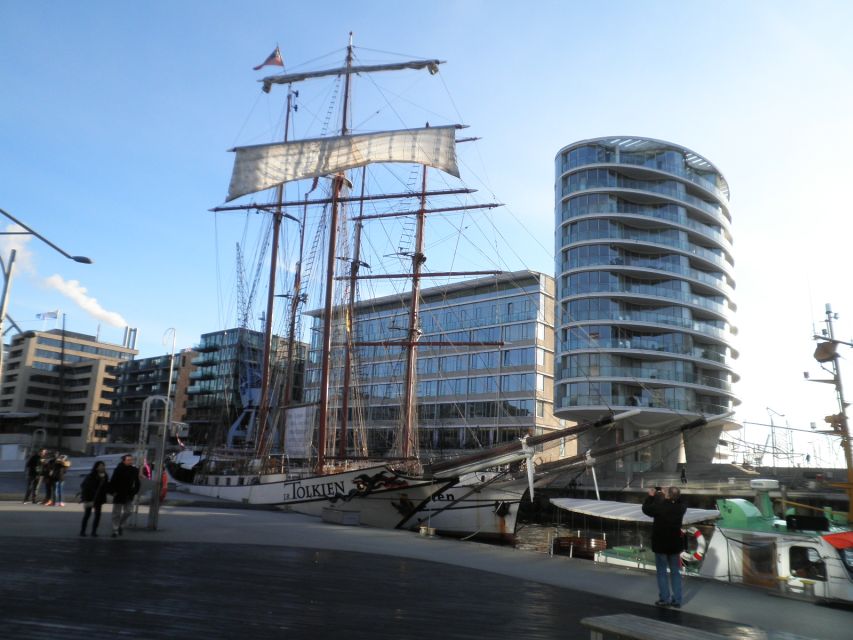
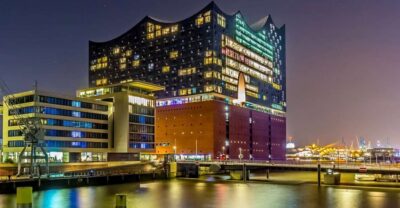
Near Coffee Plaza, you see the Elbe Philharmonic Hall, one of Hamburg’s most distinctive modern buildings. The tour describes its unusual design as part of the HafenCity story. It is a natural photo point and a useful marker of how far the city has moved from the days of warehouse-only port districts.
The route also takes in what is described as Hamburg’s highest schoolyard, another unusual feature of the newer district. That detail gives the modern buildings a practical side. HafenCity is not only about offices, hotels, and waterfront views. It includes everyday urban functions built into a dense area.
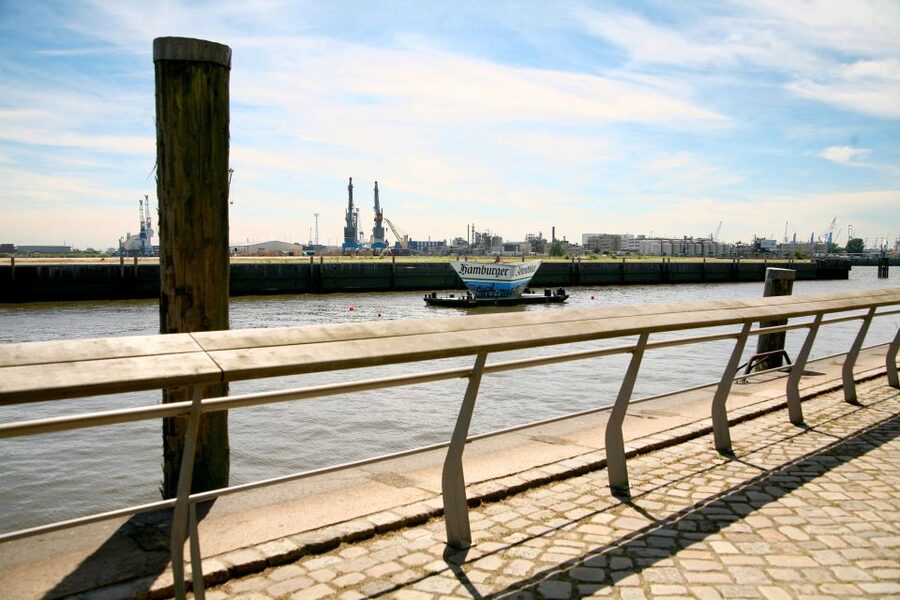
From the Unilever building, you get views over the harbor and may see a large cruise ship. The wording matters here: a cruise ship is not guaranteed. Harbor activity changes by day, so treat it as a possible bonus rather than the reason to book.
I like this ending because it opens the view after the tighter canal streets of Speicherstadt. The route finishes with the working harbor still in sight, while new buildings frame the water. It ties together the old port economy and Hamburg’s present-day role as a major maritime city without needing a long lecture.
What the guides add to the two-hour route
This experience is offered as a private group tour with a live guide in German, Spanish, English, or French. The group can include up to 15 people, so the price works differently for a couple than for a family or larger party.
Jutta Hülsmann is identified as the personal guide provider. Named guides associated with past departures include Jutta, Jörn, Karin Eberle, and Kerstin. The strongest praise centers on informative explanations, a relaxed manner, patience, and the ability to make the city engaging without making the walk feel stiff.
That matters on this route because Speicherstadt can look repetitive if you only see brick walls and canals. A good guide turns those repeated details into clues. The relaxed style described for Jutta and the strong recommendations for Jörn suggest a tour built around conversation and explanation rather than a formal script.
One three-star rating still described the tour as very informative. That is useful context. The experience appears to deliver solid information, but individual enjoyment may depend on guide style and your expectations for a two-hour walk. If you prefer a highly structured museum tour with extensive interior access, this is not that. If you want clear explanations while moving through the city, it is a better fit.
Is $294 good value for your group?
The listed price is $294 per group of up to 15 people. That can be expensive for one or two people, but the value improves as your group grows. A private walk for a family, wedding party, group of friends, or corporate group can work out reasonably when the cost is shared.
You are paying for a private guide, a flexible start time on request, and a route that links several parts of Hamburg. The fee does not include museum admission, meals, or a separate attraction ticket. The benefit is focused attention and the freedom of a private format, not a bundle of extra admissions.
For a couple, compare the price with a larger shared walking tour before booking. For a group of eight to 15, the calculation looks much better, especially if you value the ability to ask questions and keep the pace suited to your party.
The two-hour length is another value question. It is long enough to connect Deichstrasse, the Zollkanal, Speicherstadt, and HafenCity without taking up half your day. It is short enough to combine with a museum, harbor cruise, or meal afterward. The tradeoff is that each stop gets a concise treatment.
Who will enjoy this Hamburg walk?
I would choose this tour if you are visiting Hamburg for the first time and want the old port and new city explained together. It is also a good fit if you already know the main sights but want the practical story behind the warehouses, canals, and loading systems.
Families may appreciate the odd facts about warehouse design, round towers, jobs, and product transport. Those details give children something to look for beyond another row of historic buildings. The private format also lets your own group ask questions without trying to match a large public tour.
Architecture fans will get the most from the contrast between red brick and modern glass. You will see preserved buildings such as Kaispeicher B alongside newer HafenCity construction, with the Elbe Philharmonic Hall and Unilever building adding more visual variety.
This is less suitable if you want a long stop inside every building, a dedicated Maritime Museum visit, or a full architectural lecture. The route is a guided introduction. It gives you a working knowledge of the districts and helps you decide where to return later.
Wear clothing suited to Hamburg weather. Much of the experience is outdoors, and wind or rain can change how comfortable the canal and harbor sections feel. Comfortable walking shoes are a sensible choice, even though the tour lasts only two hours.
Should you book the Speicherstadt and HafenCity walk?
Book it if you want Hamburg explained through its working port, not just photographed. The strongest reasons are the warehouse entry, the canal-side history, and the clear shift from Speicherstadt to HafenCity.
For a larger private group, $294 can be fair value. For only one or two people, check other tour formats first. Choose this experience when you want an informative guide, a flexible private setting, and a compact route that covers old streets, canals, warehouses, listed buildings, modern architecture, and harbor views.
The tour’s 4.7 rating from 23 reviews fits its main strength: guides who make the walk informative and easy to follow. Jutta, Jörn, Karin Eberle, and Kerstin are all associated with positive comments about clear explanations or a calm, personable manner. Just keep the scope in mind. In two hours, you will get the essential story and a strong sense of place, not every detail Hamburg has to offer.
FAQ
Where does the tour meet?
Meet in front of Rödingsmarkt underground station on the U3 line. Use the exit marked Willy-Brandt-Straße and Ludwig-Ehrhard-Straße.
How long does the walking tour last?
The tour lasts two hours. Starting times are available according to the selected date, and the start time may be adjusted on request.
Which parts of Hamburg does the route cover?
The route covers Deichstrasse, the Zollkanal, the historic Speicherstadt warehouse district, and modern HafenCity. It also includes views of the Elbe Philharmonic Hall, Coffee Plaza, the Unilever building, and other harbor buildings.
Is this a private tour?
Yes. It is offered as a private group tour for up to 15 people.
Which languages are available?
A live guide can provide the tour in German, Spanish, English, or French.
What is included in the price?
The included service is the walking tour. The stated price is $294 per group of up to 15 people.
Just added around Hamburg
- Winter Alster tour★ 4.0 · 12 reviews
- World War 2 Hamburg Private Guided Tour★ 5.0 · 6 reviews
- UNESCO World Heritage – Speicherstadt and Kontorhaus district★ 4.5 · 12 reviews
- Ticket for the Emigration Museum BallinStadt Hamburg★ 4.0 · 57 reviews
- hamburg Experienced differently with wish rental bike relaxed enjoy★ 5.0 · 5 reviews
- Hamburg Private Food Tours with a Local: 100% Personalized★ 5.0 · 3 reviews
- The Beatles in Hamburg – Private Tour★ 5.0 · 16 reviews
- The Beatles on St. Pauli★ 5.0 · 3 reviews
Hamburg Tours, compared.
1.5-Hour Harbor and Speicherstadt Day Cruise
Read our review →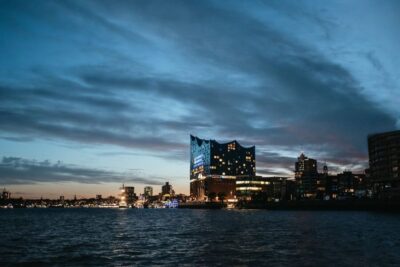


Browse the lists this tour appears in