
Review · HAMBURG TOURS
Hamburg: Private Tour Down Town around City Hall
Hamburg’s past is hiding in plain sight here. In two hours, you connect the Great Fire of 1842, the city’s first harbor basin from 1189, the old pneumatic post, and Germany’s huge underground bunker system with streets you might otherwise pass without a thought. The bunker story is the surprise, while Chilehaus gives you a sharp change of pace with its striking modern design.
I like the way the tour links old Hamburg to the commercial city you see today, especially through Mönckebergstraße and the Kontorhausviertel. I also like the private format, which lets you stay with your own group of up to 15 people and choose from English, German, French, or Spanish. The main consideration is time: two hours covers a lot, so this is a brisk overview rather than a slow visit inside every church or building.
Key points at a glance
- Hamburg’s Great Fire of 1842: Learn how four days of fire changed the old town and pushed Hamburg toward a modern commercial center.
- More than 700 bunkers: Hear about the city’s unusual underground defense network, one of the tour’s most unexpected subjects.
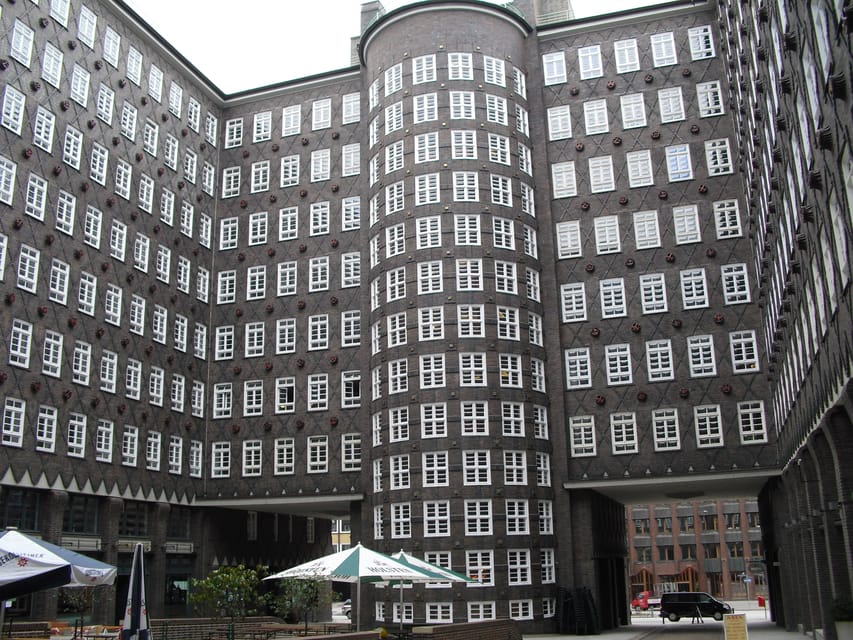
- Chilehaus and the Kontorhausviertel: See the angular office architecture that replaced much of the earlier half-timbered city.
- Mönckebergstraße, or Mö: Walk Hamburg’s famous shopping street and learn how it fits into the city’s changing identity.
- Private groups up to 15: Keep the tour focused on your own party, with guides available in four languages.
- A central old-town route: Finish near Hamburg City Hall after passing churches, bridges, the Africa House, and St. Nicholas’ Church.
Why Hamburg’s old town makes a good two-hour walk
This tour works because Hamburg’s center is not just a collection of postcard buildings. It is a record of disasters, trade, rebuilding, and changing technology. You begin around Hamburg Central Station or the stated meeting point for your booking, then move through the central streets toward City Hall.
The route is compact but full of contrasts. Mönckebergstraße is a busy modern shopping street. A few minutes later, you are looking at medieval church foundations, merchant buildings, memorials, and the sharp prow of Chilehaus. The walk then turns toward the old harbor area, where bridges and surviving landmarks help explain how Hamburg grew as a Hanseatic city.
I would choose this tour early in a Hamburg visit if I wanted to get my bearings quickly. It gives you names, dates, and visual clues that make later independent walks more meaningful. You will not get a long interior visit at each stop, but you will come away with a useful map of the old town and the main forces that shaped it.
A few more Hamburg half-days to weigh up
- Hamburg: Sex and Crime in St. Pauli Tour for Ages 18+
★ 4.7 · 15,447 reviews - Hamburg: 1.5-Hour Harbor and Speicherstadt Day Cruise
★ 4.6 · 14,200 reviews - Hamburg: 90-Minute Evening Lights Harbor Cruise
★ 4.5 · 7,728 reviews
Mönckebergstraße and the city’s modern commercial face
Mönckebergstraße, known locally as Mö, is one of Hamburg’s best-known shopping streets. It is not an old-world lane, and that is exactly why it belongs on a historical tour. The street shows how Hamburg shifted from narrow passages and half-timbered houses to a more open, commercial urban center.
Your guide spends about 10 minutes here, enough to place the street in the story without turning the tour into a shopping trip. Look around as you walk. The stores and broad route represent the later city, while the older churches and merchant quarter ahead show what came before.
I find this opening useful because it prevents a common mistake: treating Hamburg as if its historic center survived unchanged. The Great Fire, war damage, redevelopment, and commercial growth all altered the city. The guide’s job is to help you read those changes rather than simply point at attractive buildings.
St. James’ Church and the old religious center
The route continues to St. James’ Church, where the guide gives a 10-minute explanation. This stop adds a quieter note after the shopping street and gives you a sense of the religious institutions that helped anchor old Hamburg.
The tour data does not promise a lengthy interior visit, so plan on a guided look and historical explanation rather than a full church tour. That matters if you are hoping to study artwork, architecture, or details inside the building. The value here is the connection between the church and the surrounding old town.
Your guide may also use this point to explain how Hamburg’s earlier street pattern differed from the commercial city built later. Keep your eyes on the relationship between the church, the surrounding streets, and the larger route. This is a walking history lesson, not a series of unrelated photo stops.
Kontorhausviertel and the sharp lines of Chilehaus
The Kontorhausviertel brings you into Hamburg’s office district, where trade and shipping shaped the architecture. The guided stop lasts about 15 minutes, followed by roughly 10 minutes at Chilehaus.
Chilehaus is the visual star of this section. Its imposing, pointed form makes it easy to understand why the building is so memorable. It does not look like a medieval landmark, yet it belongs in the story because it reflects Hamburg’s move toward a modern business city.
I especially like this part of the route for the contrast. Earlier Hamburg is represented by churches, bridges, and the old harbor. Chilehaus speaks for large-scale commerce, office work, and the city’s changing ambitions. You get a useful explanation of why Hamburg stopped looking like a town of narrow lanes and half-timbered houses.
This is also one of the better photo stops. Give yourself a moment to look up and frame the building rather than treating it as a quick tick on a list. The short time allocation means you probably will not explore the whole district at length, but the guide should give you enough context to appreciate what you are seeing.
Same city, a completely different sort of afternoon:
- Hamburg: 2-Hour XXL Port of Hamburg Cruise Tour
★ 4.7 · 6,979 reviews - Hamburg: Line A Sightseeing Hop-On Hop-Off Bus Tour
★ 4.6 · 6,958 reviews - Hamburg: Elbphilharmonie Plaza Guided Tour
★ 4.7 · 5,882 reviews - Hamburg: Hamburg Dungeon Admission Ticket
★ 4.7 · 5,745 reviews
Africa House and St. Nicholas’ Church
The route continues through Reichenstraßen toward Africa House and St. Nicholas’ Church. These stops add two different subjects: Hamburg’s worldwide commercial connections and the damage left by war and urban disaster.
Africa House offers a small moment of wanderlust within the old town route. Its name points to Hamburg’s international trading links and the city’s long relationship with overseas commerce. The available information does not specify an interior visit, so expect to learn about the building and its place in Hamburg’s story from the street.
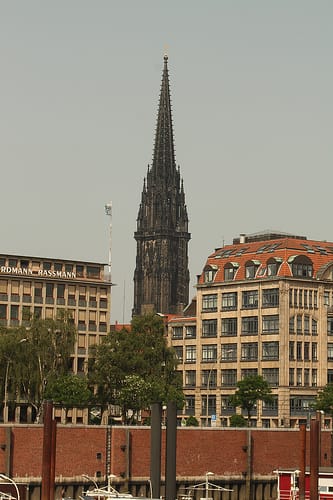
St. Nicholas’ Church is another major historical marker. The tour includes a 15-minute guided stop in this area. Its ruins and surviving structure are closely tied to Hamburg’s wartime past, making it one of the places where the city’s twentieth-century story becomes especially visible.
I would listen closely here, because this part of the tour may feel less polished than the City Hall and Chilehaus sections. That is part of its value. Hamburg’s history includes destruction as well as trade and architecture, and St. Nicholas’ Church helps keep the tour from becoming a simple parade of handsome façades.
The first harbor basin and Hamburg’s trading identity
The old harbor story gives the tour an early starting point. Hamburg’s first harbor basin was inaugurated in 1189, a date that helps explain why the city became such an important Hanseatic center.
You may not be standing at a preserved medieval dock in the form you imagine. Instead, the guide uses the route and surviving urban clues to explain how water, trade, and Hamburg’s position in northern Germany shaped the city. This is the sort of information that can be hard to pick up from a guidebook while walking alone.
The harbor connection also helps tie together the Africa House, Kontorhausviertel, and City Hall. Hamburg was not simply a city with a port nearby. Its public buildings, commercial offices, streets, and wealth grew from international trade. That larger picture is one of the strongest reasons to take a guided walk rather than only visit the headline sights.
Hamburg’s Great Fire and the city rebuilt
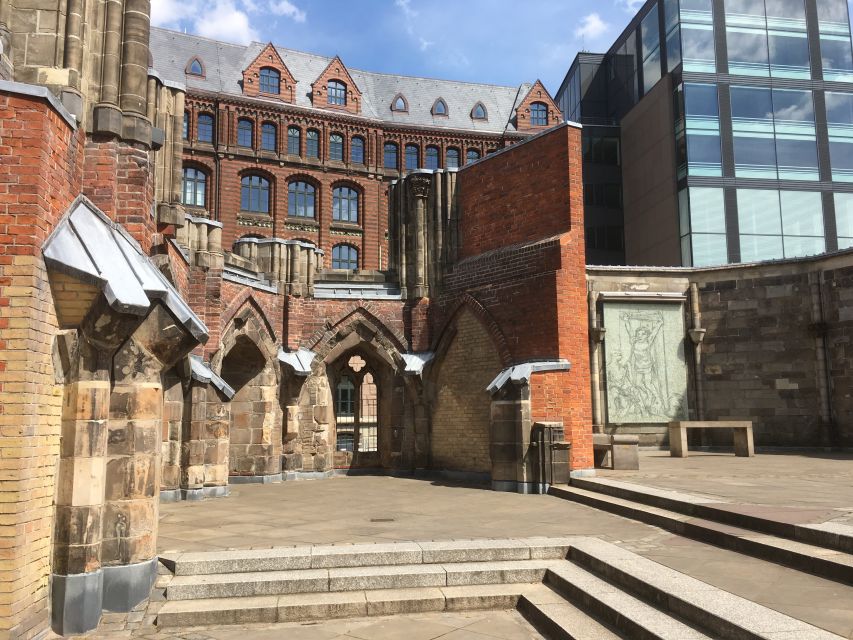
One of the tour’s most useful historical subjects is the Great Fire of 1842. The fire raged for four days and destroyed large parts of the old town. That single event helps explain why central Hamburg can feel less medieval than you might expect from a Hanseatic city.
The important point is not just the destruction. The fire gave Hamburg a reason to rebuild, widen streets, replace older structures, and change its appearance quickly. The tour explains how the city moved from narrow streets and passageways lined with half-timbered houses toward a modern commercial center.
I like this cause-and-effect approach. Instead of memorizing an isolated date, you see why the city looks the way it does. It also makes the later architecture around Mönckebergstraße and the Kontorhausviertel easier to understand.
The bunker system and the pneumatic post
The tour adds two unusual subjects that make it more than a standard old-town walk. First comes Hamburg’s underground bunker system, described as the largest in Germany, with more than 700 bunkers. You will learn about this exceptional network, though the tour does not say that you enter a bunker.
That distinction is important. If you expect an underground bunker visit, confirm the exact plan before booking. The appeal here is the historical explanation and the way it adds another layer to streets that appear ordinary from above.
The pneumatic post is another fine detail. Hamburg’s first pneumatic post went into operation on October 24, 1864. It is a reminder that the city’s commercial life depended not only on ships and offices, but also on fast communication.
These details are exactly what I want from a city walk. They are specific, memorable, and tied to Hamburg’s role as a trading center. You will probably remember the date and the bunker count long after you forget a generic description of a square.
Trostbrücke and the approach to City Hall
Trostbrücke is one of the final major stops, with about 10 minutes for a guided explanation. The bridge brings the route back to Hamburg’s older urban fabric and gives you a chance to connect the historic districts on either side.
The name and setting invite a pause, especially after the heavier subjects of fire, war, and bunkers. You can look back at the route and see how the city’s waterways and bridges shaped movement through the old center.
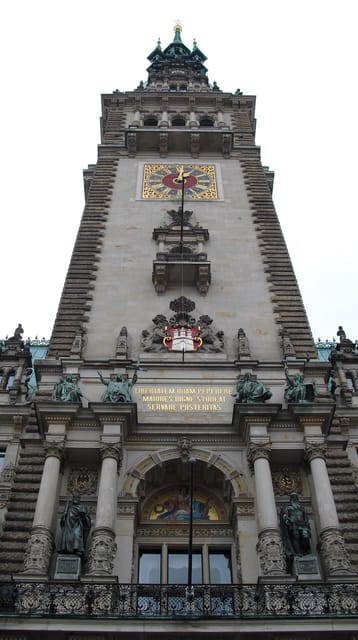
From there, the tour reaches Hamburg City Hall, where the guided stop lasts about 15 minutes. City Hall is the natural finale: grand, civic, and closely tied to Hamburg’s identity as a self-governing Hanseatic city. The walk ends at or near the Rathaus, depending on the booking option.
Do not expect a long formal tour of every room inside City Hall. The stated experience is a city tour, and the itinerary gives you a guided stop rather than a full interior program. Still, finishing here works well because you have just seen the city’s commercial, religious, architectural, and civic sides.
How the two-hour pace feels
Two hours is enough to cover the route, but it is not enough for long stops at every church, building, and bridge. You should expect a steady walk with short explanations, including stops of about 5 to 15 minutes.
That pace suits you if you like a broad introduction and want to continue exploring on your own afterward. It may feel hurried if your priority is detailed architectural study or extended time inside churches. The private format helps, since your guide can focus on your group rather than managing a large mixed crowd.
The route begins at one of two possible starting options listed as StadtRAD, with the exact meeting point depending on the option booked. The route information also refers to Hamburg Central Station, so check the confirmed meeting instructions carefully before setting out. Drop-off is listed at Hamburg City Hall, with two possible end-point listings.
Private group value at $294
The price is $294 for a private group of up to 15 people. For a full group, that works out to about $19.60 per person, which is reasonable for a private two-hour tour in a major German city. For only two or three people, the per-person price becomes much higher.
I see the best value for families, friends, or a cruise group that can share the cost. You are paying for a dedicated guide, not just access to a fixed route. That can be useful when you want explanations in English, German, French, or Spanish, or when your group has a particular interest in Hamburg’s fire, trade, architecture, or wartime past.
The price does not include a meal, transport, or a listed attraction ticket. The included services are the professional guide and the city tour. I would choose it for the interpretation, route planning, and private attention rather than for admission to interiors.
Which guide style should you expect?
The available guide names include Birgit, Jörn Löding, and Frau Stange. The strongest pattern in the feedback is clear: visitors appreciated guides who were prepared, funny, open-minded, and able to connect Hamburg’s past with its present.
One visitor specifically found Birgit humorous and engaging throughout the walk. Jörn Löding was praised for guiding a group through the old town with strong factual knowledge, while Frau Stange was noted for linking history to modern Hamburg. Those comments suggest that the quality of the experience depends heavily on the person leading your group.
That is normal for a private walking tour. The route is fixed enough to be coherent, but the guide’s storytelling shapes the experience. If you have a special interest, tell the provider when requesting a time or booking. Alternative tour times can be requested through GetYourGuide, which may help with a tight Hamburg schedule.
Who should book this Hamburg walk?
I would book this tour if you want a fast, human explanation of central Hamburg before exploring alone. It suits first-time visitors, history-minded families, and small groups who want to share a guide rather than follow a large scheduled party.
It is also a good choice if you enjoy details that do not appear on the standard sightseeing list. The pneumatic post, the bunker network, and the Great Fire give the walk real substance. You are not only looking at City Hall and taking photographs.
I would hesitate if you want a museum-heavy experience, a dedicated bunker visit, or long interior time at churches and City Hall. The tour is outdoors and route-focused, with many brief stops. You should also compare the $294 group price against the size of your party before booking.
Should you book it?
Book this private Hamburg tour if you want the old town to make sense quickly. Its strongest feature is the way it connects the Great Fire, Hanseatic trade, modern office architecture, underground bunkers, and civic Hamburg in one compact walk.
The best value comes with a larger group, especially one that can use the guide’s language options and share the cost. Choose it for context, local stories, and a well-planned route. Skip it if you prefer to linger at one building or need a true underground tour. For a two-hour introduction centered on City Hall, the old town, and Hamburg’s changing face, it is a practical choice with plenty to remember.
FAQ
How long does the Hamburg private tour last?
The tour lasts two hours.
How much does the tour cost?
The price is $294 per private group of up to 15 people.
Is this a private tour?
Yes. The experience is offered as a private group tour.
Which languages are available?
The live guide is available in English, Spanish, French, and German.
Where does the tour start?
The meeting point may vary depending on the option you book. The listed starting options are StadtRAD, and the route information also refers to Hamburg Central Station.
Where does the tour finish?
The tour finishes at Hamburg City Hall, also called Hamburger Rathaus. Two possible drop-off listings are provided.
Does the tour visit Chilehaus?
Yes. Chilehaus is included, with about 10 minutes of guided time.
Does the tour include Mönckebergstraße?
Yes. The tour includes a guided visit to Mönckebergstraße, known locally as Mö.
Will I learn about Hamburg’s bunker system?
Yes. The guide explains Hamburg’s underground bunker system, described as containing more than 700 bunkers. The provided information does not state that you enter a bunker.
Can I request a different tour time?
Yes. Alternative tour times may be requested through GetYourGuide.
Just added around Hamburg
- Winter Alster tour★ 4.0 · 12 reviews
- World War 2 Hamburg Private Guided Tour★ 5.0 · 6 reviews
- UNESCO World Heritage – Speicherstadt and Kontorhaus district★ 4.5 · 12 reviews
- Ticket for the Emigration Museum BallinStadt Hamburg★ 4.0 · 57 reviews
- hamburg Experienced differently with wish rental bike relaxed enjoy★ 5.0 · 5 reviews
- Hamburg Private Food Tours with a Local: 100% Personalized★ 5.0 · 3 reviews
- The Beatles in Hamburg – Private Tour★ 5.0 · 16 reviews
- The Beatles on St. Pauli★ 5.0 · 3 reviews
Hamburg Tours, compared.
1.5-Hour Harbor and Speicherstadt Day Cruise
Read our review →

Browse the lists this tour appears in