Review · HAMBURG TOURS
Hamburg Private Guided Tour (walking)
Hamburg makes the most sense on foot, where grand civic buildings, old brick warehouses, harbor views, and modern architecture sit within a fairly compact central area. This private tour ties those pieces together with a local guide, rather than leaving you to guess how the port shaped the city.
I like the one-group format, which lets guides such as Alex, Maureen, Jutta, or George adjust the pace and answer your questions. I also like the range of sights, from the gold-and-marble interior of St. Michael’s Church to the stark remains of St. Nikolai and the bold Elbe Philharmonic Hall. The main drawback is simple: three hours can mean plenty of walking, and cold rain or strong wind can make Hamburg feel tougher than it looks on a map.
Key points to know before booking
- Private group of up to nine: You get your own English-speaking local guide rather than joining a large crowd.
- Hamburg’s story in one walk: The route connects the Town Hall, old merchant streets, Speicherstadt, the harbor, HafenCity, and St. Nikolai.
- Flexible pacing: Guides can reduce the mileage or adjust the plan if someone struggles with the walking.
- Free sightseeing: The listed stops do not require admission fees, though food, drinks, taxis, and hotel transfers are extra.
- Three hours well spent: This works best as a first look at central Hamburg, not as a detailed museum tour.
- Weather matters: Hamburg can be windy and rainy, so bring a waterproof layer and comfortable shoes.
Why this private Hamburg walk works
Hamburg is not one single postcard scene. It is a port city, a commercial center, a damaged war city, and a modern design showcase all at once. A good walking tour helps you see how those layers connect.
This experience covers that range in about three hours. You might begin at Hamburg Town Hall, listed as the starting point at Rathaus, and finish near St. Michael’s Church. The route can also end elsewhere by arrangement, which is useful if you want to continue toward a restaurant, hotel, or another part of the center.
The private setup is the biggest advantage. With a maximum of nine people, you can ask for more history, more architecture, or more practical help getting around. George, for example, adjusted one tour around the guest’s interests and helped with ticketing and the route back to the hotel. That sort of assistance can be more useful than another five minutes at a monument.
The guides also appear to take the human side of the tour seriously. Maureen waited when a group had trouble finding the meeting place and changed the plan when some people could not keep up. That flexibility is important here because the advertised route covers a lot of ground.
More walking tours in Hamburg:
- Hamburg: Guided Walking Tour for Magic Fans
★ 4.8 · 1,992 reviews - Reeperbahn Walking Tour with St. Pauli Local
★ 4.8 · 577 reviews - Hamburg: Speicherstadt Walking Tour with Coffee Tasting
★ 4.6 · 360 reviews
St. Michael’s Church and Hamburg from above
St. Michael’s Church, known locally as Michel, is one of Hamburg’s major landmarks. The current Baroque church dates to 1763 and is described as Hamburg’s first Protestant church. Inside, expect a grand setting with plenty of marble and gold rather than a plain northern European church interior.
The church is a good starting point for Hamburg’s religious and civic story. It also provides fine views over the city and toward the Alster River. The supplied tour details do not specify a separate tower admission or promise a tower visit, so you should ask your guide what viewpoint is included on your date.
The listed church stop is about 15 minutes, which is enough for an introduction and a look inside, but not a long architectural study. If church interiors are a major interest, tell your guide early. A private tour gives you a better chance of adjusting the time than a fixed group excursion.
St. Michael’s is also near the Portuguese Quarter, an area known for restaurants and bars. That makes the church a practical place to end the walk if you want lunch or dinner afterward. Ask your guide for suggestions before you part ways.
Speicherstadt’s red-brick warehouses
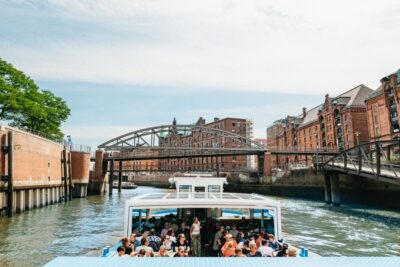
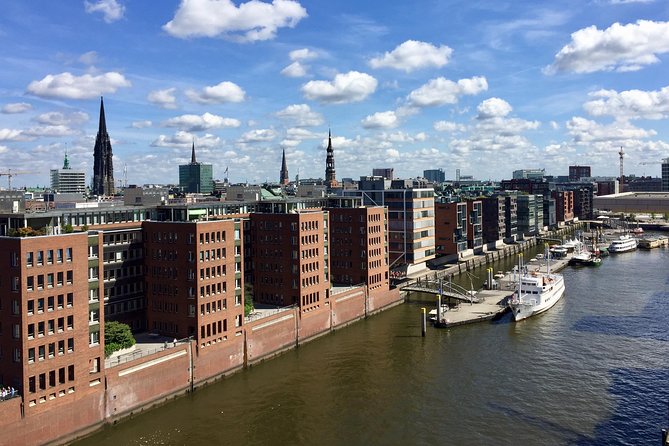
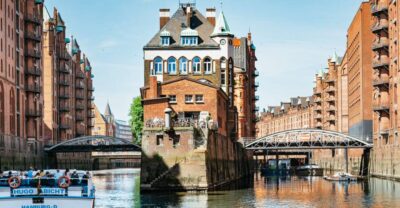
Speicherstadt is one of Hamburg’s most recognizable areas. Its red-brick warehouses were built beginning in 1888 to store goods such as coffee, tea, cocoa, spices, and tobacco. The architecture is handsome, but the more interesting point is what it tells you about Hamburg’s commercial life.
These buildings were designed for trade and storage, not homes. Their scale shows how important imported goods were to the city, and the canals and warehouse blocks make clear how closely Hamburg’s business district was tied to the water.
The scheduled look at Speicherstadt is about 10 minutes. That is enough to see the brick facades and hear the basic story, but it is brief. You will not get an extended warehouse walk or a dedicated museum visit as part of the stated program. If you want photographs, use the private format to ask for a few extra minutes here.
Speicherstadt is especially valuable when paired with HafenCity. The old warehouses show Hamburg’s trading past, while HafenCity shows how the city is reshaping its waterfront today.
Hamburg Town Hall and the city lake
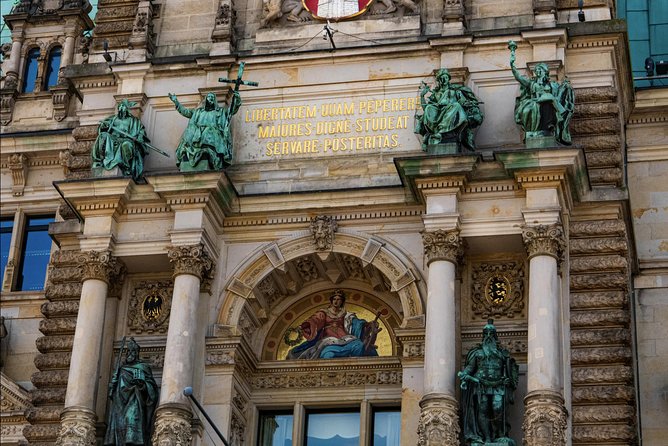
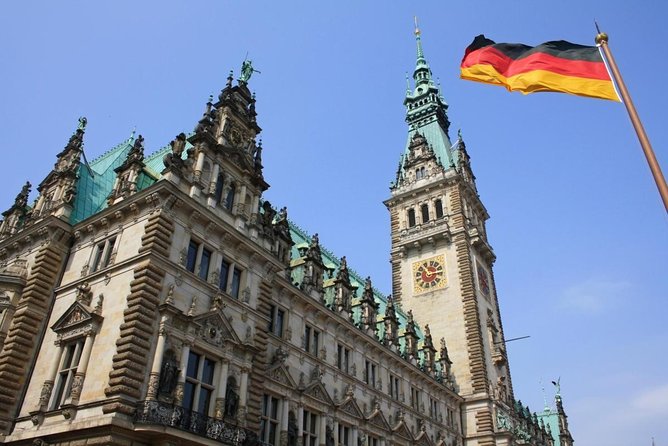
Hamburg Town Hall is a grand Neo-Renaissance building completed in 1897. Its ornate exterior reflects the city’s wealth and civic pride, and the building makes a strong contrast with the plain industrial character of the port districts.
The planned stop is about 10 minutes. That gives you time to inspect the facade and hear about Hamburg’s government and commercial power. The tour information does not promise an interior visit, so treat this as an exterior stop unless your guide says otherwise.
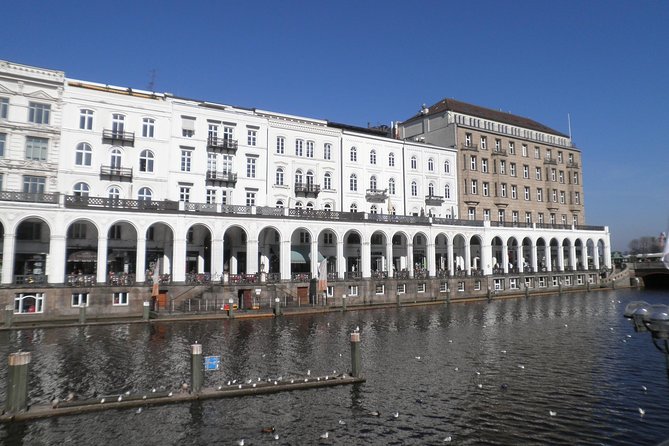
From the Town Hall, the walk connects with the central parts of Hamburg. The city’s Alster lake sits right in the middle of town, an unusual feature for a major port city. It gives the center a different feel from the industrial waterfront, with open water breaking up the streets and monumental buildings.
The route also covers the connection between the Town Hall and the central station. This is useful orientation if you are arriving by train or staying near the station. You get a clearer sense of how Hamburg’s old civic center links to its main transport hub.
A few more Hamburg half-days to weigh up
- Hamburg: Sex and Crime in St. Pauli Tour for Ages 18+
★ 4.7 · 15,447 reviews - Hamburg: 1.5-Hour Harbor and Speicherstadt Day Cruise
★ 4.6 · 14,200 reviews - Hamburg: 90-Minute Evening Lights Harbor Cruise
★ 4.5 · 7,728 reviews - Hamburg: 2-Hour XXL Port of Hamburg Cruise Tour
★ 4.7 · 6,979 reviews
Deichstrasse and the older Hamburg
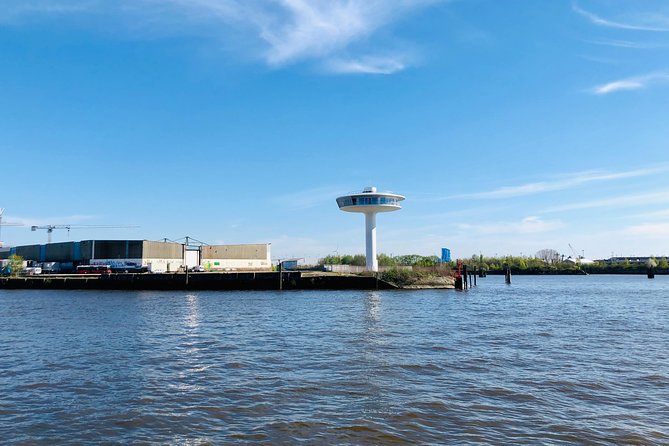
Deichstrasse offers a short but important look at older Hamburg. Its houses date from the 17th century, and the street helps you picture the city before modern redevelopment reshaped large parts of the center.
The listed stop is only about five minutes. That may sound brief, but Deichstrasse works as a compact visual pause between the Town Hall area and the port districts. The narrow historic setting gives you something different from the broad civic spaces and large warehouse blocks elsewhere on the route.
The tour also includes Hamburg’s port story. Hamburg is described here as Europe’s third-largest port and the only port in a city located 104 kilometers from the open sea. That distance is a useful reminder that the port is not simply an oceanfront harbor. Its position farther inland is part of what makes the city’s waterways and trade network so important.
Your guide can connect the port to the city streets you are walking through. That context is one of the strongest reasons to choose a guided walk instead of simply checking off buildings.
HafenCity and the Elbe Philharmonic Hall
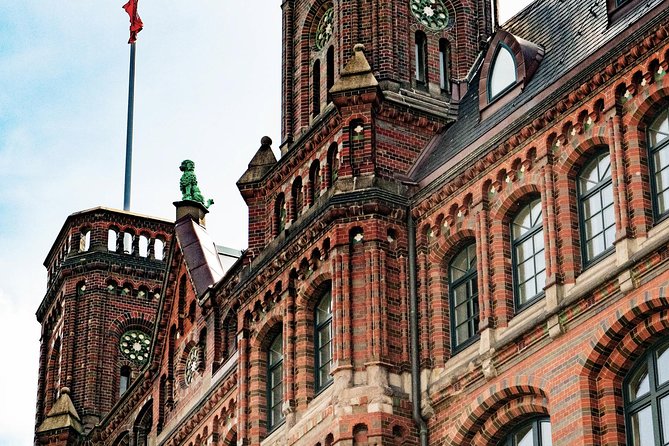
HafenCity is Hamburg’s major urban planning project, built around state-of-the-art architecture and the redevelopment of former port areas. The district gives you a close look at how a working harbor city tries to create new neighborhoods without losing its connection to trade and water.
Architecture fans will get the most from this section. The old red brick of Speicherstadt and the newer forms of HafenCity make an easy before-and-after comparison. You can see two different ideas of Hamburg within a short walk.
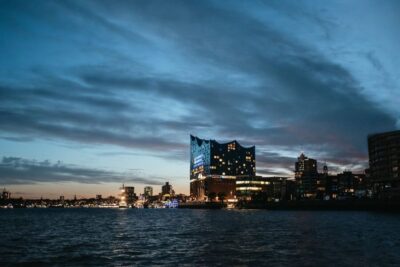
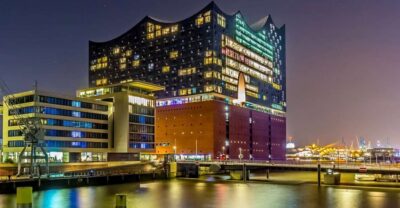
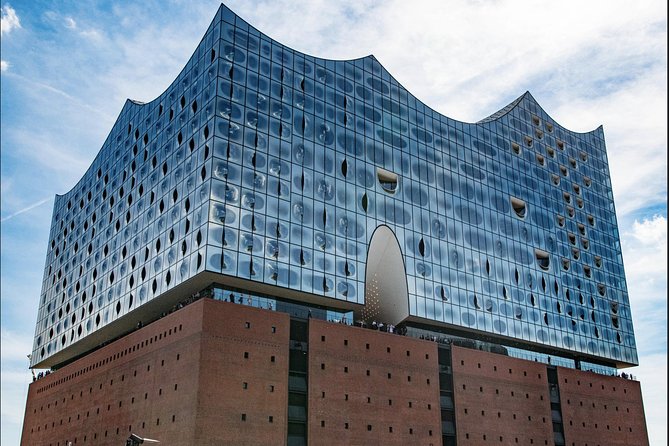
The Elbe Philharmonic Hall is the district’s modern landmark. It opened in 2016 and has become one of Hamburg’s defining buildings. The tour provides an outside look, but you should not expect to enter the concert hall or see the performance spaces.
That limitation is worth knowing before you book. If you have a concert ticket, ask whether the route can finish nearby or help you orient yourself. Otherwise, the building still works well as an exterior stop, particularly when your guide explains its place in Hamburg’s wider waterfront plans.
HafenCity can also be a good place to pause for food or a drink, but neither is included. The tour price covers guiding only.
St. Nikolai, war memory, and the Portuguese Quarter
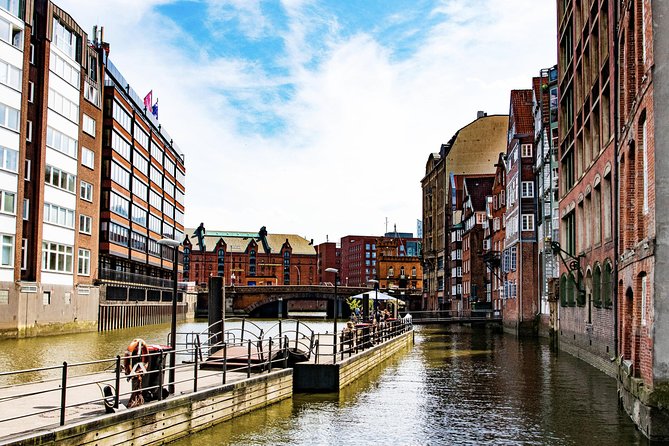
The Mahnmal St. Nikolai is a World War II memorial. The site adds a serious note to the walk and helps explain the destruction Hamburg suffered during the war. At roughly five minutes, this is a short stop, but it gives the city tour emotional weight beyond architecture and trade.
I would not rush past it. The memorial is one of the places where Hamburg’s modern appearance becomes easier to understand. Ask your guide how the wartime damage changed the city if that subject matters to you.
The walk also reaches the Portuguese Quarter, an area with many restaurants and bars. It is a useful contrast to the formal Town Hall and the industrial warehouses. You can finish the tour with a meal nearby, though you will pay for food and drinks separately.
Because the tour ends at Michaeliskirche by default, the exact relationship between the Portuguese Quarter, St. Michael’s, and the final stopping point may depend on the guide’s route that day. The provider says the ending can be changed to suit the group, so make your preference clear at the start.
What the three-hour pace feels like
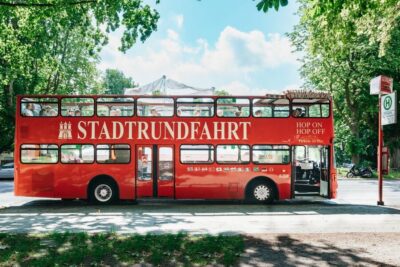
This is a walking tour, not a hop-on, hop-off sightseeing ride. You should expect a steady pace through central Hamburg, with several brief stops and explanations along the way.
One person described the pace as reasonable and said the route covered most of downtown. Another group needed a slower plan, and the guide changed the tour to match. That tells you what the private format can and cannot do: it can adapt, but the city itself still requires movement between districts.
If walking is difficult, tell the provider before the tour begins. The tour notes say a taxi can be ordered on the spot, with payment made directly to the taxi driver. Private transportation is not included.
Wear comfortable shoes with good grip. Hamburg weather can change quickly, and the wind can be strong. The tour operates in all weather, so a rain jacket is more useful than an umbrella that may turn inside out along the waterfront.
Most people can take part, and service animals are allowed. The tour is near public transportation, but hotel pickup and drop-off are not included. The listed meeting point is Rathaus in central Hamburg, with the usual end at Michaeliskirche.
Price and value for a group of nine
The price is $390.08 per group of up to nine people. That is a significant amount for a three-hour walk if you are traveling alone or as a couple. For a full group, however, the cost works out to about $43 per person, which is more reasonable for a private English-language guide.
The value comes from the access to a person, not from included tickets. The listed sights have no admission charge, and food, drinks, taxis, and transfers are extra. You are paying for local interpretation, route planning, flexibility, and the ability to shape the conversation around your group.
For a family or group of friends, this can compare well with several smaller paid attractions, especially if you want an orientation on your first day. Solo visitors and couples should think harder about the cost. A shared city walk could be cheaper, though it would not offer the same control over pace and focus.
The current record is five out of five from 21 ratings, with 100 percent recommending the experience. That is a small sample, so I would treat it as encouraging rather than final proof. The praise consistently centers on the guides’ warmth, clear explanations, humor, and willingness to adjust the route.
Who should book this walk
I would choose this tour if you are visiting Hamburg for the first time and want the main downtown areas explained in one sitting. It suits families, small groups, cruise or rail visitors, and anyone who prefers asking direct questions rather than listening through headphones.
It is also a good fit if history and architecture matter to you. You get Baroque church design, Neo-Renaissance civic architecture, 17th-century houses, red-brick warehouses, war memory, port history, and current waterfront construction.
You may want another option if you dislike walking, need long indoor stops, or want extensive access to the Elbe Philharmonic Hall. The concert hall interior is not part of the stated experience, and the tour moves through many districts in only three hours.
Free cancellation is available up to 24 hours before the start time. Changes or cancellations inside that window are not accepted, so check your schedule before the final day.
Should you book it?
Book this Hamburg private tour if you want a flexible introduction led by a person who can connect the city’s port, past, and present. The strongest reasons are the small private group, the broad route, and the guides’ proven ability to slow down, change the focus, or help with onward plans.
I would book it for a group of four to nine, especially on a first visit. For a couple, the price is harder to justify unless you place a high value on private guiding. Either way, bring sturdy shoes, a waterproof layer, and a willingness to walk through changing weather. Hamburg rewards that effort.
FAQ
How long is the Hamburg private guided tour?
The tour lasts approximately three hours.
How many people can join the private tour?
A maximum of nine people can be included in one booking.
What language is the tour offered in?
The tour is offered in English.
Where does the tour start and end?
The listed starting point is Rathaus in Hamburg. The usual end point is Michaeliskirche, and the tour can end elsewhere according to the group’s wishes.
Are food, drinks, or transportation included?
No. Food and drinks are not included, and the tour does not include private transportation or hotel pickup and drop-off. If needed, a taxi can be ordered during the tour, with payment made directly to the taxi driver.
What happens if the weather is bad?
The tour operates in all weather conditions. Hamburg can be windy, and the weather may change quickly, so dress appropriately.
Just added around Hamburg
- Winter Alster tour★ 4.0 · 12 reviews
- World War 2 Hamburg Private Guided Tour★ 5.0 · 6 reviews
- UNESCO World Heritage – Speicherstadt and Kontorhaus district★ 4.5 · 12 reviews
- Ticket for the Emigration Museum BallinStadt Hamburg★ 4.0 · 57 reviews
- hamburg Experienced differently with wish rental bike relaxed enjoy★ 5.0 · 5 reviews
- Hamburg Private Food Tours with a Local: 100% Personalized★ 5.0 · 3 reviews
- The Beatles in Hamburg – Private Tour★ 5.0 · 16 reviews
- The Beatles on St. Pauli★ 5.0 · 3 reviews
Hamburg Tours, compared.
1.5-Hour Harbor and Speicherstadt Day Cruise
Read our review →