
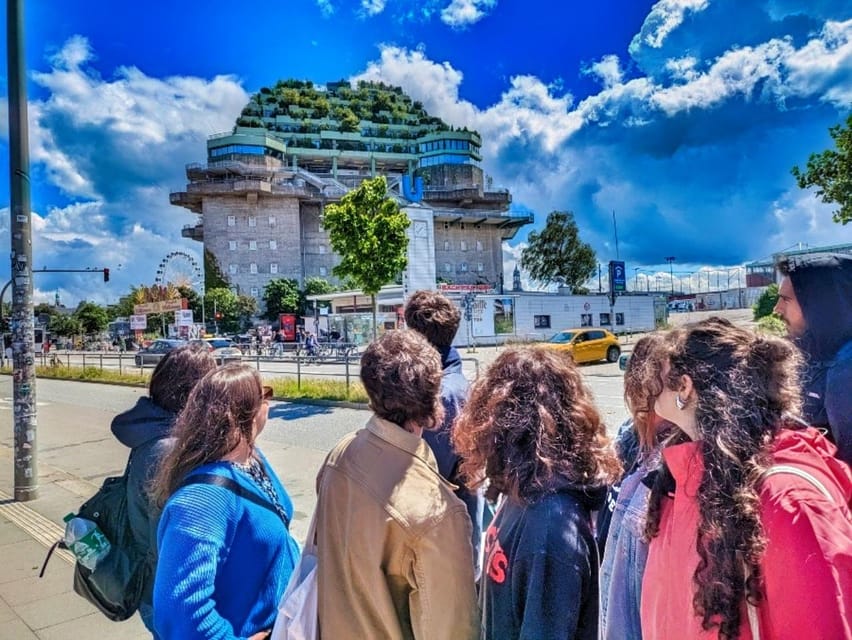
Review · HAMBURG TOURS
Alternative Hamburg / Street Art Private Tour
Hamburg’s alternative side is best understood on foot, where a painted wall can lead to a story about protest, music, football, or a neighborhood fighting to keep its character. This private tour takes you through back streets, creative districts, urban gardens, and repurposed bunkers rather than sticking to the usual harbor circuit.
I like the small private format, which lets your guide adjust the pace and explain works properly. I also like the mix of street art and local politics, from Rote Flora and G20 demonstrations to gentrification and St. Pauli’s community projects. The main consideration is time: two hours gives you a lively introduction, not a full tour of Hamburg’s huge art scene.
Key points at a glance
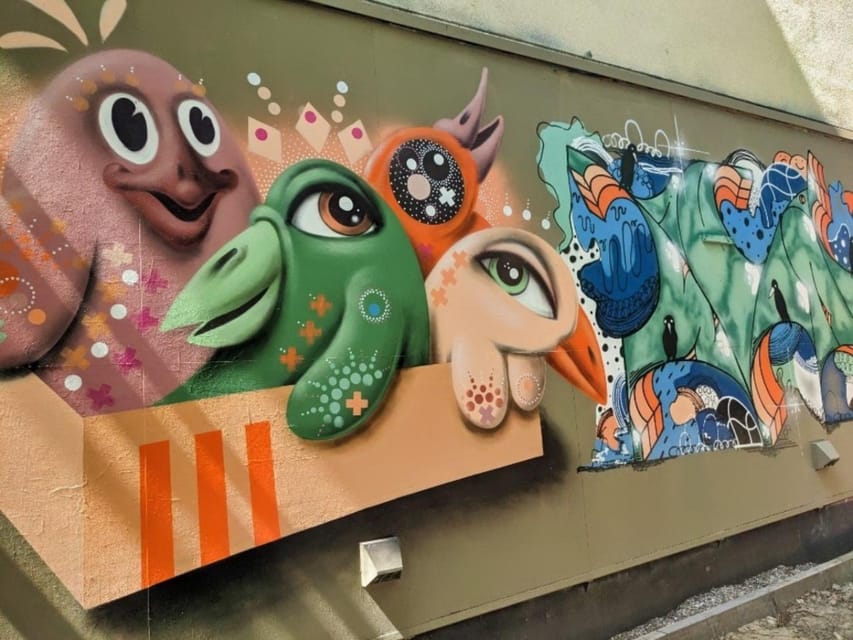
- Street art beyond the postcard route: See graffiti, stencils, murals, and 3D installation art in Hamburg’s alternative districts.
- Rote Flora and protest culture: Learn why this famous building remains tied to Hamburg’s political and community life.
- St. Pauli football influence: Pass near Millerntor Stadium and hear how the club supports local projects, music, and creative work.
- Urban gardens and repurposed bunkers: Visit unusual places where residents and artists have put neglected city spaces to work.
- Private groups up to 15 people: The $235 group price can offer good value for families, school groups, company outings, or friends.
- English or German guiding: Guides such as Adrian bring personal stories, artist background, and strong local enthusiasm to the walk.
Hamburg’s alternative districts, one painted wall at a time
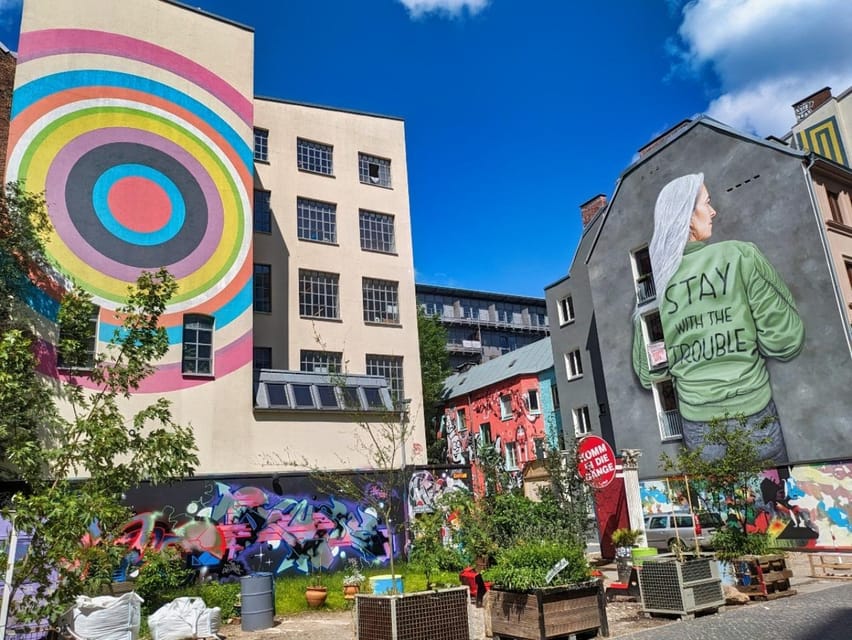
This is not a tour built around a single famous mural. It is a walk through the city’s counterculture, using art as the thread that ties the neighborhoods together.
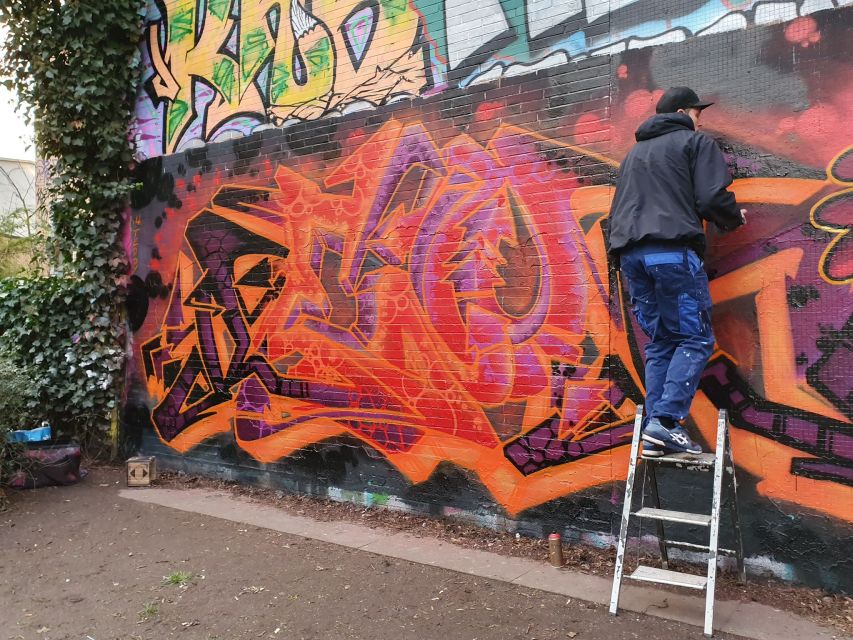
You will see graffiti walls, stencil pieces, large murals, and 3D installations. Some works are decorative. Others are political, temporary, humorous, or linked to a particular artist or local campaign. That variety is important because Hamburg’s street art is not one neat style. It is a living part of the city, changing as buildings are renovated, walls are painted over, and communities respond to new development.
Your guide adds the part you cannot get from a photograph. You will hear stories about local and international artists, the meaning behind selected works, and the personal experiences that connect art to daily life in the district.
The walk also takes you through side streets, parks, bohemian neighborhoods, and creative hubs. These areas may feel less polished than the main center, but that is the point. You get a closer look at the places where artists, community groups, musicians, and residents have shaped the city from the ground up.
More street art walks in Hamburg:
- Berlin: City Street Art Guided Walking Tour
★ 4.8 · 886 reviews - Berlin: 3-Hour Street Art Tour
★ 4.7 · 778 reviews - Dresden: Neustadt District Street Art Guided Walking Tour
★ 4.4 · 267 reviews
Starting at Sternschanze without a wrong turn
The meeting point is by the small square directly opposite the S-Bahn exit at Sternschanze station. This detail matters because Sternschanze has both S-Bahn and U-Bahn exits. You need the S-Bahn exit, not the U-Bahn exit.
After leaving the station, look for a juice stand on your left. Cross the road directly ahead to the paved area with street benches and a small round hut or rotunda. That is the meeting spot.
Give yourself a few extra minutes to get oriented, especially if you are carrying luggage or arriving with a group. The directions are clear once you know which station exit to use, but the two-exit setup could cause a rushed start if you leave it until the last minute.
Sternschanze is a fitting place to begin. The area connects naturally with Karoviertel, St. Pauli, cafes, independent shops, music venues, and street art. You start close to the action instead of spending part of the tour crossing Hamburg from a distant attraction.
Rote Flora, protest, and the arguments behind the paint
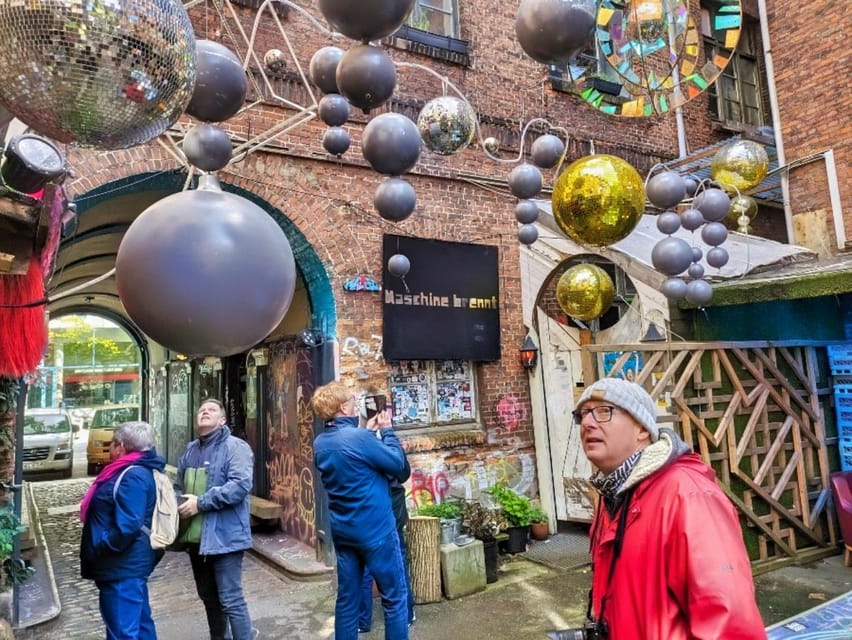
One of the most valuable parts of this walk is the context around Rote Flora. The building is closely linked with Hamburg’s alternative scene and remains a symbol of protest, political debate, and resistance to projects that threaten established communities.
Your guide discusses the history of the site, community demonstrations, gentrification, and the infamous G20 demonstrations. These topics give the art a stronger meaning. A mural or sticker-covered wall is not simply a colorful background. It may reflect anger over housing, opposition to redevelopment, support for a political cause, or pride in a neighborhood’s identity.
The tour does not present Hamburg’s alternative districts as frozen museum pieces. It looks at the pressure they face. As property values rise and buildings change use, residents and creative groups can lose the spaces that made the area attractive in the first place. That tension is central to understanding the city’s street culture.
If you prefer tours that stick to architecture and dates, this section may feel more political than expected. If you want to understand why certain walls matter to local people, it is a major strength.
Karoviertel, cafes, and art in everyday life

The walk continues through the Karoviertel area, known for its cafe culture and independent character. Here, street art is woven into ordinary streets rather than separated into a formal gallery setting.
You might see a mural above a shop, a stencil tucked beside a doorway, or a large piece occupying a wall that would otherwise be blank. The guide helps you notice the smaller details, including the difference between a quick tag, a planned mural, and more elaborate installation work.
This is where the private format earns its keep. With a group of up to 15, you can stop when something catches your eye and ask questions without competing with a large crowd. A private group also makes it easier to keep a family, school class, or company outing together.
The cafe setting gives the tour a useful everyday balance. You are not only hearing about artists and political movements. You are also seeing how creative work fits into a neighborhood where people live, eat, shop, and meet friends.
A few more Hamburg half-days to weigh up
- Hamburg: Sex and Crime in St. Pauli Tour for Ages 18+
★ 4.7 · 15,447 reviews - Hamburg: 1.5-Hour Harbor and Speicherstadt Day Cruise
★ 4.6 · 14,200 reviews - Hamburg: 90-Minute Evening Lights Harbor Cruise
★ 4.5 · 7,728 reviews - Hamburg: 2-Hour XXL Port of Hamburg Cruise Tour
★ 4.7 · 6,979 reviews
Millerntor Stadium and St. Pauli’s community spirit
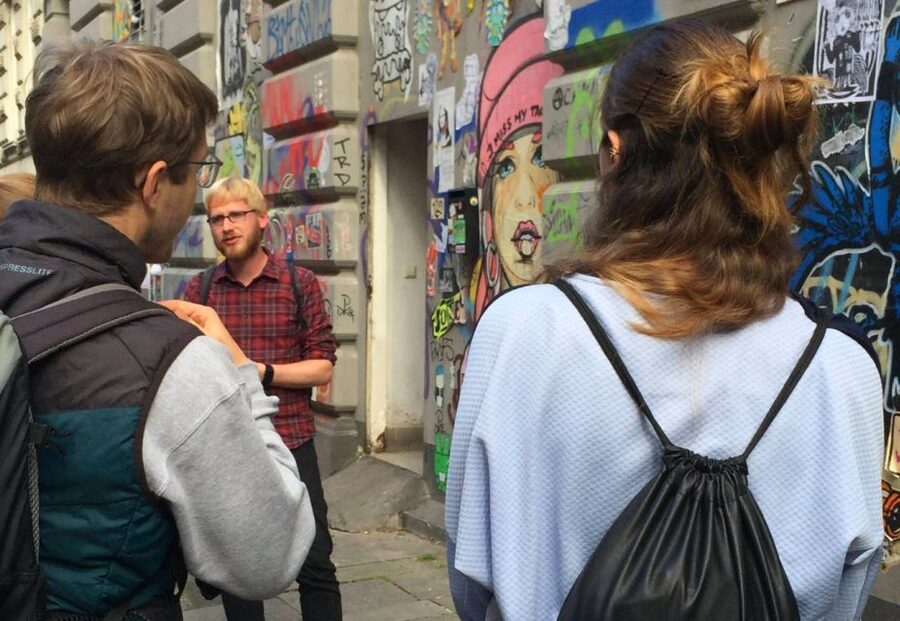
The route passes by Millerntor Stadium, home of FC St. Pauli. The club is presented here not just as a football team, but as an important force in the district’s community life.
You will hear about the club’s support for creative arts and music, along with its influence on community initiatives. That connection helps explain why St. Pauli has such a strong identity. Football, politics, music, local projects, and visual art overlap in ways that are unusual and easy to miss if you only visit the stadium on match day.
The stadium itself is not the main attraction of this tour, so do not book it expecting an interior visit or a football-focused experience. Instead, treat it as one piece of the wider story. The stop shows how a sports institution can help shape the public character of an entire district.
For football fans, this adds extra interest. For everyone else, it offers a useful look at how local pride can support art and social projects beyond the walls of a stadium.
An urban greenhouse beside the city streets
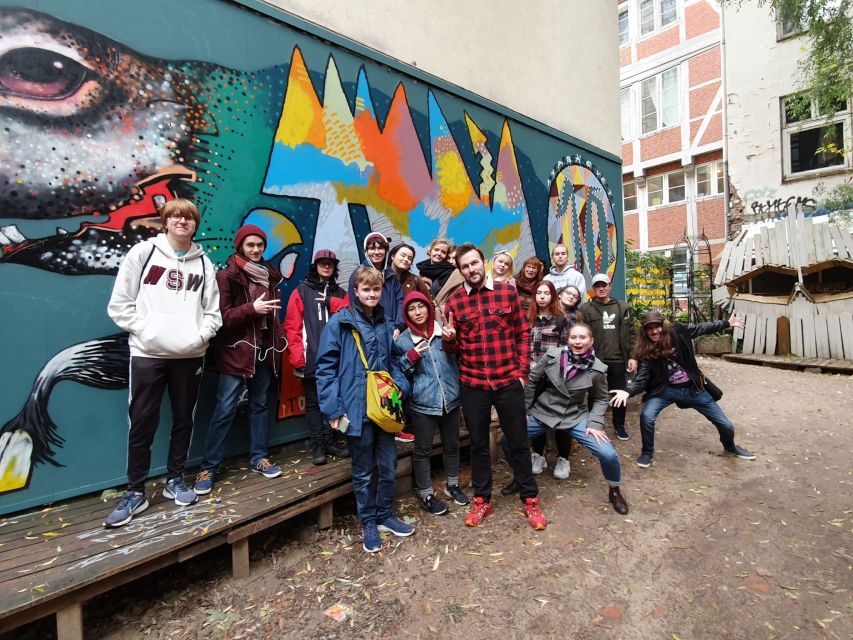
Near the Millerntor and Karoviertel, the tour includes an impressive urban greenhouse project. It is one of the more unusual stops because it shows residents using city space for a practical community purpose.
Urban gardens and green projects often appear in the gaps between buildings, transport routes, and development sites. They can provide a place for people to work together, grow plants, and protect a small patch of shared space. On this tour, the greenhouse forms part of the larger discussion about local control and the fight to keep alternative projects alive.
It also breaks up the visual rhythm of painted walls. After graffiti, murals, and concrete, a growing project gives you another view of creativity in Hamburg. Not every local idea needs to be painted on a wall. Some are built, planted, and maintained.
The supplied information does not promise a gardening workshop or time to participate, so think of this as a guided look at the project rather than a hands-on activity.
Bunkers given a new purpose
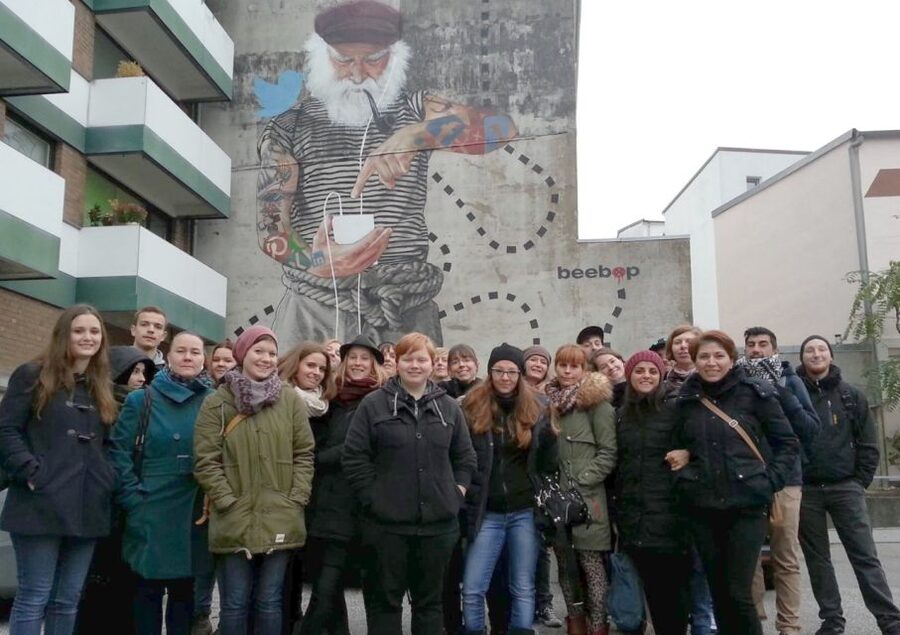
Hamburg’s repurposed World War II bunkers add another layer to the walk. These heavy wartime structures are difficult to ignore, and their newer uses show how cities can adapt buildings with complicated pasts.
The tour visits repurposed bunkers alongside creative hubs and urban gardens. Your guide explains how such places fit into Hamburg’s modern alternative culture. The value is not simply seeing an unusual building. You are considering what happens when a structure built for conflict becomes part of civilian, artistic, or community life.
The exact bunker stops can depend on the route and the guide, so do not expect a full architectural tour of every converted bunker in the city. Still, this part of the walk gives the experience a physical sense of time. Hamburg’s alternative culture is not only painted onto new walls. It also occupies and reworks older spaces.
Meeting artists through their work
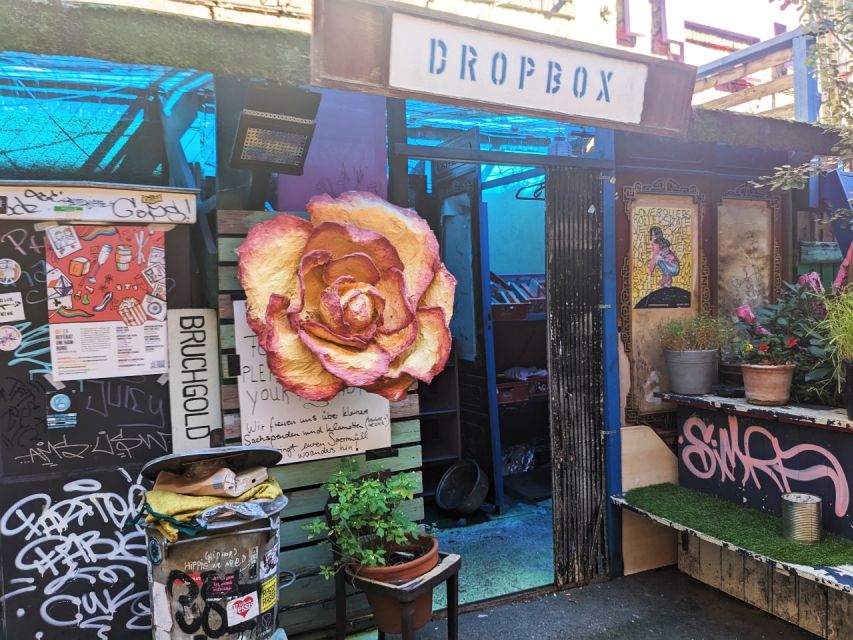
The guide introduces you to local and international graffiti and street artists throughout the walk. That artist focus keeps the tour from becoming only a general neighborhood stroll.
You may encounter bold murals, quick stencil work, layered graffiti, and 3D installations. The styles and scale vary, which makes the walk feel more like a sequence of discoveries than a visit to one fixed collection.
The strongest part is the explanation. You will learn how artists use public walls, how different techniques appear on the street, and why a particular piece has a place in its surroundings. Since street art can disappear without notice, a guide’s account also gives you a way to understand works that may not survive for long.
Bring a camera if you like taking pictures, but do not let the camera become the whole activity. The point is to read the neighborhood as well as photograph it.
What the guide adds to a two-hour walk
The guides are described as fun, engaging, and strongly informed about Hamburg’s art and alternative culture. Adrian is specifically associated with the experience and is known for telling stories and anecdotes that connect artworks with the city’s wider social life.
A good guide matters here more than on a simple sightseeing route. The works do not come with museum labels, and the political background can be complicated. You need someone who can explain without turning the walk into a lecture.
The two-hour length is a sensible introduction. It is long enough to cover several districts and themes, but short enough to fit before lunch, after a harbor visit, or around another Hamburg plan. One guide has also been willing to stay longer for conversation and an informal drink, but you should not treat extra time as guaranteed.
The walk is available in English or German. If you are booking for a mixed-language group, confirm the language you want when arranging the tour.
Is $235 good value for a private group?
The price is $235 for a group of up to 15 people. That works out to about $15.67 per person if the group is full, which is strong value for a private two-hour experience. Even a smaller group may find the cost reasonable if you would otherwise book several places on a shared tour.
The price makes the most sense for:
- Friends who want to explore together without strangers
- Families who prefer a flexible pace
- School excursions needing a focused introduction to urban culture
- Company groups looking for something more local than a standard city walk
- Football or music fans interested in St. Pauli’s wider identity
For one or two people, the total price feels less attractive than a shared walking tour. The benefit is privacy, direct access to the guide, and a route shaped around your group rather than a fixed crowd.
The experience includes a guided tour with an entertaining guide. Drinks, food, and other personal expenses are not listed as included, so plan to pay separately if you stop for anything during or after the walk.
Accessibility, pace, and practical planning
The tour is listed as wheelchair accessible. Since the route includes streets, parks, creative districts, and back streets, it is still wise to discuss any specific mobility needs when booking. The listing confirms accessibility, but it does not provide detailed information about pavement conditions, restroom stops, or seating.
You will be walking for two hours, so comfortable shoes are sensible. Hamburg weather can change quickly, and much of the experience takes place outdoors. A light waterproof layer can make the difference between enjoying the stories and watching the clock.
Starting times vary, so check availability for your chosen date. Free cancellation is available up to 24 hours before the tour for a full refund, and you can reserve now and pay later. Those policies are useful if your Hamburg schedule depends on train times, weather, or a changing group plan.
The tour has an overall rating of 4.7 out of 5 from eight ratings. The strongest praise focuses on the guides’ enthusiasm, stories, artist background, and willingness to engage with questions. One group booked it for a company outing and found the insight into Hamburg’s subculture especially useful. That makes sense: the route offers conversation and context, not just a list of photo stops.
Who should book this Hamburg street art tour?
You should book it if you want to understand why Hamburg’s alternative districts look and feel the way they do. It is especially useful if you have already seen the harbor, city hall, and main shopping streets and now want a more local side of the city.
The tour suits people who enjoy:
- Graffiti, murals, stencils, and installation art
- Urban neighborhoods rather than formal museums
- Music, football, and community culture
- Discussions about protest and gentrification
- Guides who tell personal stories and explain local tensions
Families can book it, although younger children may not care about the political sections or artist background. School and company groups are a natural fit because the private format keeps everyone together and gives the guide room to explain difficult topics.
You may want to skip it if you dislike walking, want a conventional history tour, or have only one free hour in Hamburg. It is also not a replacement for a dedicated football stadium tour, a museum visit, or a full survey of the city’s street art.
Should you book it?
Book this tour if you want Hamburg presented as a city of arguments, creativity, community projects, and changing neighborhoods. The art is the immediate attraction, but the real reward is learning what sits behind it: protest, local pride, redevelopment pressure, music, football, and the effort to hold onto a distinct way of life.
The private price is easiest to justify with a group of friends, family, students, or colleagues. For a full group of 15, it is excellent value. For a couple, compare it with shared alternatives, but choose this one if direct conversation and a flexible private walk matter to you.
Start at the correct Sternschanze exit, wear comfortable shoes, and allow yourself to look beyond the biggest mural. The smaller stencil, the repurposed building, and the community garden may tell you as much about Hamburg as the most photographed wall.
FAQ
How long does the Alternative Hamburg Street Art Private Tour last?
The tour lasts two hours.
How much does the private tour cost?
The price is $235 per group of up to 15 people.
Where is the meeting point?
Meet at the small square directly opposite the S-Bahn exit of Sternschanze station.
Which Sternschanze station exit should I use?
Use the S-Bahn exit, not the U-Bahn exit. After leaving, a juice stand should be on your left. Cross the road to the paved area with benches and a small round hut.
Which languages are available?
The tour is available in English and German.
Is this a private group experience?
Yes. The tour is for a private group, with up to 15 people included in the group price.
Is the tour wheelchair accessible?
Yes, the tour is listed as wheelchair accessible.
What kind of art will I see?
You can expect graffiti, stencil art, murals, and 3D installation art, along with creative hubs and street art in Hamburg’s alternative districts.
Which Hamburg areas and places are included?
The experience includes alternative neighborhoods, back streets, parks, urban gardens, repurposed World War II bunkers, Rote Flora, the Millerntor Stadium area, and Karoviertel.
Can I cancel for a full refund?
Yes. You can cancel up to 24 hours in advance for a full refund. You can also reserve now and pay later.
Just added around Hamburg
- Free Tour: Port, Red Light District and Beatles. You decide how much to pay at the end★ 3.9 · 13 reviews
- Hamburg: Guided Bike Tour★ 4.7 · 71 reviews
- Hamburg: Guided Port Walk for Families★ 4.6 · 191 reviews
- Express-Tour Panik City Udo Lindenberg Multimedia Experience★ 5.0 · 4 reviews
- Hamburg: Elphi Plaza Guided Tour with Störtebeker Beer★ 4.6 · 245 reviews
- Hamburg: Downtown, Alster & Creative Neighborhoods by Bike★ 4.5 · 217 reviews
- Die Kiez-Kapitän Reeperbahn & Beatles Kieztour Hamburg★ 4.9 · 178 reviews
- Die Kiez-Kapitän Hamburger Stadtführung & Speicherstadt Tour★ 4.8 · 37 reviews
Hamburg Tours, compared.
1.5-Hour Harbor and Speicherstadt Day Cruise
Read our review →
Browse the lists this tour appears in