Review · HAMBURG TOURS
World War 2 Hamburg Private Guided Tour
Hamburg’s wartime story is written across the city, not tucked away in one museum. This private tour connects former bunkers, bomb-damage sites, Nazi memorials, Jewish landmarks, and the ruined St. Nikolai church, giving you a much broader picture than a single exhibit can offer. The most striking feature is the range of subjects, from post-World War I hardship to the bombing of Hamburg in 1943 and modern remembrance.
I especially like the private format, which lets you stop and ask questions instead of keeping pace with a large group. I also like the route through Grindel, where the Jewish community’s story includes deportation, Kristallnacht, book burning, the Born Synagogue, and the Talmud Torah School. The main consideration is the five-hour length and moderate physical requirement. The route covers many locations, so it may feel demanding if you prefer a slow, stationary tour.
Key points to know before booking
- Hamburg’s wartime story begins before 1939: The tour covers World War I, hyperinflation, the Treaty of Versailles, antisemitism, and the political breakdown of the 1930s.
- You visit real bunker sites: Feldstraße and Turmbar reveal how heavily Hamburg was built for air-raid protection.
- Grindel receives a full hour: This is the most detailed stop, focused on Hamburg’s Jewish community before, during, and after Nazi rule.
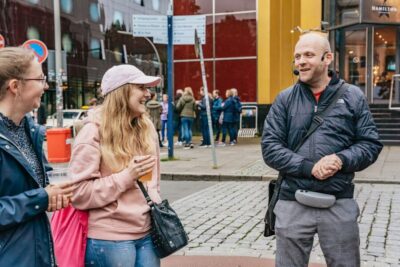
- Private guiding changes the pace: Your group of up to 15 can ask questions and request more attention to particular topics.
- St. Nikolai adds a museum option: The memorial church, museum, and tower elevator offer one of the tour’s clearest links to the 1943 bombing.
- The price works best for a group: At $714.85 for up to 15 people, the cost is easier to justify when shared by family or friends.
Starting at Schleusenbrücke and the road to dictatorship
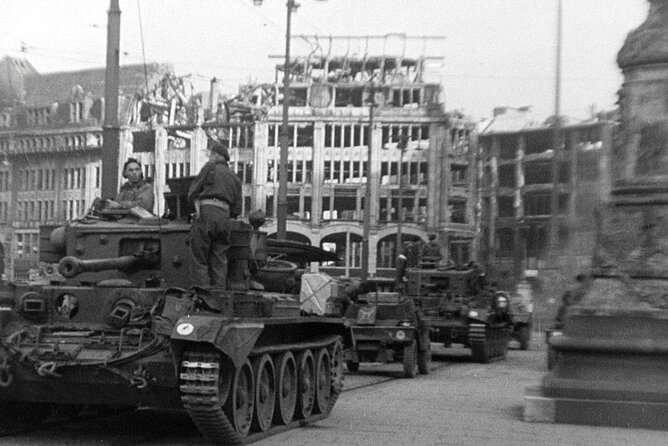
The tour begins at the monument for those killed in both world wars near Schleusenbrücke. That opening matters. Instead of treating World War II as an isolated event, your guide sets it against the years that came before it.
You start with World War I, the Treaty of Versailles, German hyperinflation in the 1920s, and the growth of antisemitism. These subjects explain why public anger and fear became such useful tools for extremist politics. The first stop lasts about 20 minutes, so expect a brisk introduction rather than a full lecture on every part of German history.
At Sievekingplatz, the focus shifts to Hamburg’s courts and political system in the 1930s. In about 15 minutes, you look at how institutions weakened under Nazi rule and why that damage had lasting effects.
I find this opening especially useful if you know the broad outline of World War II but want to understand how ordinary political structures were pulled apart. The tour does not begin with military hardware or battle dates. It begins with the collapse of law, public trust, and democratic safeguards.
A few more Hamburg half-days to weigh up
- Hamburg: Sex and Crime in St. Pauli Tour for Ages 18+
★ 4.7 · 15,447 reviews - Hamburg: 1.5-Hour Harbor and Speicherstadt Day Cruise
★ 4.6 · 14,200 reviews - Hamburg: 90-Minute Evening Lights Harbor Cruise
★ 4.5 · 7,728 reviews
Feldstraße and the practical reality of air raids
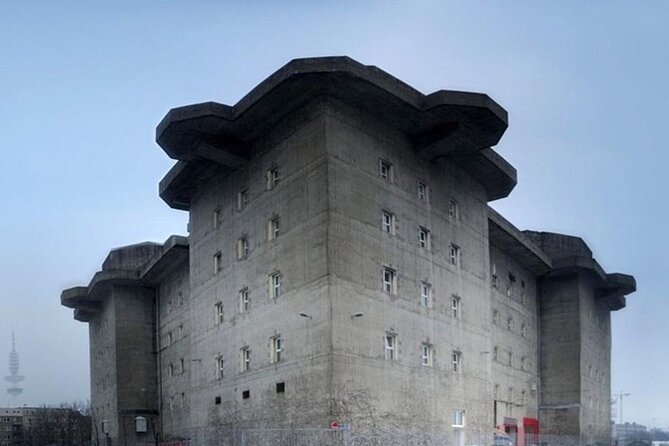
At Feldstraße, you encounter one of Hamburg’s largest wartime bunkers. It is now being repurposed as a skyline garden, a modern use that gives the old structure a second life without erasing its original purpose.
The stop itself lasts about 15 minutes. That is enough time to discuss the bunker and its place in Hamburg’s wartime defenses, though you should not expect a long interior visit based on the tour details. The experience is about seeing the structure in the city and understanding what it meant when air raids threatened homes, streets, and public buildings.
The tour later includes Turmbar, another bunker site that appears to be a water tower. This brief five-minute stop introduces the scale of Hamburg’s air-raid construction. More than 2,000 bunkers were built in Hamburg during the war, and the city’s surviving structures still shape what you see today.
These stops work well together. Feldstraße gives you a major, highly visible bunker, while Turmbar shows how wartime protection could be disguised or folded into an ordinary-looking building. If architecture and urban change interest you, these are among the tour’s most memorable moments.
Planten un Blomen’s darker past
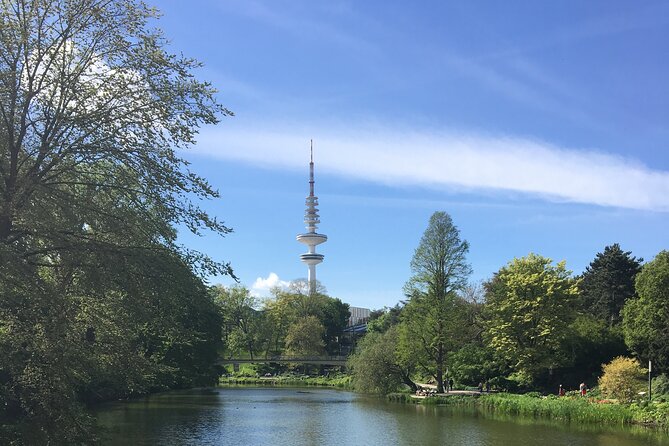
Planten un Blomen is one of Hamburg’s scenic city parks today, but the tour uses it to show how a pleasant modern setting can conceal painful events.
Here you hear about executions during World War II, a propaganda project, a human zoo, and a displaced persons camp. The stop lasts about 30 minutes, which gives the guide room to explain how the site changed meaning over time.
This is not a simple sightseeing pause. It asks you to look at a familiar public place with a more critical eye. The contrast between the park’s present appearance and its wartime associations is unsettling, but useful. You are reminded that historical evidence does not always come in the form of ruins or plaques. Sometimes it sits beneath a well-kept public space.
Five memorials and Hamburg’s culture of remembrance
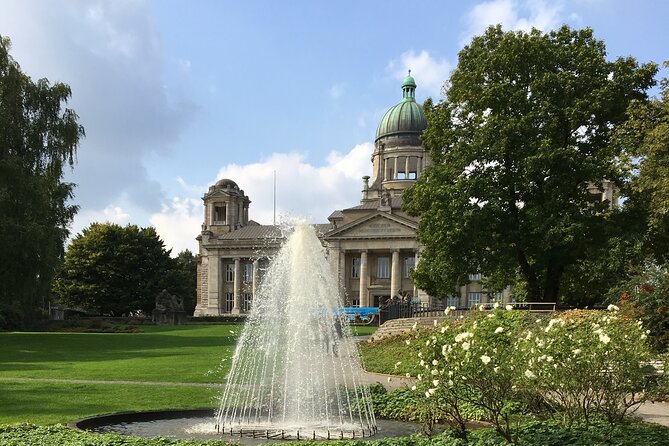
At Kriegerdenkmal am Dammtordamm, five war memorials from different periods help explain how Hamburg remembers conflict. The stop lasts about 25 minutes.
The value here is comparison. Memorials do not simply preserve facts. They reflect the politics and public attitudes of the people who built, changed, or retained them. Seeing several periods together lets you consider how Hamburg’s memory of war has shifted.
This part may appeal most to you if you care about how cities handle difficult monuments. The tour does not present remembrance as fixed. It shows physical markers from different eras and connects them to contemporary German memory culture.
Same city, a completely different sort of afternoon:
- Hamburg: 2-Hour XXL Port of Hamburg Cruise Tour
★ 4.7 · 6,979 reviews - Hamburg: Line A Sightseeing Hop-On Hop-Off Bus Tour
★ 4.6 · 6,958 reviews - Hamburg: Elbphilharmonie Plaza Guided Tour
★ 4.7 · 5,882 reviews - Hamburg: Hamburg Dungeon Admission Ticket
★ 4.7 · 5,745 reviews
Grindel, Hamburg’s Jewish quarter
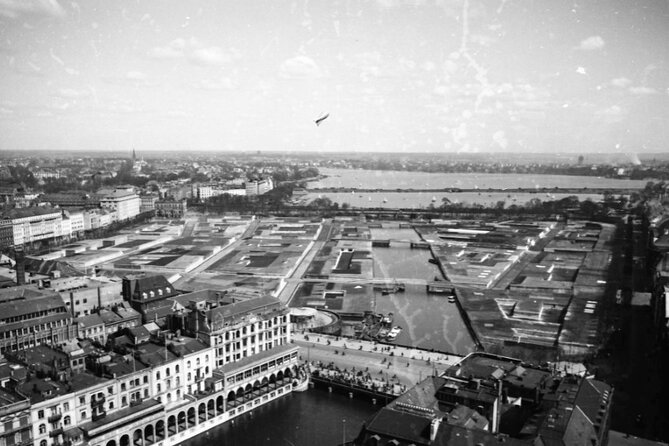
The hour spent in Grindel is the heart of the tour. Before the Nazi period, this district was home to a significant Jewish community. Your guide explains how the neighborhood developed, who lived there, what happened during the war, and what life looks like there today.
The subject list is broad but specific. You cover the place associated with Hamburg’s deported Jewish residents, Kristallnacht in 1938, the 1933 book burning, the Born Synagogue, and the Talmud Torah School.
I appreciate the way this stop places people and institutions at the center. It is not only a story of persecution. You also learn about the community that existed before the Nazis destroyed so much of it. That helps you see Jewish life in Hamburg as more than a chapter defined by its destruction.
An hour allows for questions and a fuller discussion than the shorter stops. Sarah, one of the guides associated with this experience, received especially strong praise for explaining the subject clearly and showing the monuments and bomb shelter. If your group includes several generations, the private setup is useful here. Younger family members can ask basic questions, while adults can steer the discussion toward politics, memory, or local history.
The details provided do not specify entry into the synagogue or school, so plan on an exterior and neighborhood-based visit unless your guide tells you otherwise. The strength of Grindel is the setting and the guided explanation, not a guaranteed indoor museum tour.
Jungfernstieg and the fake city center
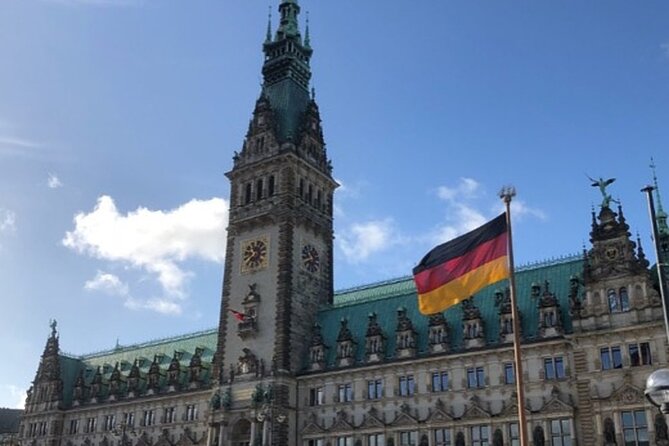
At Jungfernstieg, the tour takes up one of the more unusual parts of Hamburg’s wartime story: an attempt to construct a decoy city center to mislead British bombers.
The stop lasts around 10 minutes. It is short, but the idea is memorable. It shows the lengths to which officials went to protect Hamburg from bombing and the strange visual tactics used during the war.
This stop also adds variety. Much of the tour concerns things that were destroyed, abused, or remembered. Jungfernstieg introduces a wartime deception project, giving you a glimpse of the city’s defensive strategy rather than only its losses.
Rathausmarkt and the center of Nazi power
Hamburg’s Town Hall remains both a working civic building and a symbol of political authority. At Rathausmarkt, your guide explains how the square and Town Hall were used by the Nazi Party during World War II.
The stop lasts about 40 minutes, making it one of the longer portions of the route. The square also contains several memorials connected with opposition to the Nazi Party, the 1933 book burnings, and World War I propaganda in Nazi Germany.
This is where the tour brings politics, public space, and memory together. A central square can host official ceremonies, propaganda, protest, and later memorials. You are not just looking at architecture. You are considering who controlled the space and how later generations chose to mark what happened there.
The Town Hall is also a practical orientation point in Hamburg’s center. Since the tour visits several central locations, a private guide can help connect the sites instead of leaving you to work out their relationship from a map.
Afrikahaus and the longer history of racism
Afrikahaus provides a link to Germany’s colonial period. The tour uses this former colonial-era building to discuss racial segregation and genocide in German history, including how that earlier period is important for understanding racism in World War II Germany.
The stop lasts about 15 minutes. It is one of the tour’s most forward-looking sections because it places Nazi racial policy within a longer history rather than treating it as something that appeared without warning.
You should expect an exterior discussion unless told otherwise. The tour details identify Afrikahaus as a historical site, but they do not include admission to an interior exhibit. Even so, the stop broadens the tour beyond Hamburg’s wartime bombing and local Nazi administration.
St. Nikolai Memorial and the 1943 bombing
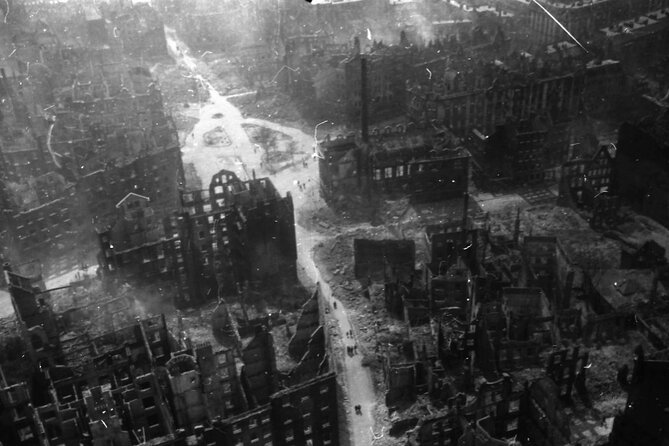
The tour reaches St. Nikolai Memorial toward the end. The remains of the former church were left after the building was bombed, along with much of Hamburg, in 1943.
Today, the church serves as a memorial to victims of war and Nazi terror. Its displays address the bombing of Hamburg, the victims of Neuengamme concentration camp, and reconciliation between postwar Germany and the United Kingdom.
This is the tour’s strongest physical reminder of destruction. A ruined church can make the scale of bombing easier to grasp than statistics alone. It also keeps the focus on victims and memory, rather than presenting the raid only as a military event.
There is a museum at the site and a tower with an elevator offering a city view. Admission is not included in the tour price, so budget separately if you want to enter or go up the tower. The available details do not state the admission fee or guarantee how much time the group spends inside, so ask your guide at the start if the museum and tower are priorities for you.
How the private format affects the experience
This is a private activity for your group only, with space for up to 15 people. That makes the $714.85 price easier to assess. For one or two people, it is a costly history tour. For a family, school group, or circle of friends, the per-person price can become reasonable, especially when you value a dedicated guide and flexible questions.
The private format is also valuable because the subject matter is complex. You can ask for clarification at Sievekingplatz, pause over a memorial, or spend more time on Grindel if that is the part your group cares about most. Evan has been praised for tailoring the experience to a group that included three generations, which is a useful sign for families with different ages and levels of background knowledge.
Sarah has also been praised for explaining the wartime story, showing monuments and a bomb shelter, and making the material memorable. Her name is not a guarantee that she will lead your tour, but you can request a preferred guide if the provider allows it.
The tour is offered in English and uses a mobile ticket. It runs for about five hours. Since it links many city locations, wear practical shoes and be ready for a moderate level of physical activity. The exact transport arrangements between stops are not specified, so confirm whether the route is mainly on foot or uses public transportation.
Who should book this Hamburg history tour?
You should consider it if you want Hamburg’s World War II story explained across the city rather than confined to one building. It suits history-minded visitors, families, educators, and anyone interested in Jewish history, memorial design, bunkers, Nazi propaganda, and the effects of bombing on an urban population.
It is particularly useful if you have limited time in Hamburg but want a serious introduction. In five hours, you cover more ground than you could comfortably research and connect on your own.
You may prefer a museum-based experience if you want extensive indoor displays, original objects, or a slower pace. St. Nikolai includes a museum and tower, but entry is extra, and most of the experience is based at outdoor sites. The tour also asks you to absorb difficult material over several hours, so it may not suit someone looking for a light city walk.
The route begins near Schleusenbrücke and finishes at the World War II bunker at Feldstraße 66. Drop-off at another location may be possible by request. The tour is near public transportation, service animals are allowed, and confirmation is provided when you book.
Free cancellation is available if you cancel at least 24 hours before the start time. Changes or cancellations made inside that window are not accepted for a refund.
My booking advice
I would book this tour if your priority is context. The strongest feature is not one single bunker or memorial. It is the way the guide links Hamburg’s political collapse, Jewish community, wartime defenses, bombing, and postwar remembrance.
The $714.85 group rate makes the most sense when several people share it. For a small group, compare it with the cost of separate museum visits and public transportation, but remember that this tour gives you a private English-speaking guide across five hours.
Book it for a focused history day, not a casual stroll. If possible, tell the provider in advance that you want time for Grindel or St. Nikolai, since those stops offer the fullest historical detail. For a family with three generations, the private pace and question-friendly format can make difficult subjects easier to discuss together.
FAQ
How long does the World War II Hamburg Private Guided Tour last?
The tour lasts approximately five hours.
What language is the tour offered in?
The tour is offered in English.
How many people can join the private tour?
The private tour accommodates up to 15 people per group.
Where does the tour begin?
It begins at the monument for those killed in both world wars near Schleusenbrücke 1, 20354 Hamburg, Germany.
Where does the tour finish?
It finishes at the World War II bunker at Feldstraße 66, 20359 Hamburg, Germany.
Can the tour finish somewhere else?
Drop-off at a location of your choice may be possible upon request.
Is admission to St. Nikolai Memorial included?
Admission is not included. The site has a museum and a tower with an elevator, and separate admission may be required.
Does the tour visit Hamburg’s Jewish district?
Yes. The tour spends about one hour in Grindel, covering the Jewish community, deportations, Kristallnacht, the 1933 book burning, the Born Synagogue, and the Talmud Torah School.
Is the tour physically demanding?
A moderate level of physical fitness is recommended. The tour covers several locations around Hamburg.
What is the cancellation policy?
You can receive a full refund if you cancel at least 24 hours before the experience start time. Cancellations or changes made less than 24 hours before the start time are not accepted for a refund.
Just added around Hamburg
- Winter Alster tour★ 4.0 · 12 reviews
- Ticket for the Emigration Museum BallinStadt Hamburg★ 4.0 · 57 reviews
- UNESCO World Heritage – Speicherstadt and Kontorhaus district★ 4.5 · 12 reviews
- hamburg Experienced differently with wish rental bike relaxed enjoy★ 5.0 · 5 reviews
- Hamburg Private Food Tours with a Local: 100% Personalized★ 5.0 · 3 reviews
- The Beatles in Hamburg – Private Tour★ 5.0 · 16 reviews
- The Beatles on St. Pauli★ 5.0 · 3 reviews
- Hamburg: 2-hour harbor cruise★ 4.0 · 180 reviews
Hamburg Tours, compared.
1.5-Hour Harbor and Speicherstadt Day Cruise
Read our review →