Review · HAMBURG TOURS
Elbe Philharmonic Hall, HafenCity and Speicherstadt tour
Hamburg tells its story in brick, steel, water, and ambitious new buildings. This two-hour walk links the futuristic Elbphilharmonie with the UNESCO-listed Speicherstadt, then threads through HafenCity, one of Europe’s largest inner-city redevelopment projects.
I like the small maximum of 15 people, which gives a guide such as Florian room to adjust the pace and answer questions. I also like the route’s mix of major sights and lesser-known corners, including Grasbrookpark, the traditional ships at Sandtorhafen, and the old bridges of the warehouse district.
The main consideration is pace. There is no admission included, and the tour covers a lot of ground in about two hours. You get a guided introduction to Hamburg’s waterfront, not extended visits inside the Elbphilharmonie, Miniatur Wunderland, or the museums along the way.
Key points to know before you book
- A compact route through three major Hamburg areas: HafenCity, Speicherstadt, and the Elbphilharmonie are tied together in one walk.
- A small group of up to 15 people: This is a better setup for questions and conversation than a large city tour.
- Local storytelling from guides such as Florian: His tours are described as informative, flexible, and delivered in good English.
- Historic and modern Hamburg side by side: You move from new waterfront architecture to centuries-old port warehouses.
- A $28.92 introduction to Hamburg: The price is fair if you want orientation and context rather than paid entry to attractions.
- A 4 p.m. start: The timing suits a first afternoon in the city, though weather can affect the walk.
Starting at Überseequartier in modern HafenCity
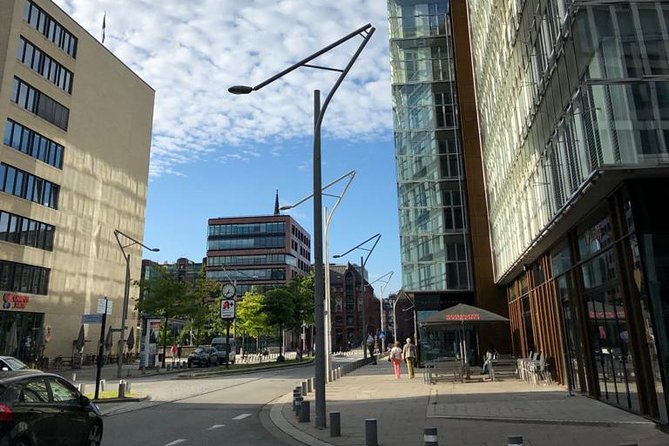
Meet at Überseequartier at 4 p.m., near public transportation. This is a useful starting point because you begin inside HafenCity, where Hamburg is building a new urban district on land once tied to the free port.
HafenCity covers roughly 157 hectares on Großer Grasbrook. By the early 2030s, plans call for homes for up to 14,000 people, as many as 3,000 hotel rooms, and workplaces for up to 45,000 people. Schools, universities, shops, and daily visitors will add even more activity.
Those numbers help explain what you are seeing. This is not simply a collection of new apartment blocks. It is a large attempt to extend central Hamburg toward the river while bringing homes, offices, culture, education, and public spaces into an area once dominated by port functions.
Your guide can give meaning to the new buildings and public spaces rather than leaving you to judge them by appearance alone. That matters here, since HafenCity can feel polished and planned at first glance. The story becomes more interesting when you understand the district’s flood protection, transport links, changing waterfront use, and long-term aims.
The walk includes Am Grasbrookpark, a small neighborhood park between Überseequartier and the Marco Polo Terraces. It is a brief but useful contrast to the hard surfaces and large buildings around it.
A few more Hamburg half-days to weigh up
- Hamburg: Sex and Crime in St. Pauli Tour for Ages 18+
★ 4.7 · 15,447 reviews - Hamburg: 1.5-Hour Harbor and Speicherstadt Day Cruise
★ 4.6 · 14,200 reviews - Hamburg: 90-Minute Evening Lights Harbor Cruise
★ 4.5 · 7,728 reviews
Crossing Kibbelstegbrücke and understanding flood protection
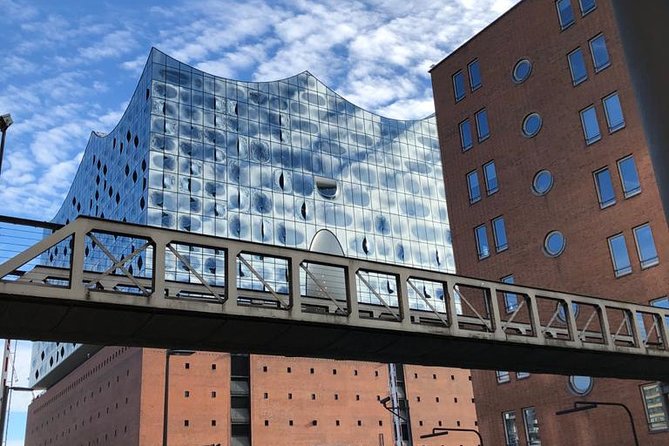
One of the short stops is Kibbelstegbrücke, a bridge connected with evacuation routes through the historic warehouse district. Hamburg is a city shaped by water, and storm-surge protection is not a side issue here.
The bridge helps connect HafenCity with areas behind Hamburg’s main dike line. Your guide may point out how the district is planned with evacuation and access in mind. This is one of the practical details that can make HafenCity easier to understand.
The stop itself lasts only a couple of minutes, so do not expect a long engineering talk or a visit inside a structure. Its value comes from seeing how Hamburg’s waterfront development must work with the river rather than pretending the water poses no risk.
The route also passes the HafenCity University of Hamburg, a state university focused on architecture and metropolitan development. Its subjects match the setting: design, engineering, natural sciences, and the social and human questions involved in building a city.
Magdeburger Hafen and Grasbrookpark: a quick look at daily life
At Magdeburger Hafen, you get a view toward the Maritime Museum and the Elbarkaden. This is one of HafenCity’s most modern stretches, with water, broad quays, and newer buildings framing the harbor basin.
The stop is short, around five minutes, so think of it as a viewpoint and orientation point. You will not have time for the Maritime Museum during this tour. If that museum interests you, mark it for another visit.
The route’s inclusion of Grasbrookpark adds a small neighborhood detail to the grander city-planning story. This park sits between the newer retail and residential parts of HafenCity, offering a glimpse of how the district is meant to function for people who live there, not only for office workers and sightseers.
This mix is one of the walk’s strengths. You are not simply taken from one famous facade to the next. You see the public spaces and routes that connect them.
Sandtorhafen and the old ships of Hamburg
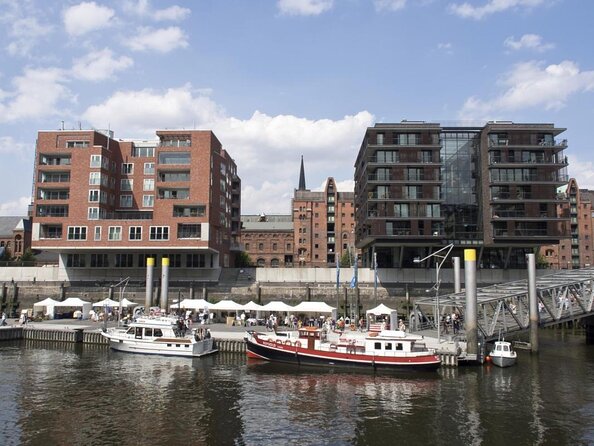
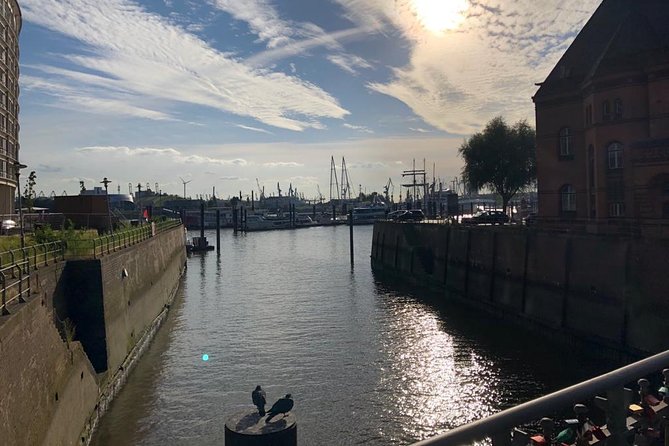
Sandtorhafen is the traditional shipping harbor in the heart of HafenCity. The floating pontoon belongs to HafenCity Hamburg GmbH and is used by the Hamburg Maritim Foundation to preserve historic ships, port equipment, and maritime working objects.
Allow about 15 minutes here. That gives you enough time to look across the water, examine the historic vessels, and hear why preserving them matters. Hamburg’s port is not only a commercial machine. It is also a record of ships, workers, cargo handling, and waterfront technology.
The Sandtorkai quay wall is Hamburg’s oldest quay wall and was restored in 2002. Three historic access bridges connect with the pontoon system. These details add texture to a district that might otherwise seem entirely new.
You should expect to view the traditional ships from the outside rather than board them as part of the tour. The stop works best for anyone who enjoys port history and wants a physical link between old Hamburg and the new buildings of HafenCity.
Same city, a completely different sort of afternoon:
- Hamburg: 2-Hour XXL Port of Hamburg Cruise Tour
★ 4.7 · 6,979 reviews - Hamburg: Line A Sightseeing Hop-On Hop-Off Bus Tour
★ 4.6 · 6,958 reviews - Hamburg: Elbphilharmonie Plaza Guided Tour
★ 4.7 · 5,882 reviews - Hamburg: Hamburg Dungeon Admission Ticket
★ 4.7 · 5,745 reviews
Entering Speicherstadt, Hamburg’s brick warehouse district
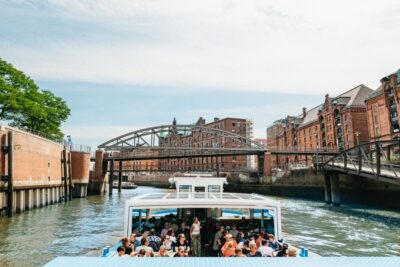
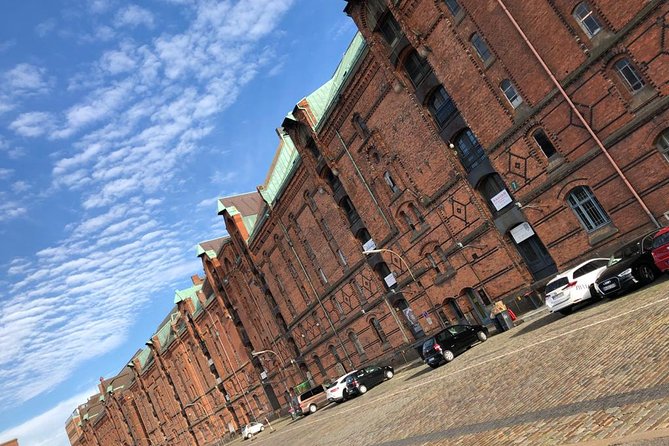
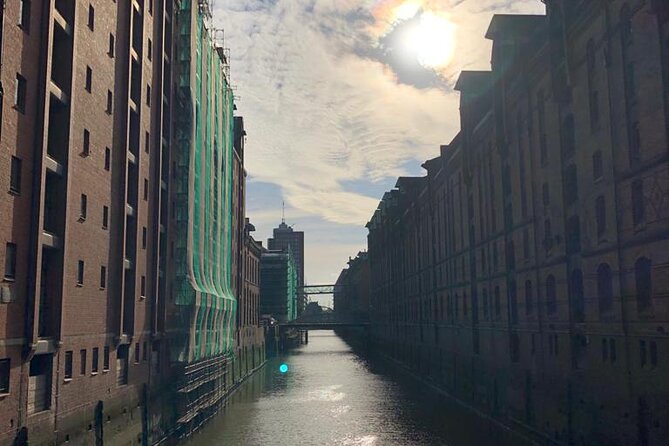
From the modern waterfront, the route moves into Speicherstadt, the world’s largest historic warehouse complex. Its red-brick buildings, tall gables, narrow waterways, and bridges create a sharp change from HafenCity’s glass and steel.
Speicherstadt was built for storage and trade. The warehouses once held goods arriving through Hamburg’s port, and their position beside canals made loading and moving cargo practical. Today, the district is protected as a historic site and has been listed by UNESCO since 2015 together with the neighboring Kontorhaus district and Chilehaus.
Plan on about 45 minutes in this part of the walk. That is enough for a strong overview, but not enough to explore every canal, courtyard, museum, and shop. A guide is especially useful here because the district’s beauty can distract you from its original purpose.
Kibbelstegbrücke and the old warehouse streets show how the historic district fits into Hamburg’s flood-protection system. The guide can also point out how the warehouses were built as part of different construction phases, rather than appearing all at once.
The route includes several quick exterior stops:
- Miniatur Wunderland: The warehouse district’s famous model railway occupies a major attraction, but admission is not included. The stop is only about a minute, so you will simply get your bearings and a suggestion for a separate visit.
- Fleetschlösschen: This listed building was once a toilet facility and is now a café and pub. Its modest original purpose is a good reminder that historic buildings often have less glamorous beginnings than their current appearance suggests.
- Spicy’s Spice Museum: This private museum opened in 1991. The tour passes it briefly, but entry is not included.
- Wasserschloss: Built between 1905 and 1907, this four-story building is one of Speicherstadt’s best-known landmarks and oldest structures. Its position beside the waterways makes it a favorite photo stop.
- Kehrwieder: This former island forms part of western Speicherstadt. It offers another chance to connect the warehouse district with Hamburg’s older geography and fortified city.
These stops are useful as signposts, but the time limits matter. If you want to visit Miniatur Wunderland or Spicy’s Spice Museum, do not assume you can fit it in during the walk. Save those attractions for another block of time.
The Elbphilharmonie, Hamburg’s glass landmark
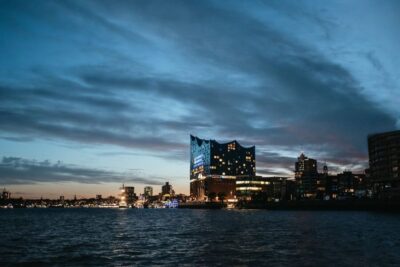
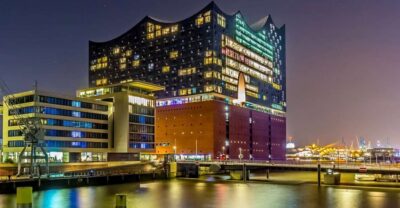
The Elbphilharmonie is the tour’s most recognizable modern sight. The 110-meter concert hall rises at the tip of Großer Grasbrook, between the Sandtorhafen and Grasbrookhafen basins.
Its design combines a glass structure with the shell of the former Kaispeicher A, a warehouse built in 1963. The upper facade has been compared to sails, waves, icebergs, and a quartz crystal. From the waterfront, the building also reflects Hamburg’s industrial past through its brick base.
The scheduled stop is about 10 minutes. That is enough to discuss the building’s location, form, and role as a new city symbol. It is not enough for a concert, a full building visit, or a leisurely interior exploration.
Admission is not included. The route should therefore be understood as an architectural and city-history visit, not an Elbphilharmonie ticket. If the concert hall is your main reason for coming, check separately for concerts or other available entry options.
I like the way this stop makes the whole walk come together. You have already seen the old port warehouses and the traditional shipping harbor. At the Elbphilharmonie, Hamburg’s port story takes a new turn, with culture and public architecture occupying a former industrial site.
From Kehrwieder to Baumwall and the harbor edge
After the Elbphilharmonie, the walk continues through Kehrwieder and toward the waterfront. Kehrwieder belongs to HafenCity and forms part of the western section of Speicherstadt. Its older island identity gives the route another layer of Hamburg’s changing shoreline.
The walk ends at Baumwall Station, near the upper station area. This makes the finish practical if you want to continue exploring central Hamburg or return by public transportation.
The final route includes a short look toward Überseebrücke. This covered pedestrian bridge connects Hamburg’s flood-protection system near Vorsetzen with a pontoon in the Niederhafen. It is also near the St. Pauli Landungsbrücken area, one of Hamburg’s best-known harbor zones.
You may also see the theater connection to Hamburg’s long-running musical tradition. The musical theater at the harbor has hosted a German production since 2001, with ferries providing direct access across the water. The tour does not include a show or ferry ride, but the detail helps explain the harbor’s role as both a working port and an entertainment district.
What the $28.92 price gives you
At $28.92 per person, this is a reasonably priced orientation walk. You are paying for about two hours of guiding across several major areas, not for attraction tickets, food, or transportation.
The value is strongest if you are new to Hamburg and want the city’s waterfront explained in a clear order. HafenCity, Speicherstadt, the Elbphilharmonie, and the harbor can feel like separate sights when visited alone. This route shows how they connect through trade, urban planning, flood protection, and cultural redevelopment.
The price is less compelling if you already know these districts well or prefer to explore at your own speed. Several stops last only a few minutes, and the tour cannot provide serious time inside the paid attractions.
A maximum of 15 people is a real benefit. It does not guarantee a private tour, but it should make it easier to hear the guide and ask about details. One published experience was effectively private, with the guide adapting the route to the group’s needs. That kind of flexibility depends on the day’s group size and the guide, so treat it as a possibility rather than a promise.
Guide style, timing, and practical planning
Florian has led this walk and is described as well informed, positive, personable, and comfortable speaking English. He has also been praised for giving an interesting, flexible walk and showing less obvious, picturesque corners of Speicherstadt and HafenCity.
The tour begins at 4 p.m. and runs for roughly two hours. That timing places much of the walk in the late afternoon, when the waterfront light may be pleasant, but you should still check the forecast. The experience requires good weather and can be canceled if conditions are poor or if the minimum number of bookings is not reached.
Wear shoes suited to a city walk. The route includes bridges, quays, streets, and warehouse-district paths. Most people can participate, and service animals are allowed. The tour is near public transportation at both the start and finish.
You receive a mobile ticket, and confirmation is provided when you book. Free cancellation is available up to 24 hours before the start time. A cancellation made less than 24 hours ahead is not refunded, and changes inside that period are not accepted.
Who will enjoy this Hamburg walk most
I would choose this tour for a first or second day in Hamburg, especially if you want a clear introduction before returning to favorite areas on your own. It suits people who enjoy architecture, port history, city planning, and guided walks more than long indoor visits.
It is also a good match for anyone who wants to compare old and new Hamburg in a single outing. The contrast between Speicherstadt’s brick warehouses and HafenCity’s glass buildings gives you a useful framework for the rest of your stay.
Families and mixed-age groups may appreciate the variety of sights, though the walk is still about two hours and includes substantial time outdoors. Miniatur Wunderland appears on the route, but the tour does not include entry or time to explore it.
I would not book this as your only Elbphilharmonie experience if you want to attend a concert or spend a long time inside the building. I would also skip it if your priority is shopping, museums, or a relaxed café afternoon. This is a guided city walk, with many exterior views and short stops.
Should you book the Elbe Philharmonic Hall, HafenCity and Speicherstadt tour?
Book it if you want context, variety, and a manageable price in one afternoon. The route covers Hamburg’s most important waterfront contrasts, and the small group gives guides such as Florian room to make the walk personal.
Do not book it expecting admission to the Elbphilharmonie, Miniatur Wunderland, or the spice museum. For the best experience, treat the tour as your city introduction, note the places you want to revisit, and return later for the interiors.
FAQ
How long does the tour last?
The tour lasts approximately two hours.
Where does the tour start?
It starts at Überseequartier, 20457 Hamburg, Germany.
Where does the tour end?
It ends at Baumwall Station, 20459 Hamburg, near the upper station area.
What time does the tour begin?
The scheduled start time is 4 p.m.
How much does the tour cost?
The listed price is $28.92 per person.
Are attraction admissions included?
No. Admission is not included for Miniatur Wunderland, Fleetschlösschen, Spicy’s Spice Museum, or the Elbphilharmonie.
How many people can join the tour?
The tour has a maximum of 15 participants.
Just added around Hamburg
- World War 2 Hamburg Private Guided Tour★ 5.0 · 6 reviews
- Winter Alster tour★ 4.0 · 12 reviews
- UNESCO World Heritage – Speicherstadt and Kontorhaus district★ 4.5 · 12 reviews
- Ticket for the Emigration Museum BallinStadt Hamburg★ 4.0 · 57 reviews
- hamburg Experienced differently with wish rental bike relaxed enjoy★ 5.0 · 5 reviews
- Hamburg Private Food Tours with a Local: 100% Personalized★ 5.0 · 3 reviews
- The Beatles in Hamburg – Private Tour★ 5.0 · 16 reviews
- The Beatles on St. Pauli★ 5.0 · 3 reviews
Hamburg Tours, compared.
1.5-Hour Harbor and Speicherstadt Day Cruise
Read our review →