
Review · HAMBURG TOURS
Hamburg: Private – Town Hall, Speicherstadt, Elbphilharmonie
Hamburg’s story unfolds in a remarkably short stretch of city center, from the neo-Renaissance Rathaus to the glassy Elbphilharmonie. In two hours, you move from medieval waterways and merchant homes to red-brick warehouses and 21st-century city planning.
I like the private format, especially for a group that wants to ask questions or set the pace. I also like the sharp contrast between St. Nikolai’s wartime ruins and the polished architecture of HafenCity. The main consideration is time: two hours is enough for an excellent overview, but not for long interior visits or a slow stop at every sight.
Key points to know before booking
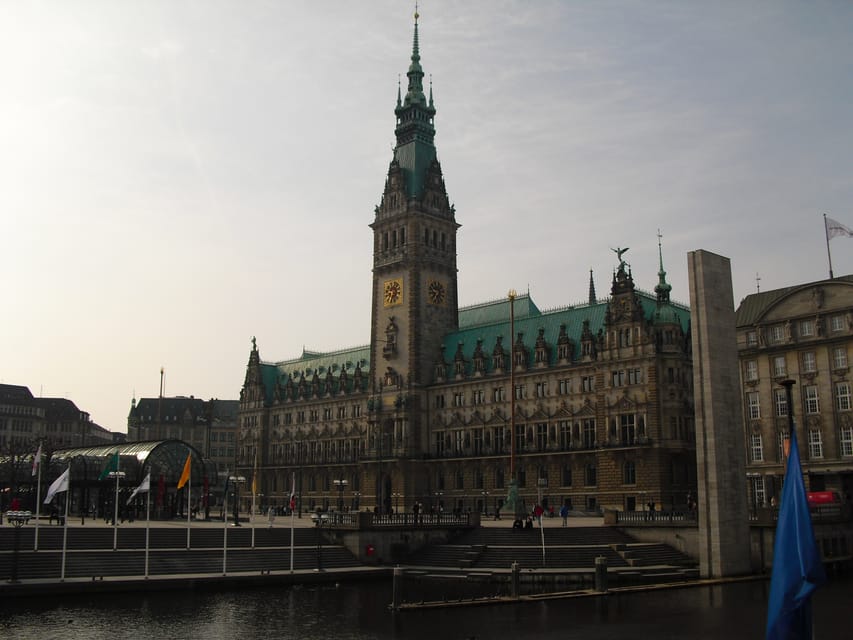
- A compact walk through Hamburg’s past: The route connects the Rathaus, former stock exchange, St. Nikolai, Deichstrasse, Speicherstadt, HafenCity, and the Elbphilharmonie.
- A genuinely private experience: One group of up to 15 people travels with its own professional guide.
- Jutta earns special praise: She is known for humorous storytelling, clear English, flexibility, and photographs showing how Hamburg changed over time.
- The route ends at the Elbphilharmonie: This makes the tour a useful introduction to the concert hall and the surrounding HafenCity district.
- You get several different kinds of Hamburg: Civic architecture, wartime memory, old port life, trade, industrial storage, and modern design all appear in one outing.
- Plan for an overview, not a museum visit: Most stops last between 5 and 15 minutes, with time mainly spent outside and moving between locations.
Starting beneath Hamburg’s grand Rathaus
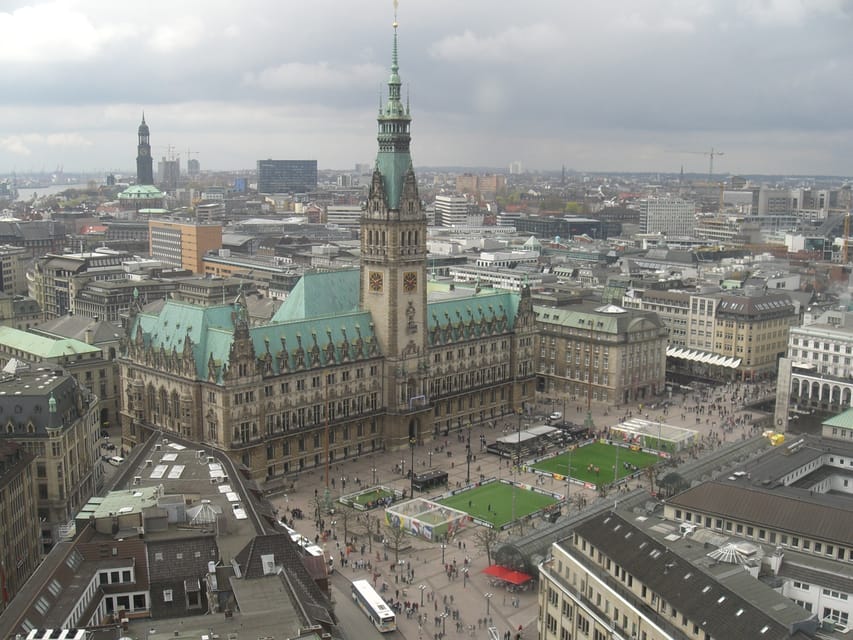
The tour begins at Hamburg’s Rathaus, the city hall, where the scale is meant to impress. Its neo-Renaissance design reflects Hamburg’s commercial success and civic pride, and the building provides a useful first lesson in how the city presents its own past.
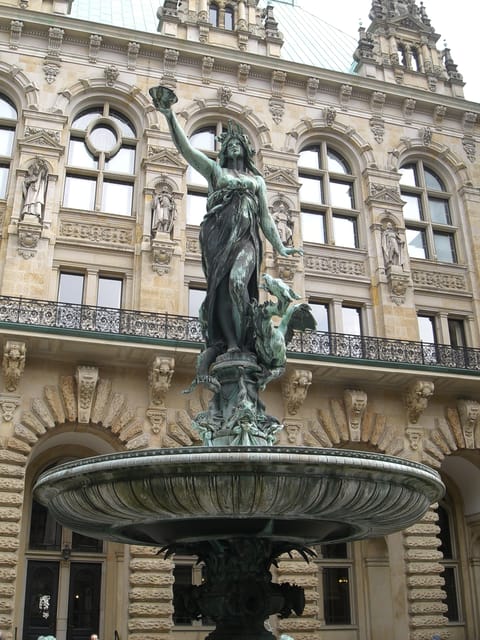
You spend about 15 minutes here with a guided visit and photo stop. The grand entrance hall offers a look at Hamburg’s governmental customs, while a fountain decorated with mystic statues gives the guide a chance to explain local stories and symbols.
I like this opening because it gives you more than a quick exterior photograph. You get a sense of how Hamburg’s leaders wanted the city to be seen, and why architecture mattered to a port city that grew wealthy through trade.
The Rathaus can also be a busy place, and 15 minutes passes quickly. If you want a detailed look at every room or a full explanation of the building’s art, this tour will feel brief. Its purpose is to set the scene before moving into the streets.
A few more Hamburg half-days to weigh up
- Hamburg: Sex and Crime in St. Pauli Tour for Ages 18+
★ 4.7 · 15,447 reviews - Hamburg: 1.5-Hour Harbor and Speicherstadt Day Cruise
★ 4.6 · 14,200 reviews - Hamburg: 90-Minute Evening Lights Harbor Cruise
★ 4.5 · 7,728 reviews
The former stock exchange and Hamburg’s trading past
Across from the Rathaus is the building associated with Hamburg’s former stock market. Today, it houses the Chamber of Commerce, linking the modern commercial city with the trading center that helped shape it.
The stop lasts around 10 minutes. That is enough for a short visit, a photograph, and an explanation of the relationship between civic power and business in Hamburg. I find this pairing especially useful because the Rathaus and former stock exchange are not just attractive buildings. Together, they show how government and commerce worked side by side.
The tour does not promise a long interior exploration here, so keep your expectations in check. You are getting context and a close look at the setting, not a full stock-market museum experience.
Trostbrücke and the remains of Nicolaifleet
At Trostbrücke, the route reaches one of the city’s old waterways. From here, you can look toward Nicolaifleet, connected with Hamburg’s first port from the 12th century.
This short five-minute stop helps explain why the city developed where it did. Hamburg’s early life was tied to water, cargo, and narrow channels. The modern streets can make that past easy to miss, so a guide’s explanation gives the waterway real meaning.
The stop is brief, but that is part of the route’s rhythm. You are not parked at one site for half an hour. Instead, each location adds another piece to the city’s story before you continue on foot.
St. Nikolai Memorial and Hamburg’s wartime memory
The St. Nikolai Memorial is one of the tour’s most serious moments. The church was destroyed during World War II, and its surviving ruin now serves as a memorial to the war’s impact on Hamburg and Western Europe.
You have roughly 10 minutes here for a guided visit and photographs. The damaged church is a powerful contrast to the handsome commercial buildings nearby. It gives the tour emotional weight without requiring a separate museum visit.
I appreciate the inclusion of St. Nikolai because Hamburg’s story is not only about trade, architecture, and new development. The ruin reminds you that large parts of the city were destroyed and later rebuilt. It also creates a pause between the city’s medieval port story and its merchant-era streets.
Ten minutes is enough to understand the site, but not enough for a lengthy memorial visit. If wartime history is your main interest, you may want more time elsewhere in Hamburg. On this tour, St. Nikolai is an important chapter in a wider story.
Same city, a completely different sort of afternoon:
- Hamburg: 2-Hour XXL Port of Hamburg Cruise Tour
★ 4.7 · 6,979 reviews - Hamburg: Line A Sightseeing Hop-On Hop-Off Bus Tour
★ 4.6 · 6,958 reviews - Hamburg: Elbphilharmonie Plaza Guided Tour
★ 4.7 · 5,882 reviews - Hamburg: Hamburg Dungeon Admission Ticket
★ 4.7 · 5,745 reviews
Deichstrasse and the old merchant houses
The route then reaches Deichstrasse, where protected merchant houses preserve a strong sense of 17th-century Hamburg. These buildings escaped the wartime destruction that erased so much of the surrounding city.
You spend about 15 minutes here, making it one of the longer stops. The narrow street, historic façades, and proximity to Nicolaifleet help you picture the city before modern shipping and urban rebuilding changed its scale.
A floating bridge offers another view of the waterway, although the sight of Nicolaifleet depends on the tide. That is a small but useful practical detail: at low tide, the view may not look as expected.
Deichstrasse is also the most flexible part of the outing. You may find places along the street for a meal, ice cream, or whiskey tasting. The tour does not include those purchases, but the guide can point out the options. If you are hungry, this is the natural place to note where you might return after the tour.
Speicherstadt’s red-brick warehouses
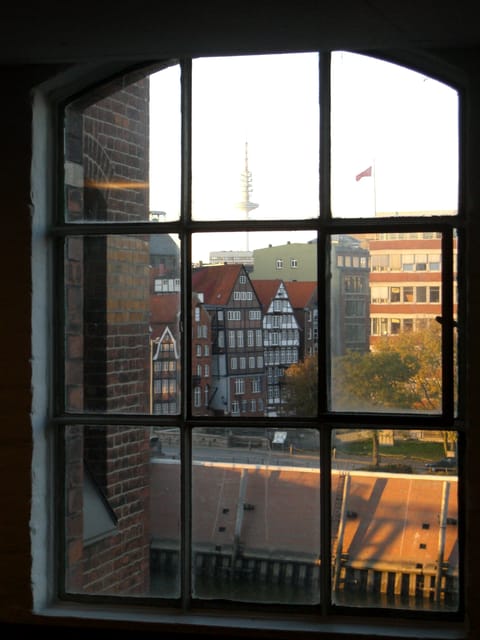
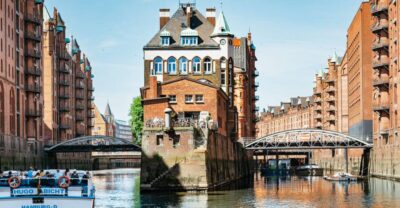
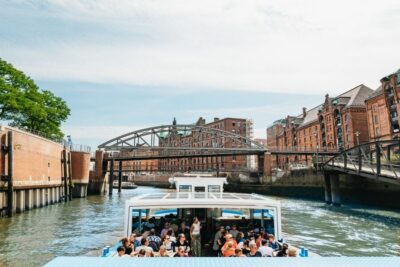
From Deichstrasse, the route moves into Speicherstadt, Hamburg’s famous warehouse district and a UNESCO World Heritage site. The red-brick buildings once stored goods delivered by flat boats, and the canals and warehouses still give this part of town a distinct character.
The guided portion here lasts about 10 minutes. That is short, but the district itself is visually striking, so even a quick explanation helps you read the buildings instead of seeing them as simple photo backdrops.
I like that the tour places Speicherstadt between the older merchant streets and the newer HafenCity district. You can see how Hamburg’s trade infrastructure changed over time, from small waterways and merchant houses to large storage blocks serving international commerce.
The limitation is clear: you will not have time for an extended visit to one of the district’s attractions. The experience focuses on the streets, architecture, and port function. If you want museums, model railways, or a longer look at the warehouses, plan a separate visit.
HafenCity and a new vision for the waterfront
HafenCity brings the story into the 21st century. It is presented as one of Europe’s major city-planning projects, with modern buildings replacing or reworking former port areas.
The stop lasts about 10 minutes and works best as a transition. Your guide can explain how Hamburg is extending its central area toward the river and how new architecture changes the relationship between city and waterfront.
This section gives the tour a useful sense of direction. You are not only looking backward at old Hamburg. You are also seeing how the city plans for new homes, cultural buildings, business space, and public areas.
The modern district may appeal less if you prefer only old streets and historic interiors. Still, the contrast is the point. Speicherstadt shows the port economy of the past, while HafenCity shows Hamburg deciding what its waterfront should become next.
Finishing at the Elbphilharmonie
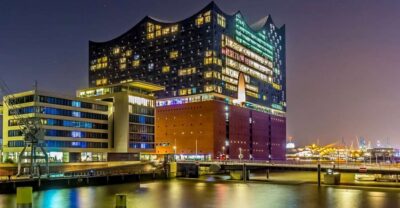
The final stop is the Elbphilharmonie, Hamburg’s spectacular concert hall, opened in 2017. Its architecture provides a dramatic finish after the older buildings and wartime memorials.
You have about 15 minutes here for a guided visit and photographs. The building hosts concerts by leading musicians, but this tour is not a concert ticket or a performance. You are seeing the architecture and learning how the hall fits into the city’s new waterfront.
Ending here is practical. You finish at Platz der Deutschen Einheit, and the Elbphilharmonie is also the listed drop-off point. You can continue exploring HafenCity, arrange your next activity, or simply take more photographs after the guide leaves.
The short stop means you should not expect a full concert-hall tour. If entering the building or seeing a performance is your priority, check separately what access is available for your date. This experience gives you a well-placed introduction, not a substitute for a concert visit.
What the private format adds
The price is $294 for a private group of up to 15 people. That can be good value if you are splitting the cost among a family or group of friends. For one or two people, it is a more expensive way to see the center than joining a shared group, but you gain a guide focused only on your party.
A private guide also makes the language choice more useful. Tours are offered in English, German, Spanish, and French. If your group includes different ages or interests, you can ask for more explanation at the Rathaus, more time for photographs at the Elbphilharmonie, or a clearer account of the war memorial.
Jutta is the guide whose name comes through most clearly in the feedback. Her style is described as humorous and flexible, and she uses photographs to show how Hamburg has changed. That detail matters. Historic images can make the destroyed and rebuilt city easier to understand than dates alone.
The tour has a current rating of 4.8 from 27 ratings, with repeated praise for clear storytelling, humor, and a strong introduction to Hamburg. I would treat that as evidence of a good guiding experience, while still remembering that the route itself is tightly timed.
Timing, languages, and practical planning
The tour lasts two hours. Stops range from five minutes at Trostbrücke to 15 minutes at the Rathaus, Deichstrasse, and Elbphilharmonie. This is a brisk city orientation, not a leisurely day out.
The starting point is in front of the Hamburg Rathaus, although the exact meeting point can vary with the option booked. Transportation to the meeting point is not included, so you need to arrange your own way there.
Because the route ends at the Elbphilharmonie, it is easy to pair with a later HafenCity visit. You might also use the tour early in your Hamburg stay, then return to the places that deserve more time. Deichstrasse and Speicherstadt are particularly good candidates for a second look.
The experience is offered in German, English, Spanish, and French. Confirm your selected language and meeting details when booking, especially if your group needs one language throughout.
Free cancellation is available up to 24 hours before the start for a full refund. You can also reserve now and pay later, which is useful when your Hamburg schedule is still changing.
Who will get the most from this tour?
I would recommend it to first-time visitors who want a clear map of central Hamburg without spending half a day on one subject. The route gives you civic buildings, port history, wartime memory, old homes, industrial architecture, and modern design in one compact package.
It also suits families and private groups. The guide can adjust the explanations, and nobody has to follow the interests or pace of strangers. For a group of up to 15, the fixed price may work well.
History-minded visitors will value the connection between the old port, St. Nikolai, Deichstrasse, and Speicherstadt. Architecture fans will enjoy the sharp change from the Rathaus to the Elbphilharmonie.
I would be less likely to choose it if you want extensive indoor access, a long museum visit, or a relaxed pace. The tour touches many sites, so each one receives a focused introduction rather than a full examination.
Should you book this Hamburg tour?
Book it if you want a private, efficient introduction to Hamburg and like the idea of ending at the Elbphilharmonie. The route is unusually well balanced, and the contrast between old waterways, wartime ruins, red-brick warehouses, and modern HafenCity gives you a useful sense of how the city changed.
Think twice if you have several days and prefer to explore slowly. In that case, you may get more from visiting these districts independently and spending longer at individual sights.
For most short stays, though, the value is solid for a group. You get a professional guide, flexible language choices, a route that covers the city’s major visual contrasts, and a final stop that leaves you in one of Hamburg’s most important modern districts.
FAQ
Where does the tour start?
It starts in front of Hamburg Rathaus. The exact meeting point may vary depending on the option booked.
Where does the tour finish?
The tour finishes at the Elbphilharmonie in HafenCity, at Platz der Deutschen Einheit 1, 20457 Hamburg.
How long does the experience last?
The tour lasts two hours.
How large can the private group be?
The private group can include up to 15 people.
Which languages are available?
The tour is available in German, English, Spanish, and French.
Is transportation included?
No. Transportation costs to the meeting point are not included.
Can I cancel for a full refund?
Yes. You can cancel up to 24 hours in advance for a full refund.
Just added around Hamburg
- Free Tour: Port, Red Light District and Beatles. You decide how much to pay at the end★ 3.9 · 13 reviews
- Hamburg: Guided Bike Tour★ 4.7 · 71 reviews
- Hamburg: Guided Port Walk for Families★ 4.6 · 191 reviews
- Express-Tour Panik City Udo Lindenberg Multimedia Experience★ 5.0 · 4 reviews
- Hamburg: Elphi Plaza Guided Tour with Störtebeker Beer★ 4.6 · 245 reviews
- Hamburg: Downtown, Alster & Creative Neighborhoods by Bike★ 4.5 · 217 reviews
- Die Kiez-Kapitän Reeperbahn & Beatles Kieztour Hamburg★ 4.9 · 178 reviews
- Die Kiez-Kapitän Hamburger Stadtführung & Speicherstadt Tour★ 4.8 · 37 reviews
Hamburg Tours, compared.
1.5-Hour Harbor and Speicherstadt Day Cruise
Read our review →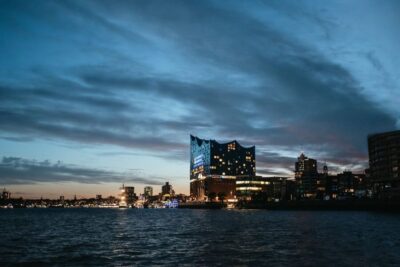
Browse the lists this tour appears in