

Review · MUNSTER TOURS
Münster: Old Town Highlights Guided Tour
Münster’s old town tells some unusually sharp stories for a compact walking tour. You’ll see the cathedral, the Anabaptist cages, the Peace Hall, and elegant Baroque buildings while learning how religion, trade, and political power shaped the city. The Anabaptist episode is especially striking: the Überwasserkirche still has a tower without its point, while St. Lambertus displays the cages linked to the movement’s grim end.
I like the 90-minute length, which gives you a useful introduction without taking over your day. I also like the mix of famous sights and small details, including the cathedral immunity, headless saints, and the old tower keeper’s workplace. The main consideration is language: this is a German-speaking tour, so you’ll need comfortable German to follow the stories.
The experience is also praised for its friendly, punctual guide service and clear answers to questions. At $16 per person, it offers solid value if you want context for Münster’s center rather than a quick walk past its buildings.
Key points about Münster’s old town walk
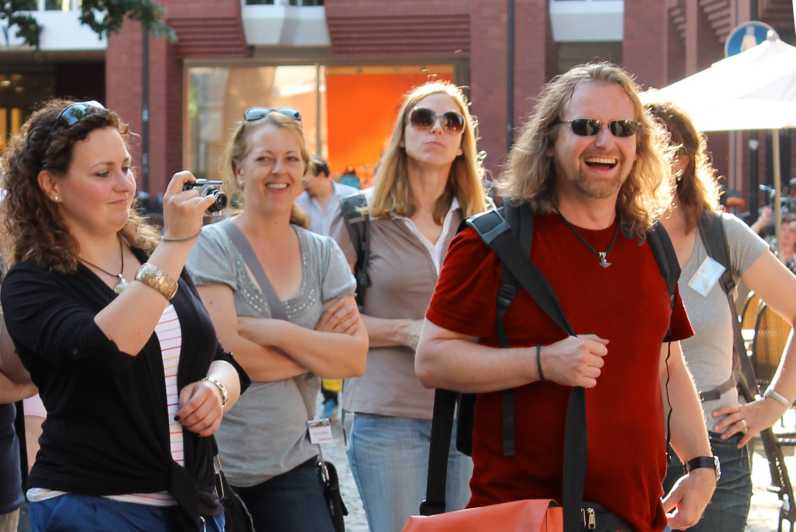
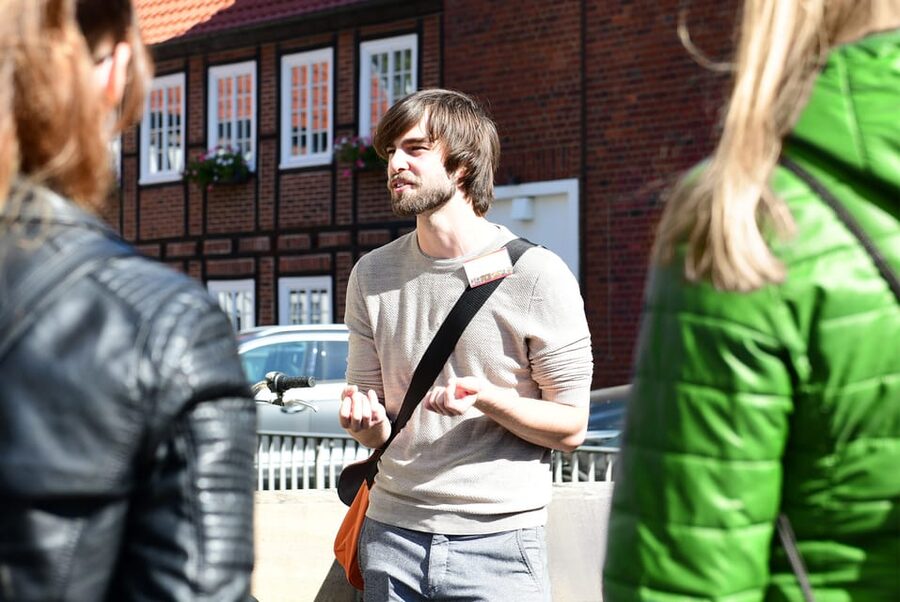
- Start opposite the Historic City Hall: Find the guide beneath the Michaelisplatz sign, near the Rathausrelief, and look for the orange bag marked k3.
- Connect Mimigernaford to modern Münster: At St. Paul’s Cathedral, trace the settlement’s development into a city.
- See the physical marks of the Anabaptists: The pointed tower of the Überwasserkirche and the cages at St. Lambertus carry the story into the present.
- Visit the Peace Hall setting: Learn how Münster helped host negotiations that ended the Thirty Years’ War in 1648.
- Spot Johann Conrad Schlaun’s work: The Erbdrostenhof and Clemenskirche show the Baroque style that helped shape the city center.
- Keep German in mind: The live guide speaks German, and children from birth through age five join free.
Why this 90-minute tour works well
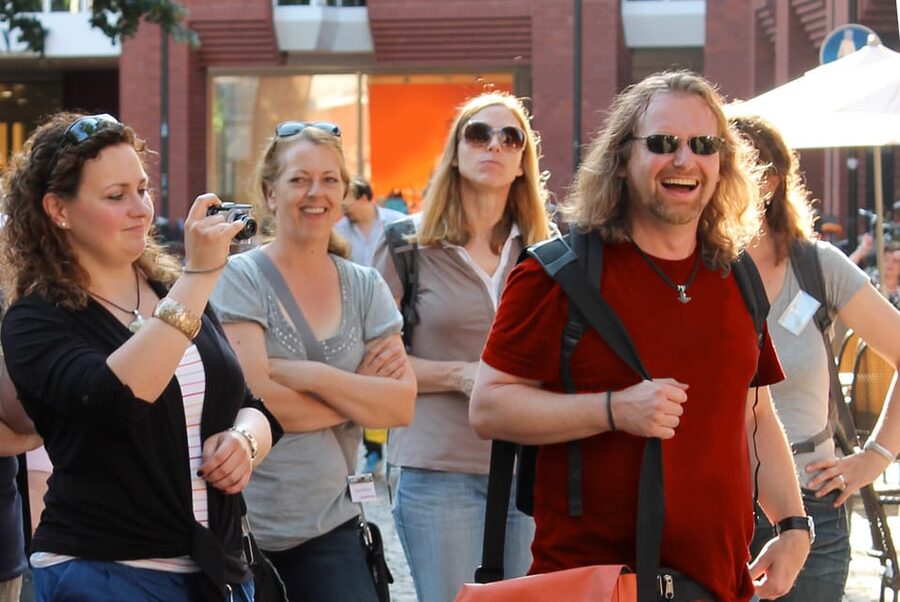
Münster is easy to approach as a pleasant collection of streets, churches, and historic façades. A guide gives those sights a clear order. Instead of seeing one church after another, you follow the forces that shaped the city: clergy and merchants, religious upheaval, war, diplomacy, and Baroque design.
That structure matters because Münster’s buildings often hold clues that are easy to miss. The tower of the Überwasserkirche is not simply an incomplete spire. Its missing point is tied to the Anabaptist rule in the 16th century. The cages at St. Lambertus are not decorative curiosities. They symbolize the end of that movement.
The tour lasts about an hour and a half, enough time for a useful orientation and several strong stops. I see this as a good first activity in Münster. You can use the walk to decide which churches, squares, or historic interiors deserve a closer look later.
The timing also works for families and short city breaks. Younger children may not follow every political or religious detail, but the unusual stories and visible symbols can hold their attention better than a long lecture. Children aged 0 to 5 join free, which keeps the cost sensible for families.
More old town walks in Germany:
- Dresden: Semperoper and Old Town Tour
★ 4.8 · 5,735 reviews - Nuremberg: Old Town Guided Walking Tour
★ 4.6 · 2,416 reviews - Munich: Old Town & Viktualienmarkt City Walk in German
★ 4.7 · 2,304 reviews
Finding the meeting point at Michaelisplatz
The meeting point is opposite Münster’s Historic City Hall, beneath the sign marked Michaelisplatz and close to the Rathausrelief. This is a useful central location, but take a moment to orient yourself before the start. The guide wears an orange bag with the k3 sign, giving you a clear way to identify the group.
There is no need to spend time searching for a distant office or transport connection. You meet in the old town and begin among the sights that form the heart of the tour.
The guide has been described as punctual, friendly, and ready to answer questions. That matters on a short walking tour. A late start or a guide who rushes through questions can make 90 minutes feel thin. Here, the available feedback points to an orderly start and a guide who knows the route well.
No individual guide’s name is provided, so you should not book this expecting a particular named host. The important practical point is that the tour is led live in German by a k3 Stadtführungen guide.
St. Paul’s Cathedral and the making of Münster

The first major story begins at St. Paul’s Cathedral. Here you learn how the small Saxon settlement of Mimigernaford became Münster. That name change is more than a piece of local trivia. It gives you a starting point for understanding how a small settlement grew into a city with powerful religious and commercial institutions.
The cathedral also introduces the idea of cathedral immunity. In simple terms, the cathedral and its surrounding area had a special legal and social status. The tour uses that setting to explain the older relationship between the clergy and the town.
Those tensions were not locked away in the past. Earlier disputes between merchants and clergy still affect the shape of Münster’s center, and the guide points out how the cityscape reflects them. This is one of the better reasons to take the walk with a local guide. The buildings may look orderly today, but their arrangement carries evidence of old rivalries.
You’ll want to listen closely here if you enjoy urban history. The value is not just in hearing dates. It is in learning why the center developed as it did, and why religious authority and business interests could pull the city in different directions.
The Überwasserkirche and the marks of Anabaptist rule

The Anabaptist chapter is likely to be the most memorable part of the route. In the 16th century, Anabaptist rule in Münster brought major changes and conflict. The tour connects that period to two physical details that remain visible.
At the Überwasserkirche, the tower still lacks its point. Some saints there also remain headless. These details give the story a direct, almost unsettling quality. You are not hearing about a distant event with no trace left behind. You are looking at the results in the stone and sculpture around you.
This is a good example of how the tour moves beyond a standard list of monuments. The guide explains why something looks unusual, then links it to the political and religious struggles of the city. I find that approach much more useful than memorizing the names of buildings without knowing what happened there.
The subject can be grim, and the tour does not reduce it to a quirky anecdote. The missing tower point and damaged saints belong to a period of upheaval. You should expect a serious historical explanation, even though the overall guiding style is described as entertaining and easy to follow.
A few more Germany half-days to weigh up
- Münster: Nachtwächter-Führung (Erlebnistour)
★ 4.4 · 213 reviews - Münster: Private Guided Rickshaw City Tour
★ 4.8 · 143 reviews - Münster: Night watchman tour through the picturesque old town by lantern light
★ 4.8 · 65 reviews - Private Christmas Tour in Münster including Glühwein
★ 4.9 · 54 reviews
St. Lambertus and the famous cages
At the market church of St. Lambertus, you see the cages associated with the end of the Anabaptist movement. They remain on the church tower, where the tower keeper once worked.
This stop has a strong visual payoff. The cages are easy to remember because they are so unusual, and their position high on the tower makes you look at the church in a different way. The guide explains both their connection to the Anabaptist story and the role of the tower keeper.
St. Lambertus also helps place the religious conflict within the daily life of the old city. Churches were not isolated monuments. Their towers watched over the market, announced time, and formed part of the working city. The story of the tower keeper adds a small human detail to a larger account of punishment and power.
If you prefer gentle sightseeing with no difficult subjects, this section may feel stark. If you want a tour that explains the less comfortable parts of Münster’s past, it is one of the strongest stops.
Prinzipalmarkt and the city’s public face
The walk includes Prinzipalmarkt, one of Münster’s key sights. Its arcaded buildings and strong architectural rhythm give the center a clear sense of place, but the tour helps you read the square as more than a pretty setting.
The earlier struggles between merchants and clergy are part of the story of how Münster developed. At Prinzipalmarkt, those links between commerce, civic authority, and religion become easier to understand. You can look at the buildings with a better sense of why the market area mattered.
This is also a useful orientation stop. If you are new to Münster, the square gives you a practical reference point for later wandering. The tour connects it with the cathedral, St. Lambertus, and the Historic City Hall, so you begin to see how the central sights relate to one another.
The walk is not presented as a long architectural survey. Instead, you get selected details that explain the city’s character. That keeps the pace moving and helps the 90 minutes feel purposeful.
The Historic City Hall and the Peace Hall
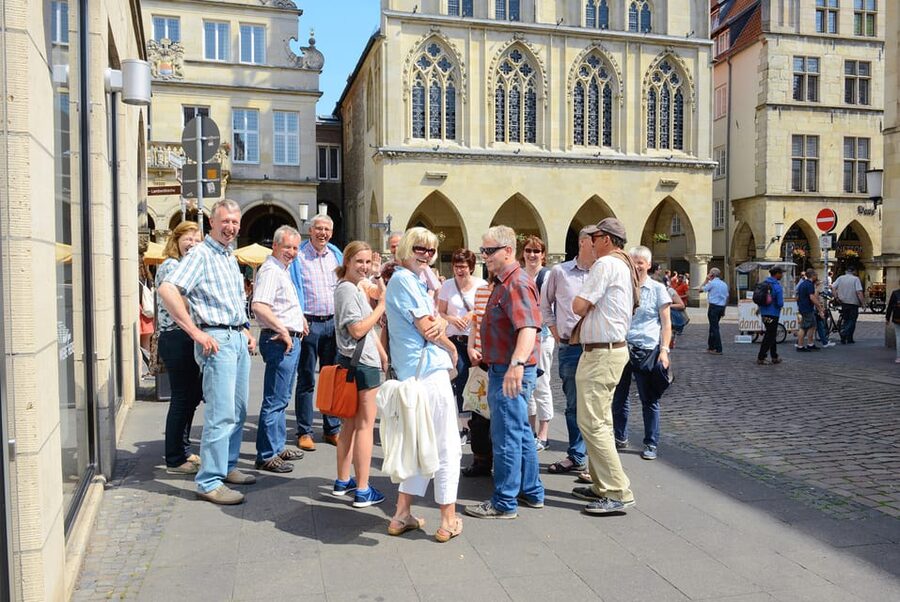
At the Historic City Hall, the focus shifts from local power struggles to European diplomacy. Inside the building is the Peace Hall, the place where peace was signed between the Dutch and the Spanish.
The negotiations in Münster formed part of the Westphalian peace process, which brought the Thirty Years’ War to an end in 1648. That conflict caused enormous suffering across Europe, so the Peace Hall carries importance far beyond Münster.
The tour explains the role of the city in those negotiations and why the room became a symbol of the Peace of Westphalia. You do not need to be a specialist in European politics to appreciate the setting. The simple point is powerful: this old civic building was connected to an agreement that helped end one of Europe’s most destructive wars.
Because the meeting point is near the Historic City Hall, you begin or end close to this major site, depending on the route and timing used on your date. The supplied details confirm the building as a tour highlight, but do not promise a separate interior visit schedule. If entering the Peace Hall is especially important to you, confirm what the booking details say for your chosen departure.
Erbdrostenhof and Clemenskirche: Münster’s Baroque side
The tour also introduces two buildings by Johann Conrad Schlaun, one of the city’s important Baroque master builders. The Erbdrostenhof and Clemenskirche show the style that helped shape Münster’s appearance.
These stops add balance to the route. The cathedral and market churches carry older religious and civic stories, while Schlaun’s buildings show a later phase of city design. You get to see how Münster’s identity continued to change rather than ending with its medieval center.
The Erbdrostenhof is a good reminder that architecture can signal status and authority. Clemenskirche offers another view of Schlaun’s style, and together the buildings help you recognize his influence elsewhere in Münster.
I like this part of the itinerary because it prevents the tour from becoming only a walk through war and religious conflict. Münster’s past also includes design, patronage, and civic rebuilding. The Baroque section gives the tour a change of pace near the end.
Guide style, language, and pace
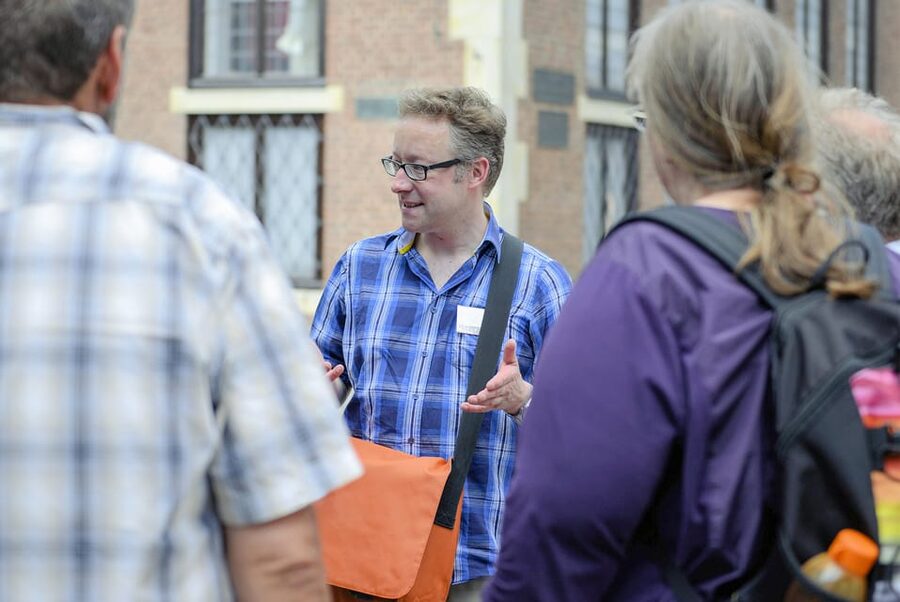
The live guide speaks German, and the tour is held in German. That is the most important booking decision. If you can follow spoken German comfortably, the tour offers a direct way to hear local stories with room for questions. If you only know a few German phrases, you may miss the links between the stops, even if the buildings are enjoyable to see.
The guide style is described as competent and entertaining. A previous departure lasted the expected amount of time, and questions were answered clearly. Another account describes the walk as informative and varied, with access to corners that are easy to overlook on your own.
Do not expect a private tour with unlimited time at every sight. At 90 minutes and $16, this is a compact introduction. You will get the main connections and highlights, not an exhaustive study of Münster’s churches, architecture, or political history.
That trade-off is fair. I would choose this format if you want a strong first look, especially before exploring independently. I would choose a longer or specialist tour only if you already know Münster and want detailed attention to one subject.
Price, family value, and flexible booking
At $16 per person, the tour is reasonably priced for a live 90-minute walk through Münster’s central sights. The value comes from the number of major themes covered in a short time: the city’s origins, cathedral privileges, merchant and clergy disputes, Anabaptist rule, the Peace of Westphalia, and Baroque architecture.
You also avoid paying for a long excursion when all you need is orientation. The route concentrates on the old town, so the price is easier to justify for a first visit or a free morning.
Families receive a helpful break because children aged 0 to 5 join free. Older children may get the most from the tour if they can follow German and are interested in unusual buildings or dramatic historical episodes.
You can cancel up to 24 hours before the activity for a full refund. The reserve-now, pay-later option also lets you hold a place without paying immediately, which is useful when your Münster schedule is still moving.
Who should book this Münster walk?
I recommend it most for first-time visitors who want context before exploring the center alone. It also suits people who like history explained through visible details rather than through a museum lecture.
You should consider it if you want:
- A short introduction that fits around meals and other sightseeing
- Major old-town highlights in one connected route
- Stories about Münster’s religious and political conflicts
- A live German-speaking guide who can answer questions
- A family-friendly price for very young children
- A central meeting point near the Historic City Hall
You may want to skip it if you need an English-language tour, want a private guide, or prefer to spend a long time inside each church and historic building. The walk is broad rather than highly specialized, and German ability is essential.
FAQ
Where does the Münster old town tour meet?
Meet opposite the Historic City Hall beneath the sign marked Michaelisplatz, close to the Rathausrelief. The guide wears an orange bag with the k3 sign.
How long does the tour last?
The guided old town walk lasts 1.5 hours, or 90 minutes.
What language is the tour conducted in?
The live tour guide speaks German, and the tour is held in German.
How much does the tour cost?
The listed price is $16 per person.
Can children join the tour for free?
Yes. Children aged 0 to 5 years can take part free of charge.
Which Münster sights are included?
The tour covers highlights including St. Paul’s Cathedral, St. Lambertus Church, Prinzipalmarkt, and the Historic City Hall. It also includes the Erbdrostenhof and Clemenskirche.
Can I cancel or pay later?
You can cancel up to 24 hours in advance for a full refund. You can also reserve now and pay later, so no payment is required at the time of booking.
Should you book the Münster Old Town Highlights Guided Tour?
Book this walk if you want Münster to make sense, not just look attractive. For $16, you get a compact route through the cathedral, market church, Prinzipalmarkt, Peace Hall setting, and Schlaun’s Baroque buildings, with the city’s odd and serious stories woven between them.
The strongest reason to go is the detail. A tower without its point, headless saints, and cages high on a church tower are the sort of things you might notice but not understand on your own. The guide supplies the connection.
My only firm caution is the German-only format. If that works for you, this is a practical, well-priced introduction to Münster’s old town, with enough historical bite to make your later walks more rewarding.
Just added around Germany
- From Berlin: Gardens & Palaces of Potsdam Bike Tour★ 5.0 · 61 reviews
- Berlin: Battle for Seelow Heights WW2 tour -Clash of Titans★ 5.0 · 27 reviews
- From Amsterdam: Cologne Private Sightseeing Tour★ 5.0 · 4 reviews
- From Berlin: Historical Gems of Potsdam Private Day Trip★ 4.4 · 4 reviews
- Freiburg: Veni, vidi, vino – wine hike and tasting★ 4.5 · 144 reviews
- From Alken: Return Day Trip by Boat to Cochem★ 4.6 · 141 reviews
- Fritz Haarmann – Die Mördertour★ 4.6 · 41 reviews
- Friedrichshafen: Zeppelin Museum Entry Ticket★ 4.1 · 83 reviews
Munster Tours, compared.

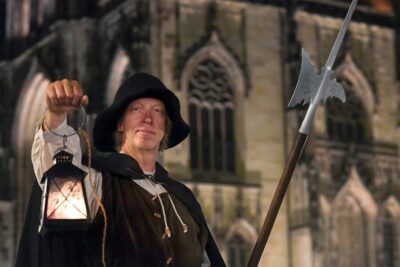
Night watchman tour through the picturesque old town by lantern light
Read our review →
Private Christmas Tour in Münster including Glühwein
Read our review →Browse the lists this tour appears in