
Review · MANNHEIM TOURS
Mannheim: Public Night Watchman Tour with Night Watchwoman Marie
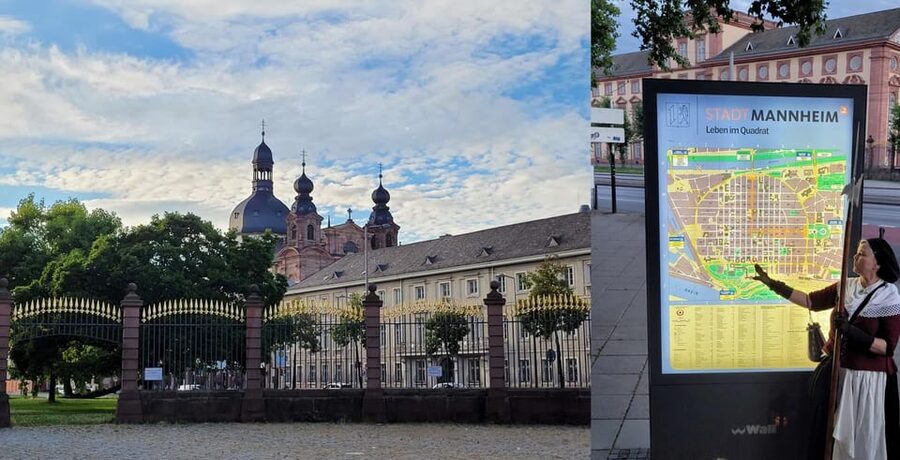
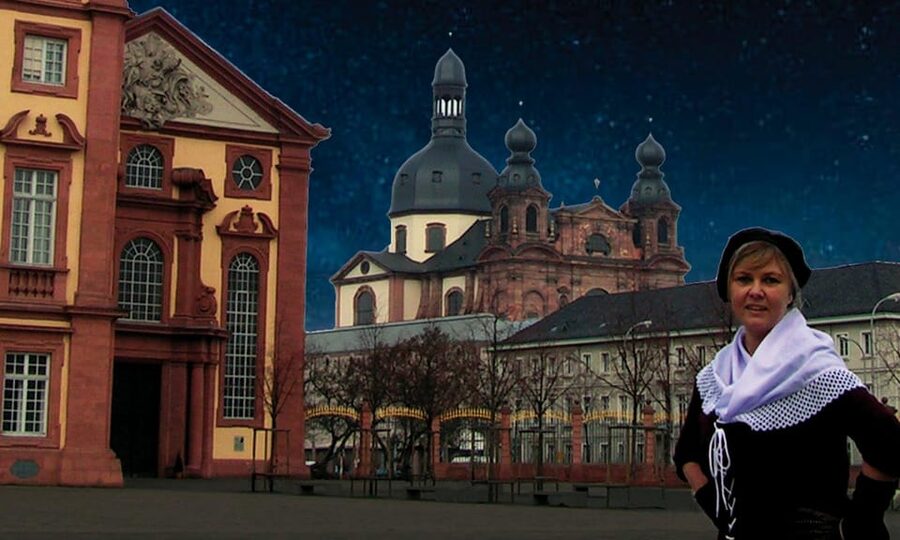
Mannheim’s night watchwoman Marie turns a city walk into a small piece of living theater. With lantern and halberd in hand, she leads you from the Baroque Palace through the former old town, linking local history to funny, grim, and sometimes odd stories from earlier centuries.
I like the clear local focus and the way the tour uses the night watchman’s job to explain daily life, not just grand buildings. I also like the human scale: tales of dishonest professions, drunken troublemakers, stinking air, the first automobile, and the Elector’s court make Mannheim easier to picture.
The main consideration is language. The tour is conducted in German, and some material remains in its original language. At about $17 per person, it offers good value if you enjoy guided storytelling, but it is less suitable if you want a formal indoor palace tour or an English-language walk.
Key points to know before you book
- Marie leads in period costume: Her lantern and halberd help turn a standard city walk into a night watch patrol.
- The tour lasts 90 minutes: The route begins and ends at Mannheim Baroque Palace and covers several central landmarks.
- Stories reach beyond palace history: Expect tales about dishonest jobs, bad smells, lightning rods, early cars, and the troubles of watchman life.
- Mannheim’s golden age gets attention: Carl Theodor’s court and the Musenhof add a cultural side to the tour.
- The tone is lively and personal: The strongest praise centers on Marie’s engaging delivery, humor, and ability to make local history easy to follow.
- German is the tour language: Wheelchair access is listed, but the walk still takes place along city streets and historic areas.
Why Mannheim needs a night watchwoman
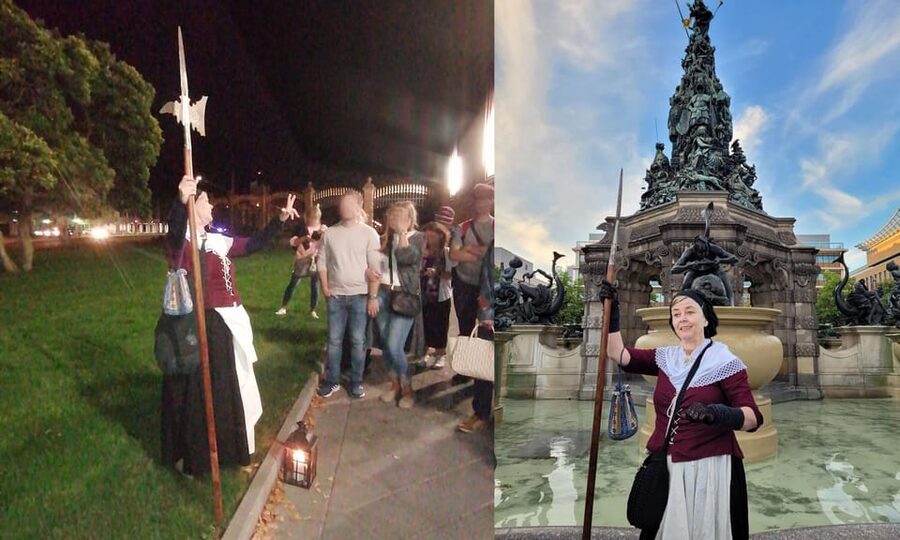
A night watchman tour works best when it gives you more than a list of dates. Marie’s role provides a useful point of view. She is not presenting Mannheim from a distant podium. She is patrolling the streets, keeping order, watching for thieves, and dealing with the unruly people who came out after dark.
That setup lets you hear about the less polished side of city life. The program includes stories of dishonest professions, a phrase that points to work considered disreputable or outside accepted civic life. It also touches on drunken rabble, thieves, bad smells, and the hard conditions faced by the person assigned to guard the streets.
I like this approach because it places grand Mannheim buildings beside ordinary worries. The Elector’s court may represent power and culture, but the night watchman had to think about safety, weather, noise, and whether trouble was brewing in an alley.
Marie’s costume, lantern, and halberd are not just decoration. They give the walk a simple dramatic frame. You follow someone who appears to belong to the older city, while the subjects move between serious history and comic detail.
More night watchman walks:
- Mannheim, guided costume tour: Tour with Night Watchman
★ 4.9 · 26 reviews - Dresden: The Original Night Watchman Tour in Lantern Light
★ 4.6 · 6,653 reviews - Hamburg: Night Watchman’s Tour of St. Pauli in German
★ 4.7 · 4,818 reviews
Starting at Mannheim Baroque Palace
The meeting point is the Court of Honor at Mannheim Baroque Palace. This is a practical place to begin because the palace gives you an immediate sense of the scale and ambition of the city’s ruling class.
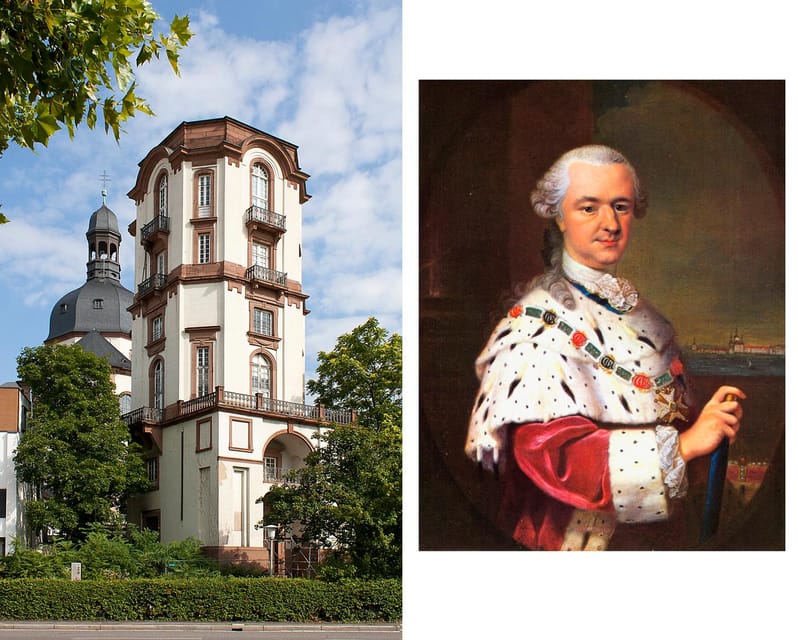
The palace is also tied to Elector Carl Theodor, whose court forms an important part of the tour. The stories about his Musenhof, or court of the arts and learning, show Mannheim during its golden age. You get a view of the city not only as a place of streets and buildings, but as a center shaped by an ambitious ruler and his cultural circle.
The opening guided section should help you set the scene before the walk moves into the former old town. Do not expect a full palace interior visit based on the tour details provided. The palace functions as the start and finish point, with the storytelling continuing outdoors.
For practical planning, arrive at the Court of Honor with enough time to find Marie before the walk begins. The meeting point is specific, and the tour returns to the same place, which makes it easy to combine with other plans in central Mannheim.
Palais Bretzenheim and the courtly side of the city
The route continues to Palais Bretzenheim. This stop keeps the focus on Mannheim’s upper levels, where palaces and court life reflected the city’s political importance.
The palace setting fits well with stories about Carl Theodor and his Musenhof. Marie can use this part of the route to connect buildings with the people who shaped the city’s golden age. That contrast is one of the tour’s strengths: you move from courtly culture to street-level problems without leaving the same compact city center.
The tour is not presented as a specialist architectural lecture. You should expect the building to serve as a backdrop for anecdotes and historical scenes. If you want detailed information about every façade, architectural phase, or interior room, a dedicated architecture tour may suit you better.
If you prefer history that explains how a place felt and functioned, this stop should work well. The night watchwoman’s point of view keeps the palace from becoming just another grand building on a list.
Alte Sternwarte and Mannheim’s scientific ambitions
At the Alte Sternwarte, the tour shifts toward science and the city’s intellectual life. This is a useful counterpoint to the stories of crime, bad air, and street disorder.
The old observatory connects with a period when rulers and courts supported science, measurement, and careful study of the world. In the context of Carl Theodor’s court, the stop helps show that Mannheim’s golden age was not only about ceremony. It also involved ideas, research, and public interest in new knowledge.
The route’s broader stories about lightning rods fit this interest in scientific change. A lightning rod may sound like a small subject, but it gives Marie a way to explain how new technology could seem strange, useful, or even alarming when first introduced.
You will not hear a dry list of inventions. The appeal is the link between a technical object and the people who had to live with new ideas. That is typical of this tour’s method: take something familiar today and show how unusual it once seemed.
More evenings out in Mannheim:
- Hamburg: 90-Minute Evening Lights Harbor Cruise
★ 4.5 · 7,728 reviews - Hamburg: 1-Hour Harbor Evening Lights Cruise
★ 4.4 · 4,861 reviews - Leipzig: 1.5-Hour Public Tour with Night Watchman Bremme
★ 4.6 · 3,116 reviews - Bremen: Walking Tour in German with Night Guard
★ 4.7 · 2,922 reviews
Schillerhaus and the literary connection
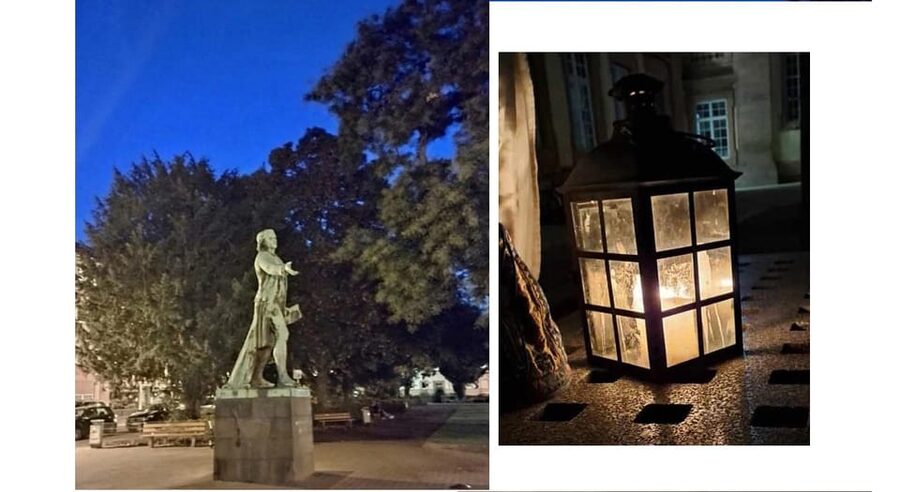
Schillerhaus Mannheim adds a literary layer to the walk. Its place on the route brings Friedrich Schiller and Mannheim’s connection with the arts into the story, alongside the court culture associated with Carl Theodor.
This stop should appeal to you if you like the way literature and city history overlap. A writer’s life is easier to grasp when connected to the streets, patrons, theaters, and social circles around him. The tour details do not promise a long literary seminar, so expect a focused stop within a wider story rather than a complete account of Schiller.
Schillerplatz follows as another point in the route. The square gives Marie room to place the literary and civic parts of Mannheim into the public setting of the old town.
The walk is strongest when these stops are treated as parts of one story. You are not simply moving from palace to palace. You are seeing how power, art, science, and everyday street life occupied the same city.
Jesuit Church and the city’s grand religious setting
The Jesuit Church brings a major religious building into the route. Its scale and formal character offer another clear contrast with the night watchman’s practical duties.
A church stop can easily become a quick photo pause on an ordinary city walk. Here, it helps show the range of institutions that shaped Mannheim. The Elector’s court, religious foundations, public squares, and private houses all formed part of the city Marie once had to patrol.
The supplied details do not specify an interior visit or a service-related element, so you should treat this as a guided sightseeing stop rather than an included church tour. Marie’s stories remain the main attraction.
The church is also a useful point for understanding the difference between public image and private reality. Grand buildings project order and authority. The night watchwoman’s tales remind you that no city is ever as orderly after dark as its official buildings suggest.
Paradeplatz and the public face of Mannheim
Paradeplatz gives the walk a broad civic setting after the narrower historic streets and individual buildings. The name itself points to ceremony, public display, and the organized side of urban life.
This is a natural place for stories about authority, rules, and the people who were expected to enforce them. The night watchman’s job sat between official power and daily disorder. He was part guard, part messenger, and part visible warning to anyone thinking about causing trouble.
The route also includes the subject of the horseless carriage, or early automobile. Paradeplatz provides an effective urban backdrop for that story because it lets Marie compare older ways of moving through the city with the arrival of modern technology.
The automobile anecdote helps keep the tour from feeling locked in one century. The program reaches back to older night watch traditions, then moves toward Mannheim’s later developments. You get a sense of change rather than one fixed picture of the past.
Dalberghaus and the final stretch
Dalberghaus is the last named stop before the route returns to Mannheim Baroque Palace. By this point, the walk has moved through courtly, scientific, literary, religious, and civic settings.
The stop fits the tour’s interest in people and institutions behind the façades. As with the other buildings, the available details do not promise a full indoor visit or an extended architectural lecture. Marie’s narration is the core experience, and Dalberghaus works as another setting for local stories.
The return to the palace is convenient. You finish where you started instead of needing to find your way back through unfamiliar streets. That matters after a night walk, especially if you are planning dinner, a hotel visit, or another activity nearby.
The complete route is listed at about 1.5 hours. That is long enough to build a story and cover several landmarks, but short enough to fit into an evening without taking over your whole schedule.
The stories that make the walk memorable
The tour’s subjects are unusually varied. Along with the Elector and the Musenhof, Marie covers:
- The dishonest professions and how society viewed certain forms of work
- The difficult, sometimes tormented life of a night watchman
- Thieves, drunken people, and the duty to keep peace
- Stinking air and unpleasant urban conditions
- Lightning rods and changing ideas about technology
- The horseless carriage and the arrival of the automobile
- Mannheim around the period described in the tour as roughly 1875
This list gives you a clue about the tone. It is not a solemn procession through famous monuments. It mixes humor, local color, and uncomfortable details.
That balance seems to be the reason Marie receives such strong praise. The German comments repeatedly describe her storytelling as entertaining, informative, engaging, and full of effort. One particularly useful detail is that she kept the tour interesting despite bitter cold in late December. If you book in winter, dress for standing outdoors, even if the forecast looks manageable.
Marie’s delivery is clearly central. The strongest reactions describe the tour as easy to enjoy, full of care, and worthwhile even for people who already know Mannheim well. That last point matters. A local history walk can still work for you if you live in the area or have already seen the main sights, because the night watchwoman’s angle changes the way familiar places are read.
Language, pace, and accessibility
The live tour guide speaks German. Some content is presented in its original language, so you should have enough German to follow spoken storytelling, humor, and historical explanation.
If your German is limited, the costume, route, and buildings will still provide visual context, but much of the value lies in Marie’s words. This is not the best choice if you need a fully translated English experience.
Wheelchair accessibility is listed for the activity. Since the route passes through historic city streets and former old-town areas, you may still want to ask the provider about the exact street conditions if you have specific mobility needs. The listed accessibility is encouraging, but it does not give detailed information about every surface or passage.
The tour is public, and no group size is provided. You should expect to share Marie’s storytelling with other participants rather than receive a private guide’s attention.
Is $17 a fair price?
At $17 per person, this is a sensible price for a 90-minute guided walk with a costumed performer and a route covering several central landmarks.
The value comes from the interpretation, not from admission to a palace, museum, or church. No separate entrance is listed as included. You are paying for Marie’s character, research, local stories, and the structure that ties Mannheim’s buildings together.
I would judge the price favorably if you enjoy guided walks and want something more distinctive than a standard overview. The cost is also modest enough to make the tour a low-risk addition to a Mannheim visit.
The value is weaker for you if you want a long indoor visit, detailed art history, or a tour in English. In that case, the language and outdoor storytelling format are important limitations, not minor details.
Booking is flexible: you can cancel up to 24 hours before the tour for a full refund, and you can reserve now and pay later. Starting times vary, so check availability for your date. These terms help if your Mannheim schedule is still changing.
Who will enjoy Marie’s patrol most?
I would recommend this tour to several kinds of visitors:
- You enjoy local history told through people, jobs, and odd details.
- You like costume tours with humor rather than formal lectures.
- You want to see central Mannheim at a relaxed walking pace.
- You speak German well enough to follow a live guide.
- You have already seen the main buildings and want a fresh angle.
- You are visiting in a group that likes stories about crime, technology, court life, and city customs.
Families may enjoy the lantern, halberd, and watchman theme, though the supplied details do not specify a minimum age or child-focused format. If you are sensitive to grim stories, note that the tour includes gruesome tales and the hard side of historical city life.
Winter visitors should plan carefully. The late December tours remained engaging in cold weather, but that does not make the cold disappear. Warm clothing and shoes suited to a 90-minute outdoor walk are sensible.
Should you book this Mannheim night watch tour?
Book it if you want a character-led view of Mannheim and can follow German. Marie’s costume and storytelling turn the former old town into a stage, while the subjects give you more than the usual parade of dates and façades.
Skip it if you need English, want substantial indoor sightseeing, or prefer a detailed architectural tour. For everyone else, $17 buys a compact, entertaining introduction to Mannheim’s courtly past, street-level problems, and early modern changes.
The best reason to choose it is the mix. You may start with Carl Theodor’s cultured court, hear about dishonest work and bad air, pause at a church and an observatory, then end with the horseless carriage. That is a memorable way to see how a city changes while its old streets keep their stories.
FAQ
Where does the Mannheim night watchman tour begin?
It begins at Mannheim Baroque Palace, in the Court of Honor.
Where does the tour finish?
The route returns to Mannheim Baroque Palace.
How long does the tour last?
The tour lasts approximately 1.5 hours.
Who leads the tour?
Night watchwoman Marie leads the costumed tour.
What language is the tour conducted in?
The live tour is conducted in German, and some content is shown in its original language.
Is the tour wheelchair accessible?
Yes, the activity is listed as wheelchair accessible.
Can I cancel for a full refund?
Yes. You can cancel up to 24 hours in advance for a full refund.
Just added around Mannheim
- Segway Tour: Old Town Hall, Water Tower & Ehrenhof★ 5.0 · 21 reviews
- Segway Tour of Mannheim: Rhein, Waldpark, and Lindenhof★ 5.0 · 13 reviews
- Mannheim: Segway Tour along the Neckar River★ 5.0 · 15 reviews
- Public tour With Bertha Benz through the city of inventors Costume tour★ 5.0 · 5 reviews
- Mannheim, guided walking tour: Pulsating Jungbusch★ 3.9 · 21 reviews
- Mannheim, guided walking tour: Industrial culture at the commercial port★ 4.8 · 5 reviews
- Mannheim, guided costume tour: Tour with Night Watchman★ 4.9 · 26 reviews
- Mannheim, guided costume tour: Hangmen, Witches, Huguenots★ 5.0 · 4 reviews
Mannheim Tours, compared.

Speyer: Technik Museum Speyer Ticket with an IMAX Dome Film
Read our review →
Mannheim, guided Walking Tour: Discover Mannheim
Read our review →
Mannheim, guided costume tour: Tour with Night Watchman
Read our review →
Mannheim, guided walking tour: Pulsating Jungbusch
Read our review →
Segway Tour: Old Town Hall, Water Tower & Ehrenhof
Read our review →
Browse the lists this tour appears in