
Review · HAMBURG TOURS
Hamburg: Reeperbahn & St. Pauli by Day
St. Pauli is easiest to understand in daylight, when you can see more than neon signs and nightclub doors. This two-hour walk connects the district’s harbor roots with its football culture, music history, red-light past, and famous entertainment streets. I especially like the stop near Davidwache and Herbertstrasse, where the guide can explain how difficult and colorful parts of St. Pauli shaped one another. I also like the visit to Beatles-Platz, a small but memorable link between Hamburg and the band’s early career.
The main consideration is language: the live tour is in German. The route is also an outdoor look at streets linked to prostitution and nightlife, so the subject matter may not suit every family. Still, daytime St. Pauli is more approachable than its late-night reputation suggests, and the tour has worked well for children and teenagers, including a 12-year-old and a group of teens.
Key points at a glance
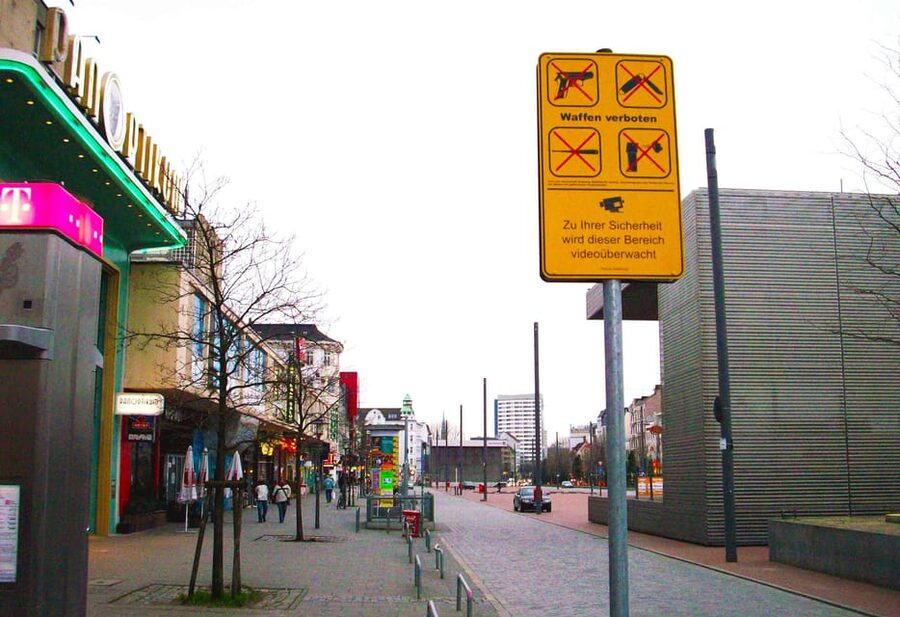
- See St. Pauli in daylight: Understand the district without entering bars or dealing with its late-night crowds.
- Start at St. Pauli Stadium: Meet at Millerntorplatz and begin with the neighborhood’s football identity.
- Visit the Davidwache and Herbertstrasse area: Learn how policing, prostitution, and public image are tied to St. Pauli.
- Pause at Hans-Albers-Platz: Hear why this nightlife square is nicknamed the Hamburger Bermuda Triangle.
- Finish on Große Freiheit: Connect the street’s clubs and entertainment history with Beatles-Platz.
- Pay $21 for two hours: A reasonable price if you want stories and orientation rather than club entry or drinks.
Why daytime is the right time for this St. Pauli walk

The Reeperbahn has a strong reputation, but a night out can show you only one narrow slice of the district. During the day, you have time to look at street signs, buildings, public squares, and the changing mix of uses without rushing from one bar to the next.
This tour gives you that broader view. You move through St. Pauli as a neighborhood with workers, residents, football supporters, musicians, entertainers, and visitors, not simply as Hamburg’s party strip. That distinction matters. If you want nightlife, you can return later with a better sense of where you are and what you are seeing.
The guide’s role is central. The route itself is easy to follow, but the value comes from explanation. A good guide links places that can otherwise seem unrelated: the stadium, the police station, the red-light district, the squares, and the music venues. Jenny, Kerstin, Guido Flo, and Ulf are among the guides who have led this experience, and the strongest feedback points to an afternoon that is funny, lively, and easy to follow.
The tour is in German, so you should be comfortable understanding spoken German. If you are, the two-hour length is well judged. It is long enough to give the district shape, but short enough to leave room for your own plans.
More St Pauli and Reeperbahn nights:
- Hamburg: Sex and Crime in St. Pauli Tour for Ages 18+
★ 4.7 · 15,447 reviews - Hamburg: Reeperbahn Lust & Laster Tour for Adults Only
★ 4.7 · 5,440 reviews - Hamburg: Insider Tour of the Reeperbahn & St. Pauli
★ 4.7 · 5,057 reviews
Meeting the guide at Millerntorplatz
You meet outside St. Pauli metro station, at the Millerntorplatz and Reeperbahn exit. Look near the phone booth for a guide carrying a white bag. This is a practical meeting point because it puts you beside St. Pauli Stadium and near the district’s main streets.
The opening view helps set the tone. St. Pauli Stadium is not just a sports venue placed on a map. It is one of the neighborhood’s best-known symbols, tied to the local identity that visitors often notice before they understand it. Starting here gives the tour a clear sense of place instead of dropping you straight into the Reeperbahn’s more famous nightlife zone.
Your guide begins with the route and a short introduction to St. Pauli’s past. Expect context rather than a museum lecture. The goal is to show how a harbor-side area for sailors and workers developed into a center for artists, entertainers, music, nightlife, and football culture.
That opening is useful if this is your first visit to Hamburg. You get your bearings quickly, and you learn why the district feels different from the city center. If you already know the Reeperbahn, the guide’s local stories may give familiar streets a new edge.
From harbor settlement to entertainment district

St. Pauli’s character comes from change. Its early connection with sailors and port workers helped create a district built around movement, work, lodging, food, and entertainment. Over time, artists and performers added another layer, and the area became known for clubs, music, theater, nightlife, and street culture.
The tour focuses on that development as you walk. You are not simply shown a collection of famous addresses. You are given a way to read the district. A street connected with nightlife may also reflect old working patterns. A public square may function as both a local meeting place and a party center. A police station may be famous because of the activity around it, not because the building itself is a grand sight.
I like this approach because St. Pauli can be hard to interpret on your own. The streets are full of strong images, but those images do not always explain one another. A guide helps separate fact from reputation and gives you a better sense of how the neighborhood gained its present identity.
The tone also matters. Several guides have been praised for making the walk amusing as well as informative. Kerstin, in particular, is described as lively and entertaining, while Ulf managed to keep the balance comfortable for both adults and a 12-year-old. That suggests the tour can be light on its feet without treating serious subjects as a joke.
Davidwache and the difficult story of Herbertstrasse
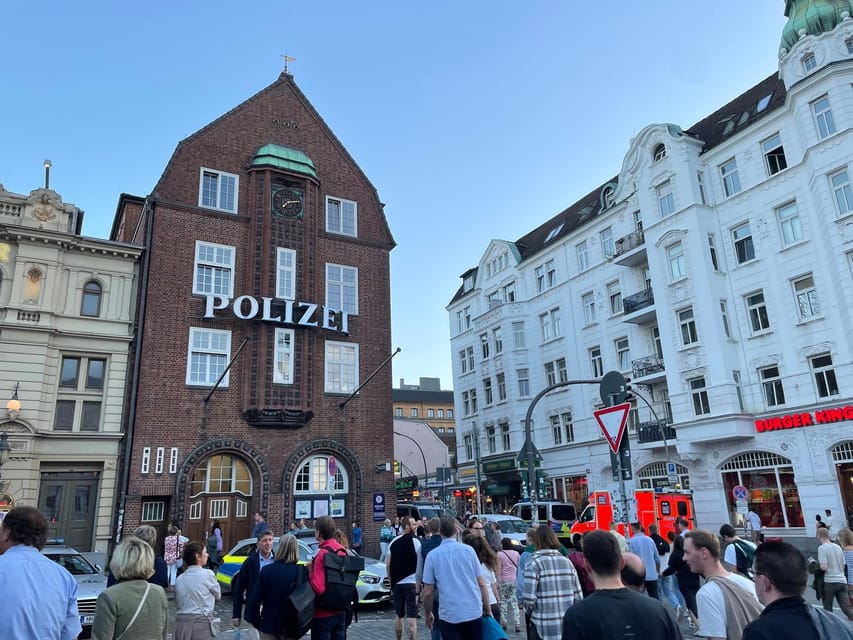
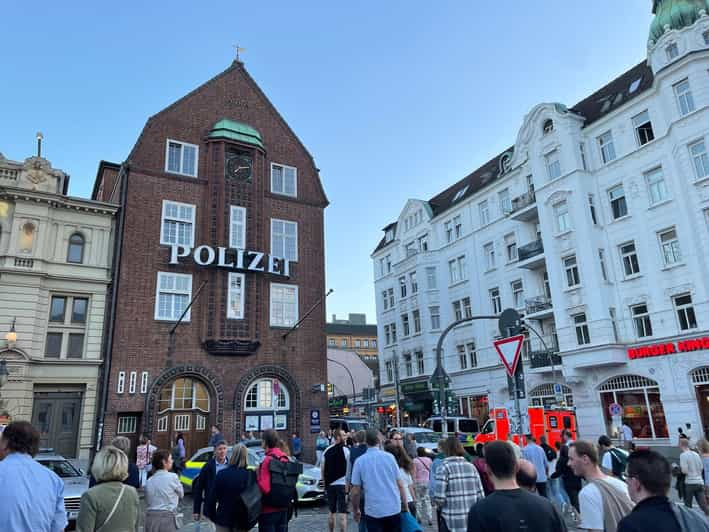
One of the most important sections takes place near the Davidwache police station. The building is closely linked with St. Pauli in the public mind, and its location puts you near streets where nightlife, crime, policing, and prostitution have long met.
Around the corner is Herbertstrasse, known for its connection with prostitution. Your guide explains the street’s background and its effect on the district. This is not presented as a bar stop or an invitation to enter. It is a chance to understand one of the most controversial parts of St. Pauli from the outside.
That distinction is important. Herbertstrasse is not a conventional sightseeing attraction, and some people may find the subject uncomfortable. The tour gives you context, but you should not expect a polished or family-themed presentation of the area. The setting is direct, adult, and tied to the realities of the red-light district.
At the same time, visiting in daylight makes the stop easier to process. You can listen, look around, and move on without the pressure of a late-night crowd. The tour does not include drinks, club visits, or bar admission, so you remain focused on the streets and their background.
A small note on tone: one participant objected strongly to a guide making repeated negative comments about Austrians. That complaint appears to be an isolated issue, while the other detailed comments praise the guides’ humor and friendliness. Still, it is a useful reminder that the experience depends on the individual guide. The stories should add color, not distract from the place or target people unfairly.
A few more Hamburg half-days to weigh up
- Hamburg: 1.5-Hour Harbor and Speicherstadt Day Cruise
★ 4.6 · 14,200 reviews - Hamburg: 90-Minute Evening Lights Harbor Cruise
★ 4.5 · 7,728 reviews - Hamburg: 2-Hour XXL Port of Hamburg Cruise Tour
★ 4.7 · 6,979 reviews - Hamburg: Line A Sightseeing Hop-On Hop-Off Bus Tour
★ 4.6 · 6,958 reviews
Hans-Albers-Platz, St. Pauli’s nightlife crossroads
The next major stop is Hans-Albers-Platz, a square known locally as the Hamburger Bermuda Triangle. The nickname hints at the square’s role in St. Pauli’s nightlife. It is a central point for people heading out to drink, dance, and continue into the surrounding streets.
By day, the square gives you a calmer look at a place associated with late hours. That contrast is part of the appeal. You can see how a public space changes meaning depending on the time, and you can hear how the surrounding nightlife developed rather than simply seeing the end result.
The stop also gives the guide room to explain St. Pauli’s social rhythm. This is not only a place for visitors. It is part of a wider district with its own local habits, meeting points, and strong public identity. A good explanation helps you avoid reducing the square to a photo stop.
The route is designed for walking, not for a long sit-down break. Wear shoes you can use comfortably for two hours, and allow for ordinary city conditions such as traffic, noise, and uneven attention as the group moves between points. The supplied information does not give a precise walking distance or group size, so you should think of this as a steady neighborhood walk rather than a private, slow-paced tour.
Große Freiheit and the Beatles connection
The tour finishes on Große Freiheit, one of the names most closely tied to St. Pauli’s entertainment history. The street is known for places where people come to dance, drink, and enjoy live entertainment. Your guide explains how it kept its place in Hamburg’s nightlife over time.
This is also where the Beatles connection adds a different note. Beatles-Platz is dedicated to the band and recalls the period when Hamburg helped shape its early story. The square is not a grand monument, but it is a worthwhile stop for music fans and a nice change of mood after the more difficult material near Herbertstrasse.
I like the way these two elements work together. Große Freiheit shows the street as a working entertainment zone, while Beatles-Platz gives it a clear international link. You see how a local music scene can become part of a much larger cultural story.
Do not expect entry into clubs or bars. The experience ends with an outside look at the street and its role in St. Pauli. That keeps the price low and the schedule predictable, but it also means you will need to plan a separate evening if you want music, drinks, or nightlife after the walk.
What $21 buys you
At $21 per person, the tour is priced for a short guided city walk. You are paying for two hours of explanation, route planning, and local storytelling, not for food, drinks, transport, or admission to entertainment venues.
That is good value if you are new to Hamburg or curious about St. Pauli but do not want to spend an entire night in the Reeperbahn area. The tour brings together several subjects that would be hard to connect on your own: the stadium, the police station, Herbertstrasse, Hans-Albers-Platz, Große Freiheit, and Beatles-Platz.
The value is lower if you only want to take photographs or wander independently. St. Pauli is easy to reach by metro, and the streets named on the route can be visited without a ticket. In that case, the guide’s stories are the main reason to pay.
The two-hour format also helps the budget. You can fit the walk into a morning or afternoon without giving up most of your day. It works especially well before a harbor visit, another city tour, or an evening meal. Since you can cancel up to 24 hours before the start for a full refund and reserve without paying immediately, the booking terms give you some flexibility when your Hamburg schedule is still changing.
Who will enjoy this experience most
I would choose this tour if you want to understand St. Pauli rather than simply pass through it. It suits first-time visitors, music fans, people interested in urban history, and anyone curious about how a working district became famous for nightlife.
It can also suit families during the day. The subject matter includes prostitution and crime, so parents should decide if that fits their children. The experience has worked for teenagers and for a 12-year-old, which suggests the guide can adjust the tone for mixed ages.
German speakers will get the full benefit. The live guide language is German, and the tour’s humor and local detail are likely to matter as much as the visible sights. If you do not understand German, this is not the best choice unless you have confirmed another language before booking.
The walk is wheelchair accessible, another practical advantage for visitors who need a step-free activity. The exact route conditions are not described in detail, so it is still sensible to confirm any personal mobility needs when arranging your day.
Practical tips for a better walk

Meet at the correct metro exit, Millerntorplatz and Reeperbahn, rather than assuming every St. Pauli station entrance leads to the same place. Look for the phone booth and the white bag, which should make the guide easier to identify.
Arrive ready for an outdoor walk. Drinks are not included, and there is no bar or club admission, so carry what you need for two hours. If you want to experience Große Freiheit at night, treat this tour as an introduction and return later on your own.
Keep your expectations realistic. You will see famous streets and squares, but the point is not a series of grand monuments. St. Pauli’s interest lies in its stories, contrasts, and public life. The guide’s explanation turns ordinary-looking corners into meaningful stops.
The experience has earned an overall rating of 4.4 from 71 ratings, with several strong comments about the guides’ humor, friendliness, and ability to keep the two-hour route moving. Kerstin is described as lively, Jenny as warm and entertaining, Guido Flo as successful with teenage participants, and Ulf as especially good at balancing adults and children.
Should you book the St. Pauli daytime tour?
Book it if you want a compact, story-led introduction to one of Hamburg’s most famous districts. For $21, you get a useful route, a look at the Reeperbahn beyond its nightlife image, and stops that include Herbertstrasse, Hans-Albers-Platz, Große Freiheit, and Beatles-Platz.
Skip it if you need an English-language tour, want to enter clubs, or prefer to explore without a guide. Also think twice if prostitution and crime are subjects you would rather avoid.
For German-speaking visitors, this is a practical first look at St. Pauli. Take it during the day, listen closely to the guide, and save the late-night experimentation for a separate plan.
FAQ
Where does the St. Pauli and Reeperbahn tour meet?
Meet outside St. Pauli metro station at the Millerntorplatz and Reeperbahn exit. The guide waits near the phone booth and carries a white bag.
How long is the walking tour?
The tour lasts two hours.
What language is the tour conducted in?
The live tour guide speaks German.
Is the tour wheelchair accessible?
Yes, the activity is listed as wheelchair accessible.
Does the price include drinks?
No. Drinks are not included.
Can I enter bars or clubs during the tour?
No. Admission to bars and clubs is not included, and the experience is a guided daytime walking tour.
Does the tour visit Herbertstrasse?
Yes. The route goes near Herbertstrasse, and the guide explains its links with prostitution and crime.
Does the tour include Beatles-Platz?
Yes. The experience includes a visit to the square dedicated to The Beatles, near Große Freiheit.
Can I cancel for a full refund?
Yes. You can cancel up to 24 hours in advance for a full refund. You can also reserve now and pay later.
Just added around Hamburg
- Winter Alster tour★ 4.0 · 12 reviews
- World War 2 Hamburg Private Guided Tour★ 5.0 · 6 reviews
- UNESCO World Heritage – Speicherstadt and Kontorhaus district★ 4.5 · 12 reviews
- Ticket for the Emigration Museum BallinStadt Hamburg★ 4.0 · 57 reviews
- hamburg Experienced differently with wish rental bike relaxed enjoy★ 5.0 · 5 reviews
- Hamburg Private Food Tours with a Local: 100% Personalized★ 5.0 · 3 reviews
- The Beatles in Hamburg – Private Tour★ 5.0 · 16 reviews
- The Beatles on St. Pauli★ 5.0 · 3 reviews
Hamburg Tours, compared.
1.5-Hour Harbor and Speicherstadt Day Cruise
Read our review →


Browse the lists this tour appears in