Review · HAMBURG TOURS
Hamburg: Tour from St. Michael’s to the Elbphilharmonie
Hamburg’s story comes into focus on this compact walk from the city’s beloved Michel church to its boldest modern building, the Elbphilharmonie. Along the way, you pass old homes, harbor streets, flood defenses, Speicherstadt warehouses, and the sharply modern HafenCity. The route links two very different Hamburgs without wasting time on a bus.
I like the strong sense of progression: you begin with the city’s traditional church and finish at the water, beneath an international architectural symbol. I also like the small stops, especially Krameramtsstuben and the Sieleinstiegshäuschen, which give the walk more character than a simple church-to-concert-hall transfer. The main drawback is that the tour is conducted in German and is not suitable for people with mobility impairments.
Key points along the two-hour walk
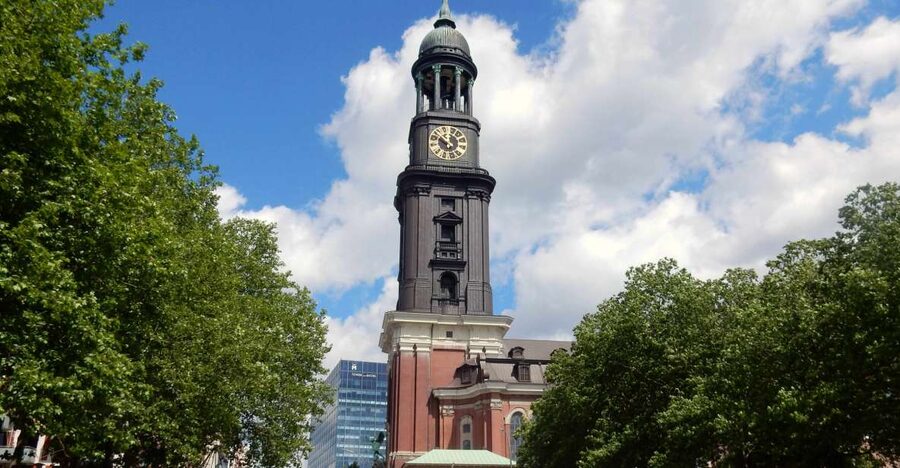
- St. Michael’s Church: Start beside Hamburg’s main church and learn about its enormous clock, said to be Germany’s largest church clock.
- Krameramtsstuben: Step into Hamburg’s oldest surviving row-house settlement, a rare look at compact urban life from another era.
- Michelwiese and Portugiesenviertel: Walk downhill toward the harbor through open green space and a neighborhood known for its Portuguese character.
- Flood protection at Baumwall: See the small Sieleinstiegshäuschen and learn how Hamburg protects low-lying areas from storm surges.
- Speicherstadt and HafenCity: Compare brick warehouse blocks with the glass, steel, and ambitious planning of the newer district.
- Elbphilharmonie finish: End beside Hamburg’s concert hall with harbor views and the option to visit the Plaza independently, subject to closure.
From the Michel’s clock to the Elbe
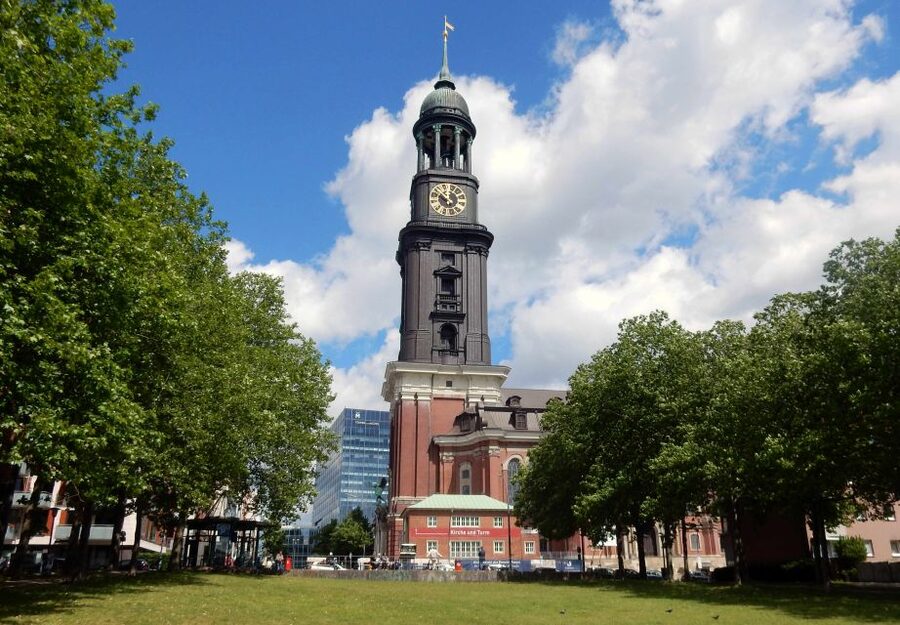
The route begins on the right side of the main entrance to St. Michaelis Church. Arrive about 10 minutes early and look for the guide carrying a white bag. That simple meeting point matters because the church sits in a busy part of central Hamburg, and the tour does not begin with a long orientation session.
St. Michaelis, usually called the Michel, is one of Hamburg’s defining sights. The church’s copper-colored tower is easy to spot, and its clock gives the opening stop a clear point of focus. You spend about 20 minutes here with the guide, enough time for a guided look and photographs rather than a full interior visit.
The tour does not include entrance fees to attractions, so you should not expect a church admission or a concert hall visit as part of the $25 price. The value comes from the outdoor storytelling and the way the route connects places that you might otherwise visit separately.
The church is an apt starting point. Hamburg has always been shaped by water, trade, faith, fire, and rebuilding, and the Michel gives you a traditional reference point before the walk turns toward the harbor. The guide’s German commentary is most useful if you can follow spoken German comfortably. If you cannot, the architecture and route are still accessible, but much of the tour’s purpose is the explanation between the stops.
A few more Hamburg half-days to weigh up
- Hamburg: Sex and Crime in St. Pauli Tour for Ages 18+
★ 4.7 · 15,447 reviews - Hamburg: 1.5-Hour Harbor and Speicherstadt Day Cruise
★ 4.6 · 14,200 reviews - Hamburg: 90-Minute Evening Lights Harbor Cruise
★ 4.5 · 7,728 reviews
Krameramtsstuben and Hamburg’s oldest surviving row houses
After the church, the group reaches Krameramtswohnungen, also called Krameramtsstuben. This is one of the most interesting stops on the route because it is more intimate than Hamburg’s grand public buildings.
The settlement preserves an old row-house arrangement associated with the Krameramt, a guild for shopkeepers. You see a tighter, more domestic side of Hamburg, with homes arranged in a way that feels very different from the broad streets and large offices elsewhere in the city.
The stop lasts about 10 minutes and includes time for photographs and explanation. That is enough for a useful introduction, though not a long architectural study. I would pay close attention here, since the small scale is easy to miss if you are focused only on the more famous sights ahead.
This stop also helps explain why a walking tour can offer more than a list of major attractions. The Elbphilharmonie gets the headlines, but Krameramtsstuben gives you a sense of how ordinary urban life once fit into the same central city. It is the sort of place you could walk past without understanding its importance.
Across Michelwiese toward Portugiesenviertel
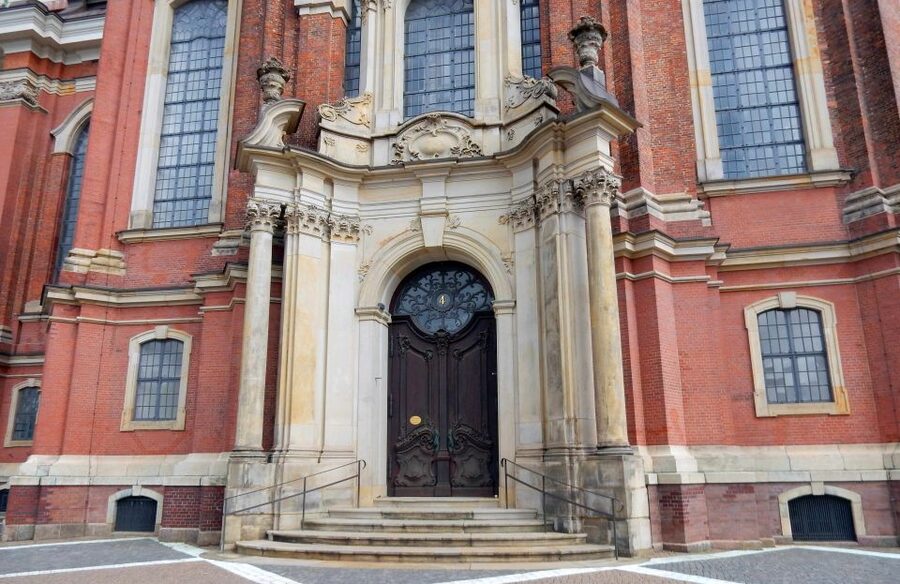
The route then crosses Michelwiese, an open area near the church, and heads toward the harbor. This part gives you a change of pace. Instead of looking up at church architecture or down a narrow lane, you have room to walk and see how the church relates to the surrounding city.
The guide spends about 10 minutes on the Michelwiese and the walk beyond it. You then pass through Portugiesenviertel, the Portuguese Quarter, for a shorter guided section of about five minutes. The tour does not present this neighborhood as a long food stop, and food and drinks are not included, so treat it as a streetscape and cultural waypoint rather than a restaurant crawl.
I like this middle section because it keeps the route grounded in daily Hamburg. You are not simply moving between monuments. You are walking through a neighborhood before reaching the port infrastructure and new construction farther along the route.
The downhill direction also makes practical sense. The tour begins near the Michel and gradually takes you toward the Elbe. Still, this is a city walk, not a flat promenade. Comfortable shoes are essential, and the activity is specifically not suitable for people with mobility impairments.
Flood defenses at Baumwall
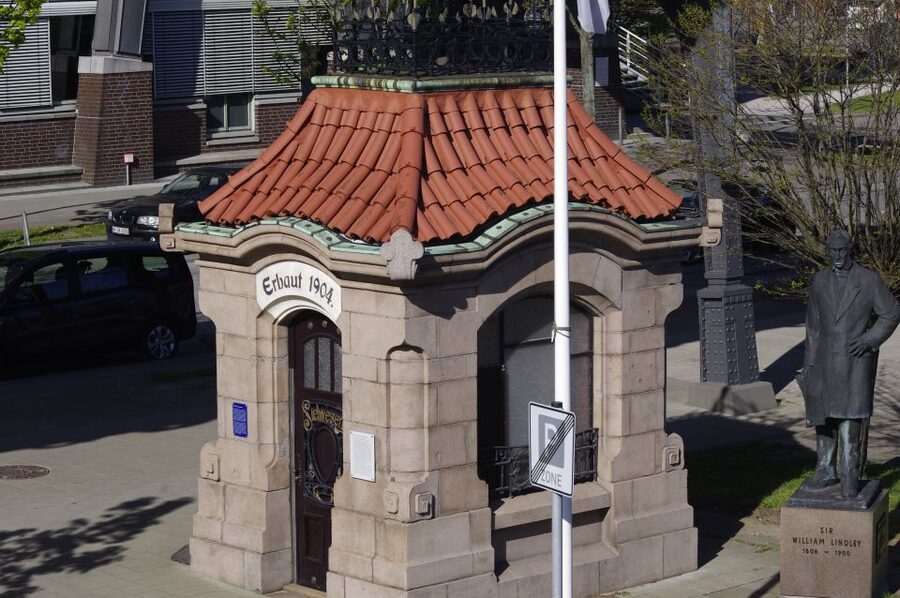
Near the underground station Baumwall, the guide explains Hamburg’s flood protection. This is one of the route’s most useful practical stops because it shows how the city’s relationship with the Elbe affects streets, buildings, and public space.
You also see the Siel-Einsteigehäuschen, a small structure connected with the city’s drainage and sewer system. It is not the kind of sight most people would put on a first-time Hamburg list, which is precisely why it adds interest. The guide uses it to point out infrastructure that is easy to overlook.
The information here gives needed context before you reach Speicherstadt and HafenCity. Hamburg’s harbor is attractive, but it is also a working waterfront exposed to difficult weather and high water. Flood protection is not an abstract engineering topic in this city. It helps explain why some parts of the urban layout look the way they do.
The tour includes a guided walk by Hamburg Port after this stop. Since the route takes place rain or shine, you should dress for the conditions rather than assume every minute will be spent indoors. There is no included meal or drink break, so carry what you need for the two-hour outing.
Same city, a completely different sort of afternoon:
- Hamburg: 2-Hour XXL Port of Hamburg Cruise Tour
★ 4.7 · 6,979 reviews - Hamburg: Line A Sightseeing Hop-On Hop-Off Bus Tour
★ 4.6 · 6,958 reviews - Hamburg: Elbphilharmonie Plaza Guided Tour
★ 4.7 · 5,882 reviews - Hamburg: Hamburg Dungeon Admission Ticket
★ 4.7 · 5,745 reviews
Brick warehouses in Speicherstadt
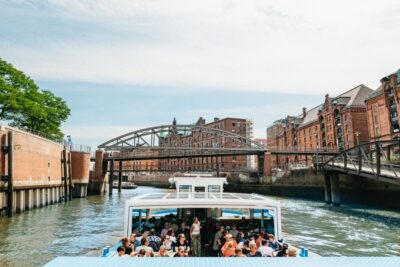
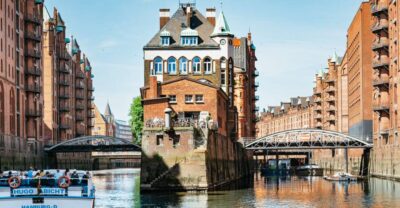
The walk continues along Speicherstadt, Hamburg’s UNESCO World Heritage Site. Here the city’s commercial past becomes visible in long brick warehouse buildings, canals, bridges, and dense blocks built for storage and trade.
Speicherstadt is one of Hamburg’s most photogenic areas, but the guide’s context is what makes it more useful than a quick picture stop. You can compare the older warehouse district with the newer buildings of HafenCity, which appear later in the route.
The stop includes a photo opportunity and guided sightseeing. The supplied timing does not assign a fixed number of minutes to Speicherstadt, so the exact pace can vary. Expect to keep moving as part of the larger walk rather than settle in for a lengthy museum-style visit.
I think this is where the tour’s central idea becomes clearest. Hamburg’s past is not sealed away in a historic quarter. The old warehouses remain part of the modern city, close to new offices, housing, cultural buildings, and harbor routes.
You should also keep your expectations in check. This experience does not include entrance to museums or attractions in Speicherstadt. You see the district from the streets and hear the guide’s explanation. If you want extended indoor visits, you will need to plan those separately.
HafenCity and the Elbphilharmonie
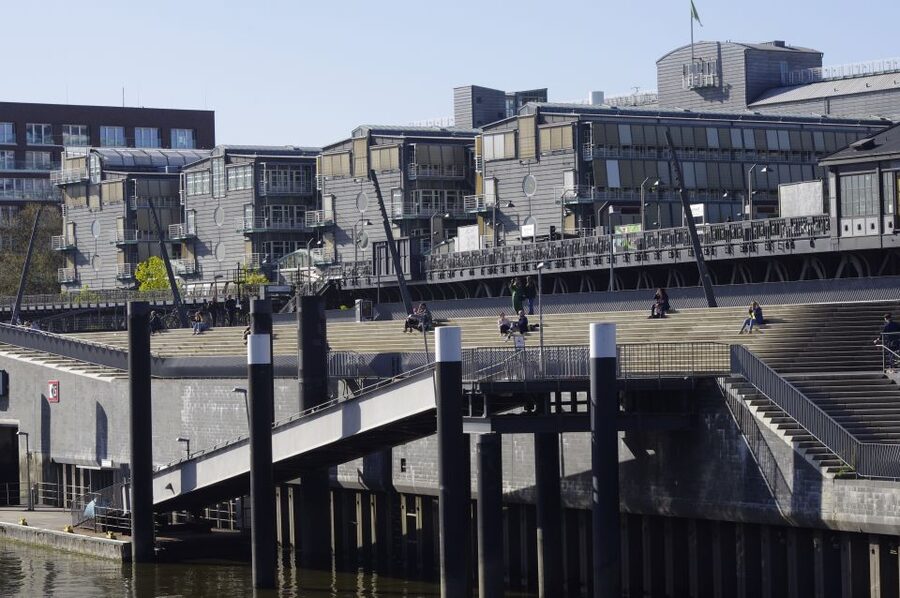
The final section shifts into HafenCity, an area known for striking modern buildings and large-scale redevelopment. The change is easy to feel: Speicherstadt’s brick walls give way to newer forms, wider spaces, and a more contemporary waterfront setting.
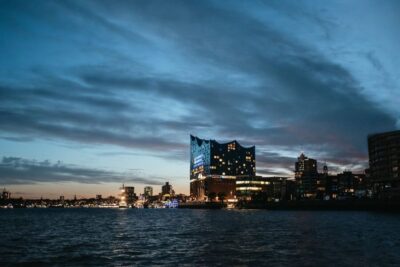
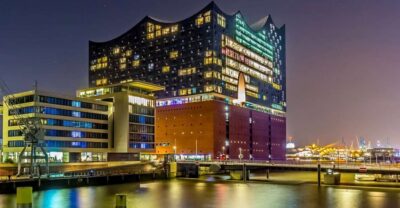
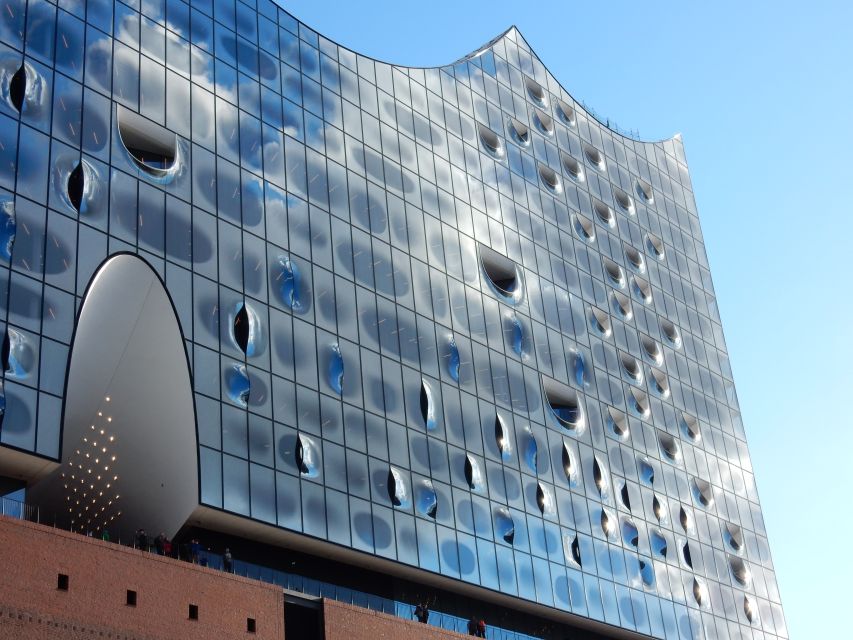
The destination is the Elbphilharmonie, Hamburg’s controversial and now internationally recognized concert hall. The building combines a traditional brick warehouse base with a sweeping glass structure above it. That contrast makes it a fitting end to a tour that began at the Michel.
You spend about 20 minutes at the Elbphilharmonie for guided sightseeing and photographs. The guide explains the building from outside, but the concert program and interior entrance are not part of the activity. The ticket also does not include admission to sights.
The tour ends directly at the foot of the Elbphilharmonie, with views across Hamburg’s harbor and toward the musical theaters on the opposite side of the Elbe. The provided meeting information also says the activity ends back at the meeting point, so confirm the exact end arrangement when booking if that detail matters to your plans. The stated route itself clearly finishes at the concert hall area.
Afterward, you may be able to visit the Elbphilharmonie Plaza independently. That depends on closures made by the concert hall, so do not treat Plaza access as guaranteed. If it is open, it is a worthwhile way to extend the visit without adding another guided tour.
What the $25 price really buys you
At $25 per person, this is a fairly focused walking experience. You are paying for a live guide, a carefully arranged route, and explanations in German. You are not paying for transportation, food, drinks, church admission, concert hall admission, or any other attraction ticket.
The value is strongest if you want orientation and context. In two hours, you see the Michel, Krameramtsstuben, Michelwiese, Portugiesenviertel, harbor areas, Speicherstadt, HafenCity, and the Elbphilharmonie. Covering that distance independently is possible, but you would need to research the route and decide what links these places together.
The price is less attractive if you want long visits inside buildings or a specialist architectural tour. The schedule gives roughly 20 minutes to the Michel and 20 minutes to the Elbphilharmonie, with several shorter stops between them. This is a moving city walk, not a series of extended admissions.
The ability to reserve now and pay later can help if your Hamburg plans are still shifting. Free cancellation up to 24 hours before the activity also gives you some flexibility. Those policies do not change the basic need to choose a suitable weather day, since the tour runs rain or shine.
Language, pace, and practical comfort
The live tour guide speaks German. That is the most important booking point. If German is not comfortable for you, the visual route still has appeal, but you may not get the full benefit of the guide’s explanations about the church, old housing, flood protection, harbor, and architecture.
The walk lasts two hours, and the route includes city streets, open areas, harbor surroundings, and passage through older and newer districts. Wear comfortable shoes. The experience is not suitable for people with mobility impairments, and the description gives no indication of adapted transport or an alternative route.
There is no food or drink included. A short walk of two hours does not require a full meal plan, but you should organize refreshments before or after the tour if needed. The route passes through areas where you may want to continue exploring, especially Speicherstadt and HafenCity.
The group size is not provided, so do not book expecting either a private walk or a guaranteed small group. The guide can be identified by a white bag at the meeting point. Allow extra time to reach St. Michaelis and arrive 10 minutes before the start.
The experience has a rating of 4.6 from 72 reviews, with praise focused on the amount of information, the friendly guide, and the variety of the route. One German comment highlights viele Infos nette Gruppe, or lots of information and a nice group. Another points to the high volume of information, while a five-star comment calls the tour informative, varied, and led by a very friendly female guide. The consistent lesson is simple: book this for explanation and range, not for a slow, private-style visit.
Who should book this Hamburg walk?
I would recommend it to a first-time Hamburg visitor who wants a strong two-hour introduction without boarding a bus. It is especially useful if you want to understand how the Michel, harbor, Speicherstadt, HafenCity, and Elbphilharmonie fit together geographically.
It also suits anyone interested in the city’s changing identity. You get old housing, Portuguese neighborhood streets, drainage infrastructure, brick warehouses, flood defenses, and modern cultural architecture in one route. That mix gives you more than a standard collection of postcard views.
You should think twice if you need English commentary, require step-free access, dislike walking in poor weather, or want to tour the interior of the Elbphilharmonie. Those needs are not covered by this activity.
For the best experience, arrive ready to listen while walking. Keep your camera handy at Krameramtsstuben, Speicherstadt, and the concert hall, but do not let photographs distract you from the transitions between places. The route’s real strength is the connection between them.
Should you book it?
Book this tour if you want a German-language city walk with a clear beginning, middle, and end. The route moves from Hamburg’s famous church through less obvious corners and harbor infrastructure before finishing at the Elbphilharmonie. That makes the $25 price reasonable for visitors who value context and efficient sightseeing.
Skip it if you want interior admissions, food, a private guide, or English commentary. For everyone else who can manage the walk and follow German, it is a practical way to see Hamburg’s old and new faces in a single outing.
FAQ
Where does the tour start?
The tour starts at St. Michaelis Church in Hamburg. Meet on the right side of the church’s main entrance and look for the guide with a white bag.
How early should I arrive?
Arrive 10 minutes before the activity begins.
How long does the tour last?
The walking tour lasts two hours. Starting times vary, so check availability when booking.
What language is the tour conducted in?
The live tour guide speaks German.
Does the tour include entry to St. Michael’s Church?
No. Entrance to sights is not included.
Does the tour include entry to the Elbphilharmonie?
No. Entrance to sights is not included. After the tour, you may explore the Elbphilharmonie Plaza independently, subject to closures by the concert hall.
Is food or drink included?
No. Food and drinks are not included.
What should I bring?
Bring comfortable shoes. The tour takes place rain or shine, so dress for the weather.
Is the tour suitable for people with mobility impairments?
No. The activity is not suitable for people with mobility impairments.
Just added around Hamburg
- Winter Alster tour★ 4.0 · 12 reviews
- World War 2 Hamburg Private Guided Tour★ 5.0 · 6 reviews
- UNESCO World Heritage – Speicherstadt and Kontorhaus district★ 4.5 · 12 reviews
- Ticket for the Emigration Museum BallinStadt Hamburg★ 4.0 · 57 reviews
- hamburg Experienced differently with wish rental bike relaxed enjoy★ 5.0 · 5 reviews
- Hamburg Private Food Tours with a Local: 100% Personalized★ 5.0 · 3 reviews
- The Beatles in Hamburg – Private Tour★ 5.0 · 16 reviews
- The Beatles on St. Pauli★ 5.0 · 3 reviews
Hamburg Tours, compared.
1.5-Hour Harbor and Speicherstadt Day Cruise
Read our review →