
Review · HAMBURG TOURS
Hamburg: City Tour by Bike with Elbphilharmonie
Hamburg makes most sense from a bicycle seat, where water, old brick warehouses, grand shopping streets, and new harbor buildings come together in one steady ride. This tour links the Alster, Old Town, Speicherstadt, HafenCity, Elbphilharmonie, and St. Pauli without making you change trains or retrace your steps.
I like the mix of major sights and less obvious corners, including the old Gängeviertel and Peterstraße. I also like the practical extras: a bicycle, city map, emailed photo series, and time to reach the Elbphilharmonie Plaza if access is open. The main consideration is pace. Three and a half hours on a bike is a long outing, and access to the concert hall can be restricted during major events.
Key points to know before you book
- Start in Rotherbaum: Meet outside the University of Hamburg bicycle station at Schlüterstraße 11.
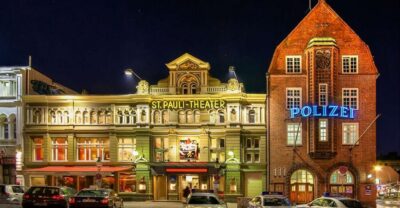
- See Hamburg in one connected ride: The route covers Alster Lake, the Town Hall, Deichstraße, Speicherstadt, HafenCity, Neustadt, St. Michael’s Church, and the St. Pauli Piers.
- Expect a strong history-and-city mix: The ride follows the traces of the 1842 fire, old port activity, working-class streets, and modern harbor redevelopment.
- The Elbphilharmonie visit depends on access: You get time to go to the Plaza only when conditions allow.
- Guiding is a major strength: English and German tours are offered, and Bernhard has been praised for giving lively, detailed explanations of his city.
- The price is moderate for a half-day outing: At $39 per person, the bicycle, guide, map, and photo series add useful value.
Why a bicycle is a smart way to see Hamburg
Hamburg is spread across waterways, port districts, shopping streets, parks, and broad civic squares. Walking between all of these areas would take much of your day. Public transport is useful, but it would break the visual connection between the districts.
A bicycle gives you that connection. You ride from the green setting around the Alster toward the dense city center, then continue into old port districts and the newer HafenCity. You can see how Hamburg changes block by block instead of viewing each sight as an isolated stop.
The route is also useful early in a Hamburg visit. I would take it near the beginning of a stay because it gives you a map in your head. Afterward, you will know where the Old Town sits in relation to the Alster, how Speicherstadt links with HafenCity, and how the Elbe waterfront relates to St. Pauli.
The experience is guided rather than a simple bike rental. That matters here because much of Hamburg’s interest lies in the story behind its buildings. A guide can explain why warehouses sit over waterways, how the great fire altered the city, and why modern harbor architecture looks so different from the brick districts nearby.
More bike days around Hamburg:
- Hamburg 3-Hour Bike Tour
★ 4.8 · 1,353 reviews - Guided Hamburg City Bike Tour
★ 5.0 · 642 reviews - Hamburg: Downtown, Alster & Creative Neighborhoods by Bike
★ 4.5 · 217 reviews
From Schlüterstraße 11 to the Alster
The ride begins outside the Fahrradstation of the University of Hamburg at Schlüterstraße 11, in the Rotherbaum area. You receive the bicycle and begin with a route that quickly introduces Hamburg’s water-centered character.
The first major sight is Alster Lake. The route follows the Außenalster before moving toward the Binnenalster. These connected bodies of water give the city an unusually open feel. From the Binnenalster, you get a panorama toward the old and new parts of Hamburg.
This opening section is a good warm-up because it places the city center in view without rushing straight into traffic-heavy streets. It also gives you the first taste of the tour’s main theme: Hamburg is both a major business city and a place shaped by water, open space, and maritime trade.
The Alster stop is listed as a photo stop and guided bike-tour section. You should expect time for explanation and pictures, but not a long break away from the bicycle. If you prefer slow sightseeing with extended interior visits, this format may feel brisk.
The Town Hall and Hamburg’s changing city center
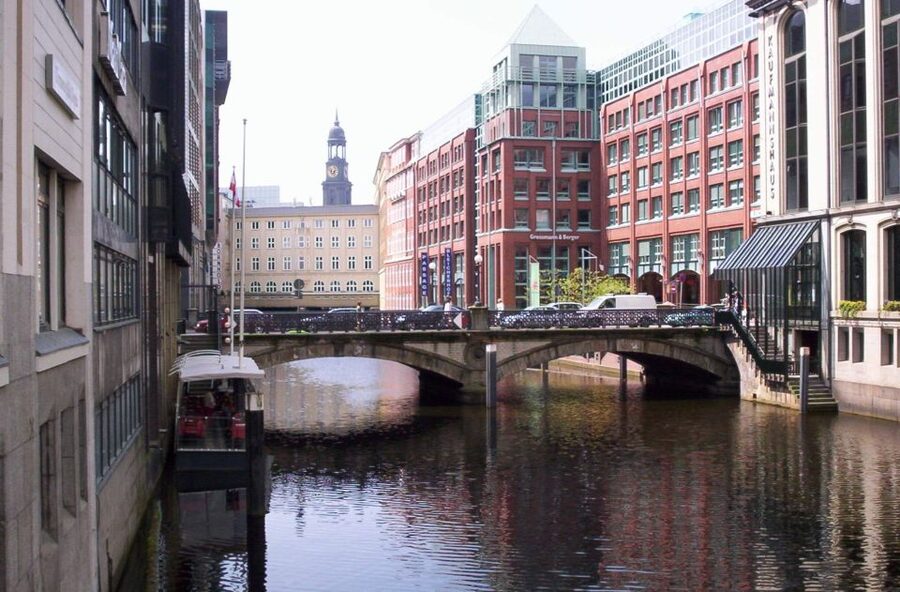
From the Alster, the route continues through the central city toward Hamburg’s Town Hall and Old Town. This is where the contrast between grand civic architecture and working city streets becomes clear.
The Town Hall provides one of the tour’s classic photo stops. The Old Town section gives your guide a chance to place the central streets in the wider story of Hamburg, including the damage caused by the great fire of 1842 and the rebuilding that followed.
You also pass through the Gängeviertel of the Neustadt. This former working-class district from the 18th century now has an arts connection, giving the ride a different mood from the formal center. The birthplace memorial for Johannes Brahms adds a small but memorable detail.
I like this part because it avoids treating Hamburg as only a port city. You get civic buildings, old residential quarters, music history, and modern city life in a short stretch. The downside is that the route gives you an overview rather than a detailed walking visit. You will see and hear about these areas, but you should not expect lengthy stops inside museums or historic buildings.
Deichstraße and the route toward Speicherstadt
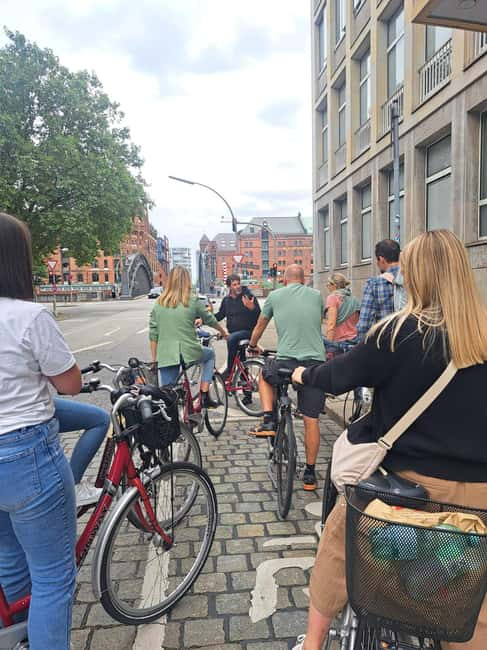
The ride crosses Fleet Island, a former harbor area, before reaching Deichstraße. The route follows the path of old port activity and connects the historic center with Speicherstadt.
Deichstraße is important because it helps explain where Hamburg’s port operations developed in the old city. The street’s position near the waterways makes the relationship between commerce and the city easy to understand. You are not simply looking at attractive façades. You are seeing a district shaped by trade, storage, water, and fire.
This is one of the places where a guide adds real value. Without context, the route can look like a pleasant sequence of old buildings. With an explanation of the 1842 fire and the growth of port operations, the streets become part of a much bigger story.
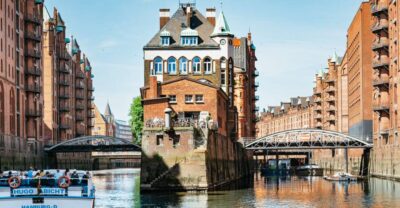
The ride then reaches Speicherstadt, one of Hamburg’s most recognizable areas. Its enormous brick warehouses sit over waterways called Fleete, supported on millions of oak poles. The architecture feels imposing and highly ordered, with bridges, canals, and long warehouse walls creating strong views from the bicycle.
A few more Hamburg half-days to weigh up
- Hamburg: Sex and Crime in St. Pauli Tour for Ages 18+
★ 4.7 · 15,447 reviews - Hamburg: 1.5-Hour Harbor and Speicherstadt Day Cruise
★ 4.6 · 14,200 reviews - Hamburg: 90-Minute Evening Lights Harbor Cruise
★ 4.5 · 7,728 reviews - Hamburg: 2-Hour XXL Port of Hamburg Cruise Tour
★ 4.7 · 6,979 reviews
Speicherstadt, where brick warehouses meet water
Speicherstadt is a major highlight, and the bicycle is especially useful here because you can cover more of the district than you would on foot. The route lets you see the scale of the warehouse quarter and its position beside the newer harbor development.
The brick architecture dates from the 19th century and forms part of Hamburg’s UNESCO World Heritage setting. The waterways are not just decorative. They explain how goods once moved through the warehouse district and why the buildings were constructed in this particular form.
I would keep your camera ready here. The combination of brick, bridges, narrow waterways, and long straight lines gives you some of the most distinctive images on the ride. The guide also provides a useful bridge between the old port economy and the new Hamburg that follows.
You should keep your expectations practical. This is a bike tour with photo stops, not a dedicated Speicherstadt architecture tour. You will get orientation, stories, and views, but the schedule does not suggest time for every museum, warehouse attraction, or canal-side café.
HafenCity and the Elbphilharmonie
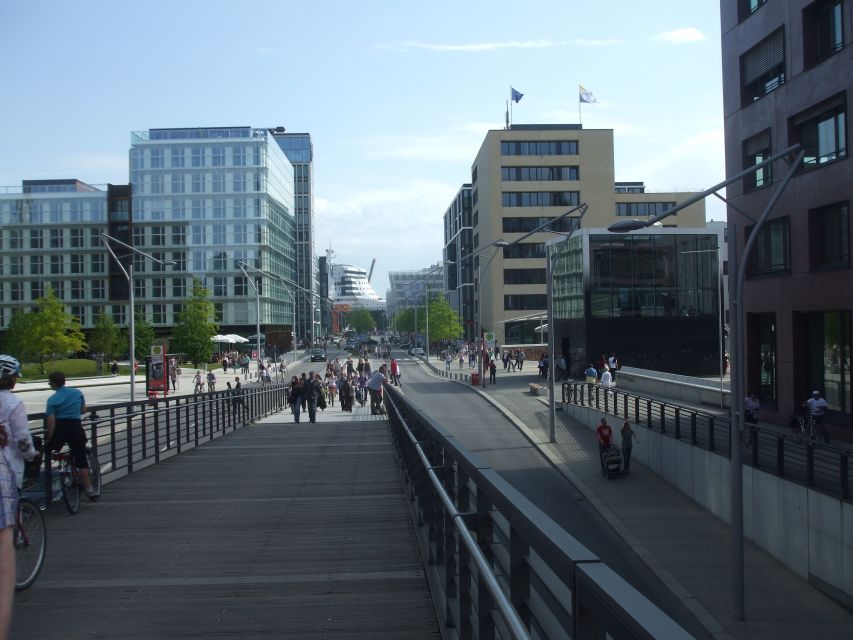
After Speicherstadt, the route enters HafenCity, the former harbor area now reshaped with postmodern buildings and new public spaces. This section shows Hamburg in the middle of change. The old warehouse district and the newer development sit close together, making the city’s past and present easy to compare.
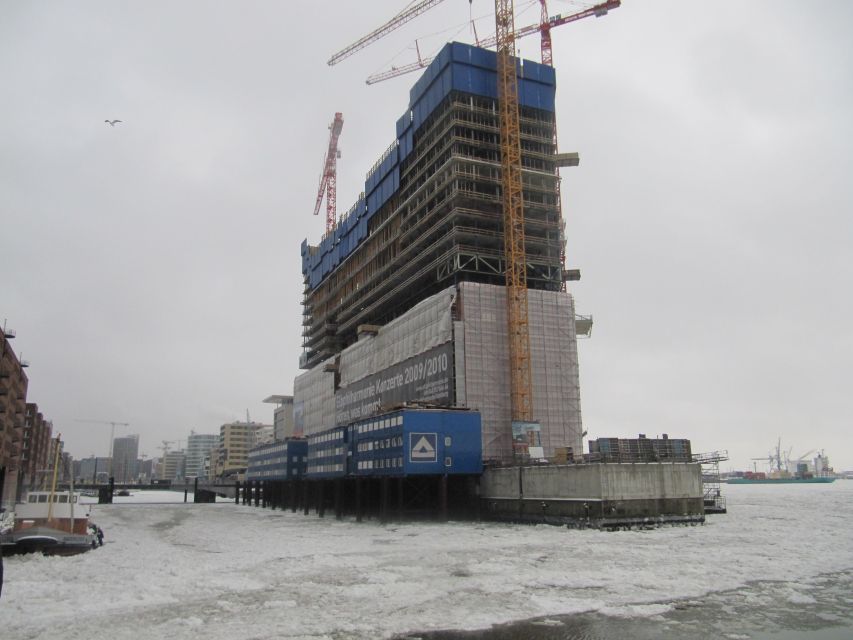
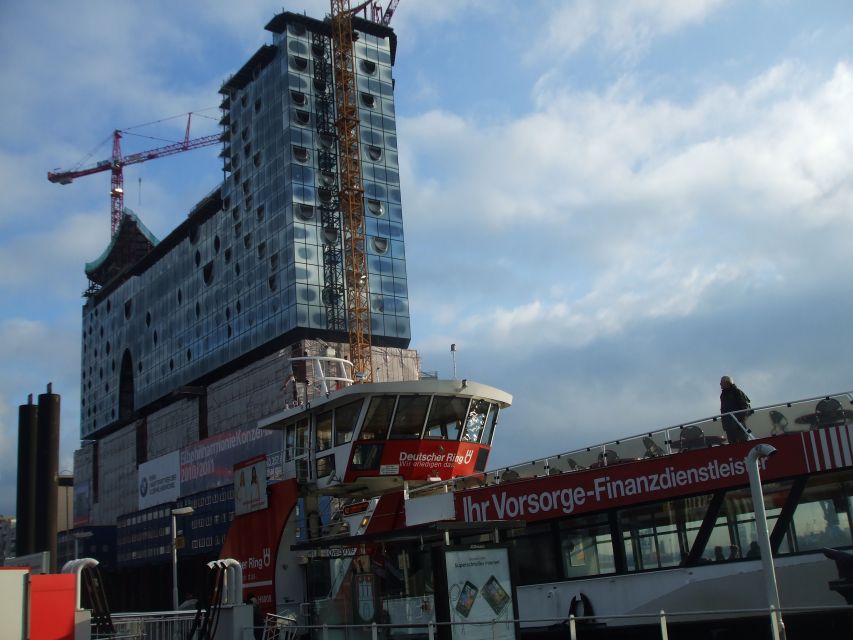
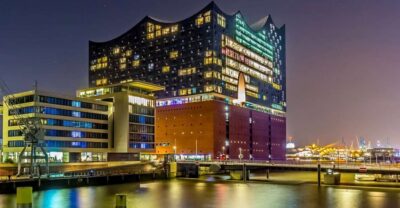
The Elbphilharmonie is the architectural centerpiece. The tour takes you toward the 110-meter-high concert hall and includes a photo stop and guided explanation. You also follow a path across the newer flood protection system, which offers views of the building from below.
That lower view is worth noting. Many people first picture the Elbphilharmonie from the waterfront or across the harbor. Seeing it from the flood-protection route gives you a different angle and helps you understand how the building sits within HafenCity.
The tour includes time to go to the Elbphilharmonie Plaza, but this is subject to access. Major events can restrict or close entry. You should treat the Plaza as a welcome possibility, not the one part of the experience that must happen for the tour to feel worthwhile.
The building itself is described as controversial, and that is part of its appeal. You get to consider a bold modern concert hall beside older port structures rather than seeing only a polished postcard view. The route makes the building part of Hamburg’s wider urban story.
Baumwall, Neustadt, and St. Michael’s Church
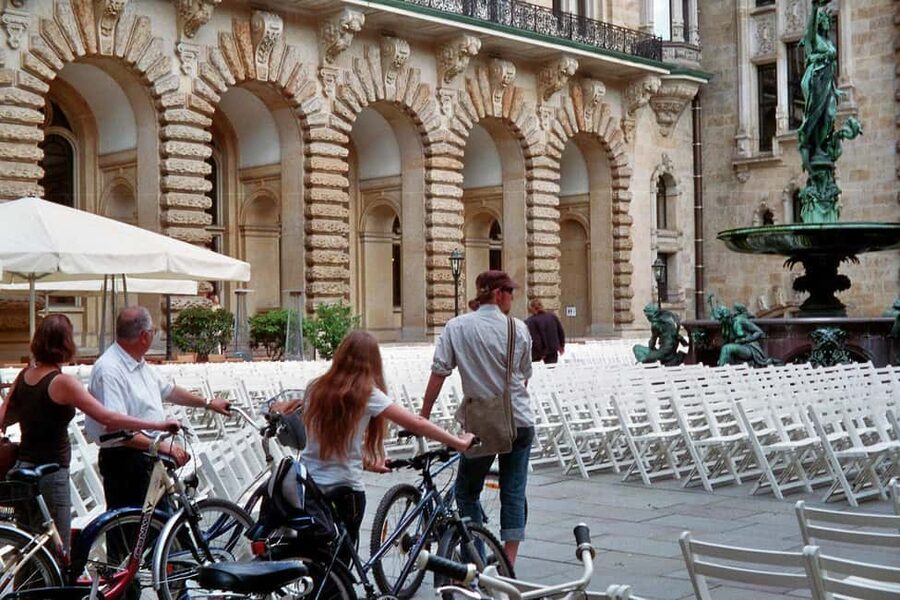
The ride continues through a steel publishing building at Baumwall, described as almost futuristic in appearance, before passing St. Michael’s Church. This section keeps the tour moving between new construction and older landmarks.
St. Michael’s, often known simply as the Michel, is one of Hamburg’s key landmarks. On this tour, it is a photo stop and guided bike-tour point rather than an extended church visit. You get the location and the outside view, along with the chance to hear how it fits into the city center.
The route then follows historic Peterstraße, where the Brahms and Telemann Museums are located. These details make the Neustadt section more than a ride between famous buildings. You see how music, residential streets, church architecture, and modern business districts occupy the same central area.
This part will suit you if you enjoy connections. Hamburg’s appeal is not based on one perfectly preserved quarter. It comes from the way old and new uses sit beside each other. You may also find this section less visually dramatic than Speicherstadt or the Elbphilharmonie, but it supplies useful context and variety.
St. Pauli Piers and the return to Rotherbaum
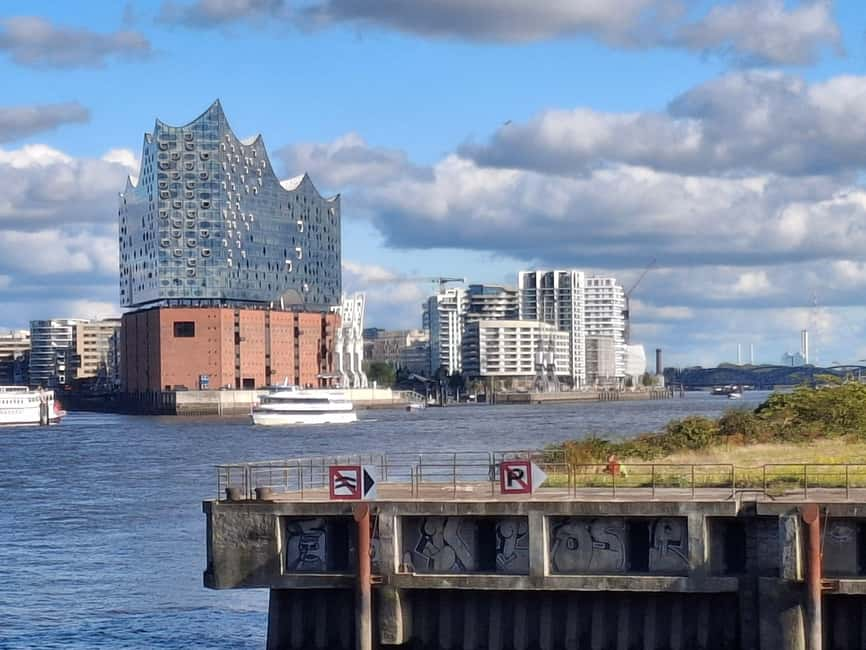
The final major area is the St. Pauli Piers, bringing the route back to Hamburg’s maritime identity. The piers connect the city center with the Elbe waterfront and the working port atmosphere that defines much of Hamburg’s character.
The stop is listed for photos and guided riding. Again, the format favors a broad look rather than a long waterfront pause. You will get a sense of the area and its place in the route before cycling back toward the starting point.
After about three hours of riding, the tour returns to Schlüterstraße 11, passing the exhibition halls. The total activity time is advertised as three and a half hours, while the included bike tour is described as three hours. That small difference likely allows time for stops, explanations, photos, and the possible Elbphilharmonie Plaza visit.
I would not book this immediately before a train, flight, or timed attraction. The route has many stops, and access to the concert hall can change. Give yourself a little breathing room afterward.
What the guide adds to the ride
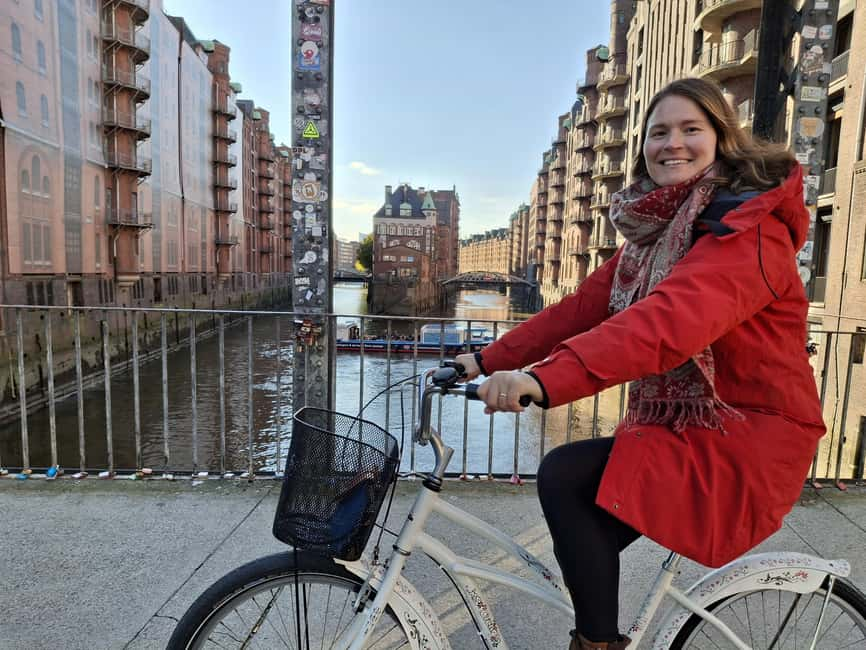
A good guide is especially important on a city bike tour because you cannot stop at every sign or read every plaque. The guide keeps the story moving while you travel through several districts.
English and German guiding are available. Bernhard is one guide whose city commentary has received especially strong praise. His approach is described as full of information about Hamburg, which is exactly what this route needs. The best parts of the ride are likely to be the explanations that link the great fire, the port, Speicherstadt, HafenCity, and the Elbphilharmonie.
You also receive a city map. That is more useful than it may sound. Hamburg has several districts with similar-sounding names, and the map can help you return later to the streets or waterfront areas that caught your eye.
The emailed photo series is another modest but practical extra. It does not replace your own pictures, but it gives you a set of Hamburg images after the tour and may help you remember the route.
Is $39 a fair price?
At $39 per person, I consider this a reasonable price for a 3.5-hour guided outing. The cost includes the bicycle, guide, city map, and photo series. You are also paying for route planning across a large city and for commentary that ties the sights together.
The value is strongest if you want an overview on your first day or two in Hamburg. A self-guided ride might cost less if you already have a bicycle and know the city, but it would not necessarily give you the same sequence of historic and modern districts or the same background information.
The value is weaker if you want a slow visit inside each attraction. The route does not include stated admission to museums, the church, or other interiors. The Elbphilharmonie Plaza visit is conditional, so you should not compare the price with a guaranteed concert-hall admission.
Free cancellation up to 24 hours before the tour and the option to reserve now and pay later make planning easier. Those policies are useful if your Hamburg schedule is still shifting.
Who will enjoy this Hamburg bike tour?
I would recommend it to you if you:
- Want to cover many central Hamburg sights in one outing
- Enjoy learning the story behind buildings and districts
- Are comfortable spending several hours on a bicycle
- Prefer seeing a city through connected neighborhoods rather than isolated attractions
- Want both historic port areas and modern HafenCity
- Need an early orientation to Hamburg
It may not suit you if you dislike cycling, need frequent long breaks, or want extensive time inside museums and churches. The tour also requires some flexibility around the Elbphilharmonie Plaza, especially on days with major events.
Families and casual cyclists should consider their own comfort with a 3.5-hour activity. The supplied information does not specify group size, bicycle style, route difficulty, or child equipment, so ask the provider directly if those details matter to your booking.
My practical verdict
This is a strong introduction to Hamburg because it tells the city’s story through movement. You start beside the Alster, pass civic and historic districts, follow old port routes into Speicherstadt, then see the future-facing HafenCity and Elbphilharmonie before returning through Neustadt and St. Pauli.
I especially like the balance between famous sights and smaller details such as the Gängeviertel, Brahms birthplace memorial, Peterstraße, and the old harbor traces. The guide’s role matters, and Bernhard’s detailed city knowledge is a good sign for the kind of commentary you can expect from the strongest guides.
Book it if you want a practical, information-filled overview and are happy to trade deep interior visits for broad coverage. Skip it if you want a relaxed walking tour or a guaranteed Elbphilharmonie Plaza visit. For $39, it offers a useful amount of Hamburg in one half-day, with enough variety to help you decide where to return on your own.
FAQ
Where does the Hamburg bike tour begin?
The tour begins outside the Fahrradstation of the University of Hamburg at Schlüterstraße 11.
Where does the tour end?
The activity ends back at the starting point at Schlüterstraße 11.
How long does the experience last?
The total duration is 3.5 hours. The included bike tour itself is described as three hours, with additional time for stops and the possible Elbphilharmonie Plaza visit.
Which languages are available?
The live guide is available in English and German.
Is a bicycle included?
Yes. The bicycle is included in the tour price, along with a guide and city map.
Can I visit the Elbphilharmonie Plaza?
The tour includes time to go to the Plaza when access is possible. On days with major events, access may be restricted or closed.
Can I cancel for a full refund?
Yes. You can cancel up to 24 hours in advance for a full refund. You can also reserve now and pay later.
Just added around Hamburg
- Winter Alster tour★ 4.0 · 12 reviews
- World War 2 Hamburg Private Guided Tour★ 5.0 · 6 reviews
- UNESCO World Heritage – Speicherstadt and Kontorhaus district★ 4.5 · 12 reviews
- Ticket for the Emigration Museum BallinStadt Hamburg★ 4.0 · 57 reviews
- hamburg Experienced differently with wish rental bike relaxed enjoy★ 5.0 · 5 reviews
- Hamburg Private Food Tours with a Local: 100% Personalized★ 5.0 · 3 reviews
- The Beatles in Hamburg – Private Tour★ 5.0 · 16 reviews
- The Beatles on St. Pauli★ 5.0 · 3 reviews
Hamburg Tours, compared.
1.5-Hour Harbor and Speicherstadt Day Cruise
Read our review →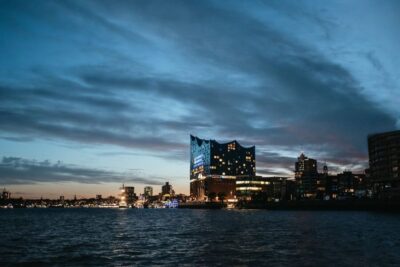

Browse the lists this tour appears in